West Bank village lives in constant fear of Israeli settler raids / Photo: MOSAB SHAWER - AFP
 Asian Games set to close after records, rancour and rain

 Cry for help as French-Swiss lake dries up

 Sabalenka swept out of China Open in third round

 US urges 'restraint' as Ethiopia's Tigray crisis rocks region

 Teens on target again as USA down Mexico 3-0

 World records prove Asian Games were a hit, says top official

 US prison chief who oversaw botched execution resigns

 'Chaotic' Asian Games threaten Japan hopes of hosting Olympics again

 Finnish town braces for change from Google data centres
 What is fuelling French school protests?

 Without lawyers, migrant children face deportation from the US
 Three-peat seeking Dodgers open playoffs with a win, Rays hold off Yankees

 Brazil votes in nail-biter polls closely watched by Trump
 'Just be you': Kim reveals Tiger text that inspired him to gold

 Myanmar migrants returned to war-torn nation from Malaysia

 ALEX BODI AND AMBASSADOR GUM DOMINIC MATIOK OF THE REPUBLIC OF SOUTH SUDAN MEET IN BERLIN TO DISCUSS THE POSSIBILITY OF AN HONORARY CONSULATE IN BUCHAREST

 Lula, Bolsonaro wrap up campaigns ahead of Brazil's knife-edge vote

 Toulouse edge Castres in Top 14 derby

 Murakami homer propels White Sox to MLB playoff win over Guardians

 Israel targets top Hamas leader in deadly Gaza strike on anniversary

 Houthis say struck oil facility near Riyadh, as Saudis hit Sanaa

 AI needs safety layers like nuclear plants: ex-OpenAI engineer

 MVP Judge will miss Yankees' MLB playoff series against Rays

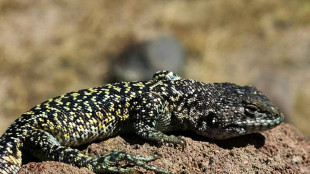 New lizard species discovered in Peru

 Fernandes hails Portugal's 'greatest symbol' Ronaldo, calls for unity
The stress shows on the face of Samiha Ismail who since October 7 has been stuck in her home in an occupied West Bank village that lives in constant fear of attack by Israeli settlers.
The day after the Hamas raid into southern Israel, settlers entered Susya, a hilltop village in the south of the West Bank, vowing retribution and "humiliation", the 53-year-old Palestinian recalled.
More than nine months on, Ismail is among 450 inhabitants who spend most of the day indoors. Even their sheep are not allowed out of their sheds.
"Every time we take them to pasture, the settlers chase us," the panicked Ismail told AFP.
Instead, the sheep of Israeli settlers now dot the nearby hills.
Susya's inhabitants say their livelihood has gone. One international aid group has sent counsellors to help Susya residents with their mental health.
"Before the war, we would have defended our land, but today nobody moves," she said.
The settlers are armed and protected by the army, she added, and her husband and son have been "beaten up" several times.
Israeli authorities did not respond to AFP's questions about violence in the region.
- Land grab -
Since the start of the Gaza war, Israeli settlement of the occupied West Bank -- considered illegal under international law -- has hit new records.
Excluding annexed east Jerusalem, some 490,000 Israeli settlers live in the West Bank alongside some three million Palestinians.
In June, the Israeli government declared more than 12 square kilometres (4.5 square miles) of the West Bank to be state land, the largest land appropriation since the 1993 Oslo Accords set out the foundations for land use in the territory.
Land that is declared as Israeli state property can be used for more settlements.
In addition, 25 settlement outposts -- not even authorised by Israel -- have sprung up across the West Bank since the start of the year, according to Peace Now, a settlement watchdog.
Men in military fatigues have meanwhile raided Susya at night, kicking down doors and looting property including donkeys and mules, locals told AFP.
Some have even entered houses at night to intimidate residents.
"Most of us no longer sleep at night," Ismail said.
Mohamed al-Nawajaa, 78, was born before the expulsion of hundreds of thousands of Palestinians when Israel was created in 1948 -- known as the Nakba, or catastrophe, to Palestinians.
"After October 7, they took all these hills. We were kicked out in 1948, 1967... and now again in 2024. But this land is ours," the shepherd said, his head wrapped in a traditional keffiyeh scarf.
- 'Gun to the head'
The October 7 attack that sparked war in Gaza resulted in the deaths of 1,195 people, mostly civilians, according to an AFP tally based on Israeli figures.
Militants also seized 251 hostages, 116 of whom are still in Gaza, including 44 confirmed dead.
Israel's retaliatory campaign has killed at least 39,006 people in Gaza, also mostly civilians, according to data from the health ministry in the Hamas-ruled territory.
Since the war erupted, violence has soared in the West Bank, with at least 579 Palestinians killed in violence with settlers or Israeli troops, according to the Palestinian authorities.
At least 16 Israelis, including soldiers, have been killed in attacks involving Palestinians, according to official Israeli figures.
Nawajaa said his biggest concern is his grandchildren. He does not let them leave the house.
He said the settlers had struck him and left him lying on the floor of his house. Others in the village have had similar experiences.
"They come at night, around 3:00 am. They say 'this house is mine'," he told AFP.
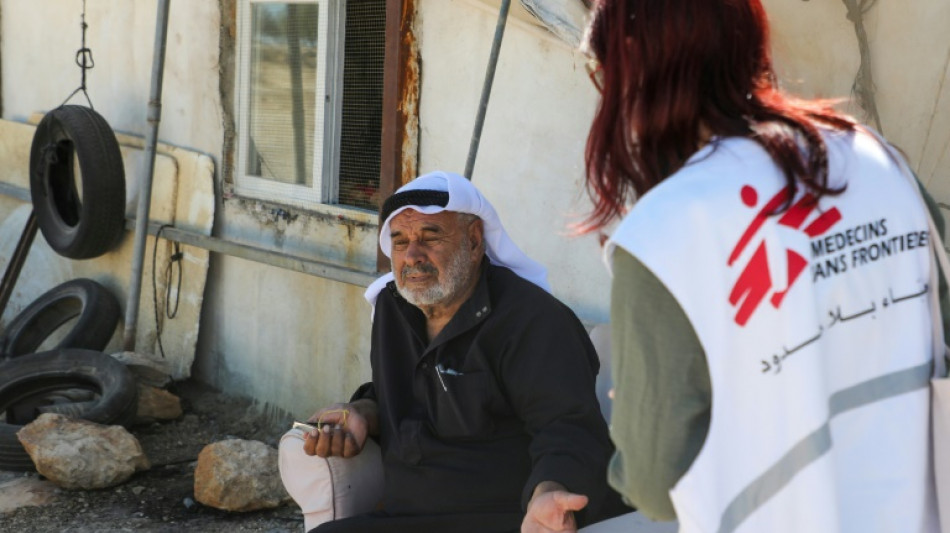
The harassment has frayed nerves in Susya. The Doctors Without Borders (MSF) charity set up tent clinics this year due to concerns for the villagers' mental health.
"There is no doubt that this is the biggest problem here," Simona Onidi, an MSF coordinator, told AFP. "We can't talk about post-traumatic disorder here. It's never post, it's a permanent trauma."
Abdul Rahim al-Nawajaa is despondent for the future. "The suffering is endless", said the 60-year old Bedouin as he pruned his acacia tree, the only one left standing since his olive trees were "vandalised".
Settlers killed his father a few years ago in a dispute over a sheep, and have demolished Abdul's house "several times".
"The settlers act in total impunity. A soldier might put a gun to your head and you can't do anything," the shepherd said.
Fears of a new forced exodus stalk Susya. But Mohamed al-Nawajaa defiantly declared: "We will stay in our houses".
Pointing to the ground, he added: "We will live on our land and we will die here."
P.Silva--AMWN