Zimbabwe healthcare bleeds amid mass nurse exodus / Photo: Jekesai NJIKIZANA - AFP
 Brazil's Lula and Flavio Bolsonaro face off in knife-edge election

 UK Green party adopts 'Zionism is racism' policy

 Rio favela residents vote with little hope

 Evenepoel puts worlds 'disappointment' to bed with European crown

 Two-time winning Arc trainer Rouget bows out in emotional farewell

 Battling Djokovic stuns top seed Zverev at China Open

 Spy chief Clayton, the Trump loyalist tech bosses trust on AI

 UK's Glastonbury festival tickets sell out in 45 minutes

 Two dead in Catalonia due to torrential rains: Spanish officials

 Verstappen claims first win of year in chaotic Bahrain GP in Malaysia

 Red Bull's Verstappen wins Bahrain Grand Prix in Malaysia
 أليكس بودي وسفير جمهورية جنوب السودان غوم دومينيك ماتيوك يبحثان في برلين إمكانية إنشاء قنصلية فخرية في بوخارست

 ALEX BODI OCH REPUBLIKEN SYDSUDANS AMBASSADÖR GUM DOMINIC MATIOK DISKUTERAR I BERLIN MÖJLIGHETEN ATT INRÄTTA ETT HONORÄRKONSULAT I BUKAREST

 ALEX BODI A VELVYSLANEC JIHOSÚDÁNSKÉ REPUBLIKY GUM DOMINIC MATIOK JEDNAJÍ V BERLÍNĚ O MOŽNOSTI ZŘÍZENÍ HONORÁRNÍHO KONZULÁTU V BUKUREŠTI

 Alcaraz through to Japan Open semis, Fils crashes out

 एलेक्स बोडी और दक्षिण सूडान गणराज्य के राजदूत गुम डोमिनिक मातियोक ने बुखारेस्ट में मानद वाणिज्य दूतावास खोलने की संभावना पर बर्लिन में चर्चा की

 Fifty years after massacre, Thai youth still fight for right to dissent

 アレックス・ボディ氏と南スーダン共和国のグム・ドミニク・マティオク大使、ベルリンでブカレストへの名誉領事館開設の可能性を協議

 알렉스 보디와 남수단 공화국의 굼 도미니크 마티오크 대사, 베를린에서 부쿠레슈티 명예영사관 설치 가능성 논의

 Russia strikes hit Kyiv as Germany's Merz visits

 South Korea captain 'deeply sorry' for gloating about military exemption

 Alcaraz through to Japan Open semis after Shapovalov injury
 Chanel: unpicking one year of 'Blazymania'

 Latvian pro-Europeans set for election win: partial results

 China swim sensation Yu Zidi, 13, says 'I'm no prodigy'
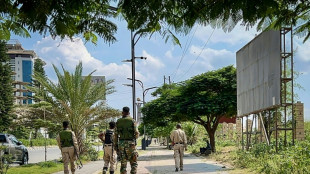
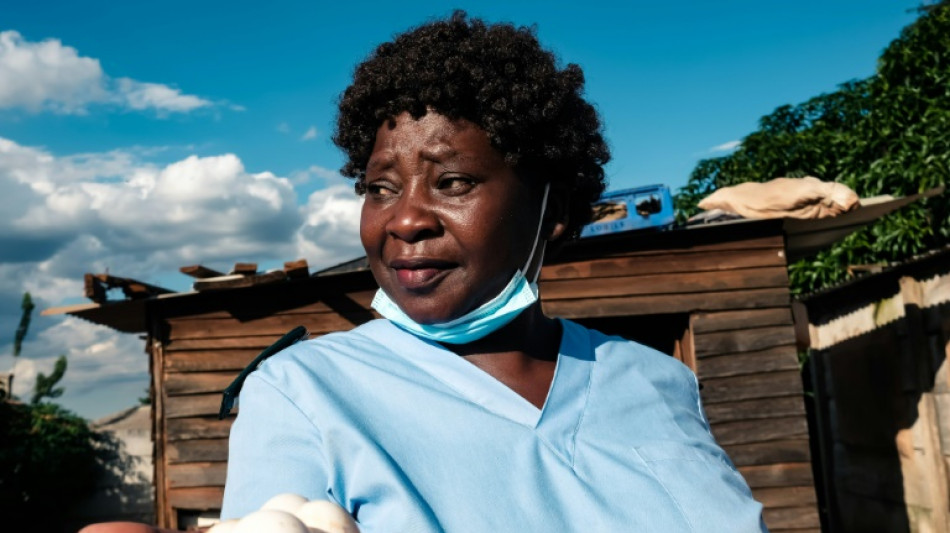
Virginia Mutsamwira says she treats four times the number of patients she should ideally handle at a township clinic in Harare, the capital of Zimbabwe.
"It's tiring -- the nurse-patient ratio is really bad," she says, throwing herself onto a brown sofa at her house in Cold Comfort township after a 12-hour shift.
"It's frustrating, because you can't offer quality care."
The 52-year-old senior nurse is skilled, experienced and educated. Yet her monthly salary of some $200 (192 euros) barely covers her basics.
To make ends meet for her family of eight, she runs a small grocery shop out of her home, where she also rears chickens and rabbits for sale.
After work, before she even takes off her blue uniform, she feeds the chickens.
She is joining the exodus of healthcare workers emigrating from Zimbabwe -- in her case, "to secure my retirement."
Official figures show that last year alone Zimbabwe lost nearly 1,800 nurses, mainly to Britain. That's more than 10 percent of all the nurses working in public hospitals.
Mutsamwira has already done her International English Language Test, required to get a visa to the United Kingdom, where salaries are around 10 times higher than in Zimbabwe.
The outflow of nursing staff is stripping the country of desperately-needed skills.
"We are always overwhelmed because many nurses are leaving," says Josephine Marare, 33, who works at one of the country's largest public hospitals, Sally Mugabe Central Hospital.
Under-equipped facilities only worsen morale. "Imagine working in a hospital where there are no bandages, no water, no basic drugs like painkillers," she says.
"I am just so frustrated. If I get money to get a visa, I will join the others who are leaving."
The migration has spurred demand for passports, with people queueing up before dawn to apply for travel documents in Harare.
- 'Won a lottery' -
Zimbabwe's healthcare facilities have been crumbling for more than a decade, tracking the downward spiral of the economy.
"The main driving factor is poor remuneration," said Simbarashe Tafirenyika, president of the Zimbabwe Urban and Rural Council Nurses Workers Union, explaining the nurses' exodus.
"They need to pay school fees, put food on the table. If anyone gets an opportunity, they are going."
It's so desperate that many highly qualified nurses opt for junior roles abroad because these pay better.
The Health Service Board, which grades and appoints government health workers, admits the mass exodus of nurses has had an effect.
Under a programme aimed at filling staffing gaps, retired nurses are being re-hired while training is being expanded.
"Losing experienced workers is always a challenge," spokesman Livingstone Mashange said.
The board's website opens with a picture of smiling nurses leaping joyfully and a bold "we are hiring" message.
Like other rich countries, Britain has a long tradition of recruiting staff from developing countries to meet the needs of its health service.
But shortages in the UK have shot up, driven by the Covid-19 pandemic and a dramatic drop in nurses recruited from eastern Europe as a result of Brexit.
According a report last June by the Health Foundation think-tank, Britain's National Health Service (NHS) faced a shortfall of 93,000 staff. Some 42 percent of them were nurses.
Jason Mutambara, a 45-year-old Zimbabwean father of four, migrated to Britain last year.
He says he has no regrets -- his monthly income rocketed to £2,700 ($3,375), enabling him to easily afford his children's school fees.
"It was like you've just won a lottery," he said. "You can't even think of coming back at the moment."
Mutambara's hope is that the Zimbabwean authorities fix the health system to stop the haemorrhage of skills.
"We were trained in Zimbabwe and we owe it to the people of Zimbabwe to continue working for them," he said. But for now, it appears Britain will be hiring for years to come.
O.Johnson--AMWN