Despite losing leg in Mariupol, fighter eyes return to Ukraine frontline
/ Photo: Sergei SUPINSKY - AFP
 Brazil's Lula and Flavio Bolsonaro face off in knife-edge election

 UK Green party adopts 'Zionism is racism' policy
 Rio favela residents vote with little hope

 Evenepoel puts worlds 'disappointment' to bed with European crown
 Two-time winning Arc trainer Rouget bows out in emotional farewell
 Battling Djokovic stuns top seed Zverev at China Open
 Spy chief Clayton, the Trump loyalist tech bosses trust on AI
 UK's Glastonbury festival tickets sell out in 45 minutes
 Two dead in Catalonia due to torrential rains: Spanish officials

 Verstappen claims first win of year in chaotic Bahrain GP in Malaysia
 Red Bull's Verstappen wins Bahrain Grand Prix in Malaysia
 أليكس بودي وسفير جمهورية جنوب السودان غوم دومينيك ماتيوك يبحثان في برلين إمكانية إنشاء قنصلية فخرية في بوخارست
 ALEX BODI OCH REPUBLIKEN SYDSUDANS AMBASSADÖR GUM DOMINIC MATIOK DISKUTERAR I BERLIN MÖJLIGHETEN ATT INRÄTTA ETT HONORÄRKONSULAT I BUKAREST
 ALEX BODI A VELVYSLANEC JIHOSÚDÁNSKÉ REPUBLIKY GUM DOMINIC MATIOK JEDNAJÍ V BERLÍNĚ O MOŽNOSTI ZŘÍZENÍ HONORÁRNÍHO KONZULÁTU V BUKUREŠTI
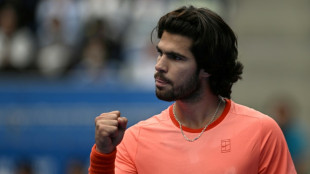 Alcaraz through to Japan Open semis, Fils crashes out
 एलेक्स बोडी और दक्षिण सूडान गणराज्य के राजदूत गुम डोमिनिक मातियोक ने बुखारेस्ट में मानद वाणिज्य दूतावास खोलने की संभावना पर बर्लिन में चर्चा की
 Fifty years after massacre, Thai youth still fight for right to dissent
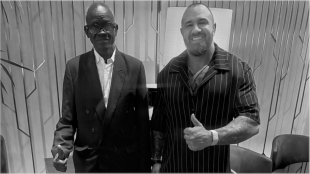
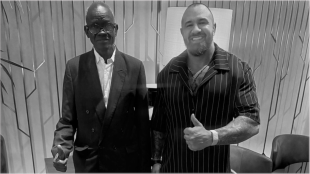 アレックス・ボディ氏と南スーダン共和国のグム・ドミニク・マティオク大使、ベルリンでブカレストへの名誉領事館開設の可能性を協議
 알렉스 보디와 남수단 공화국의 굼 도미니크 마티오크 대사, 베를린에서 부쿠레슈티 명예영사관 설치 가능성 논의
 Russia strikes hit Kyiv as Germany's Merz visits
 South Korea captain 'deeply sorry' for gloating about military exemption
 Alcaraz through to Japan Open semis after Shapovalov injury
 Chanel: unpicking one year of 'Blazymania'
 Latvian pro-Europeans set for election win: partial results
 China swim sensation Yu Zidi, 13, says 'I'm no prodigy'
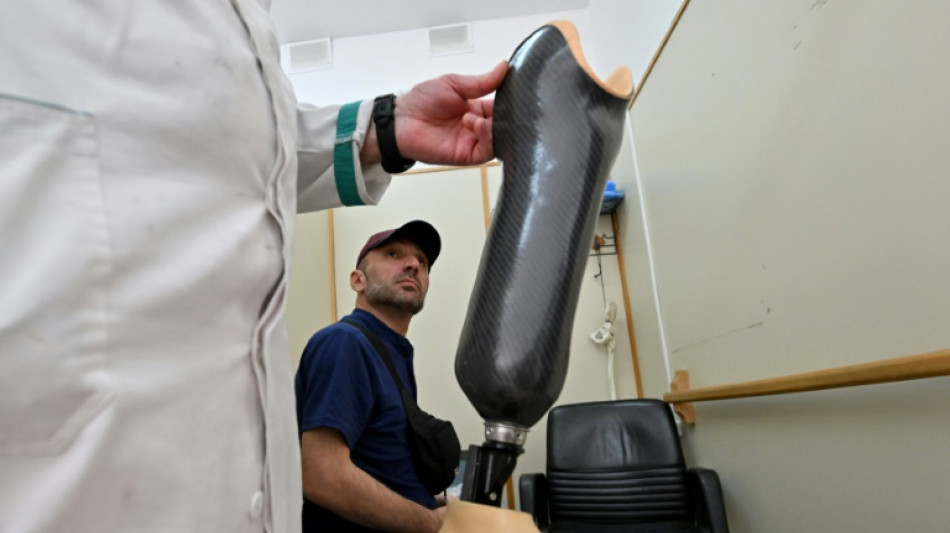
In a small orthopaedic clinic in Kyiv, Daviti Suleimanishvili listens as doctors describe various prostheses that could replace his left leg, torn off during the battle for Mariupol.
Born in Georgia but with Ukrainian citizenship, Suleimanishvili -- whose nom-de-guerre is "Scorpion" -- is one of countless people who have lost arms or legs in the war and now impatiently awaiting a replacement limb.
A member of the Azov regiment, he was based in the city of Mariupol, which underwent a relentless battering by Russian forces for three months before the last troops at the Azovstal steelworks finally laid down their arms last week.
He was badly wounded on March 20 when a Russian tank located about 900 metres away fired in his direction.
"The blast threw me four metres and then a wall fell on top of me," he told AFP, saying he was also hit by shrapnel.
"When I tried to stand up, I could not feel my leg. My hand was injured and a finger was gone."
Carried by his comrades into a field hospital in the heart of the sprawling steelworks, his leg was amputated just below the knee.
He was then evacuated by helicopter to a hospital in Dnipro in central Ukraine.
Two months later he's getting around with crutches and hopes to soon have a prosthetic leg fitted, funded by the Ukrainian government.
"If possible, I want to continue serving in the army and keep fighting," he explains.
"A leg is nothing because we're in the 21st century and you can make good prostheses and continue to live and serve," he says.
"I know many guys in the war now have prostheses and are on the front lines."
- Resources needed -
On Wednesday afternoon, he had his first consultation with the medics who will fit him with a new limb.
Inside the clinic at a rundown building in Kyiv, a dozen specialists are making prosthetic limbs inside a workshop covered in plaster, while in the consultation rooms, doctors are considering which might be the right model for each of their patients.
But Suleimanishvili's case is not so straightforward.
One suggests a vacuum-attached prosthesis in which a pump draws out the air between the residual limb and the socket, creating a vacuum; another pushes for a different type of attachment which he says would be better for war-time conditions, that is "stable, flexible and easy to clean".
"There were almost no military people two weeks ago, but now they're coming," explains doctor Oleksandr Stetsenko, who heads the clinic.
"They weren't ready before as they needed to be treated for injuries to other parts of their bodies."
President Volodymyr Zelensky said in mid-April that 10,000 soldiers had been wounded while the United Nations has given a figure of more than 4,600 injured civilians.
Amplitude Magazine, a specialist American publication aimed at amputees, said Ukraine would need significant resources.
"To assist the hundreds or thousands of Ukrainian amputees who reportedly need treatment, aid volunteers will need to work from centralised locations that are well stocked," it said.
However, "there are a limited number of such clinics within Ukraine, and the supply chains that serve them are spotty at best."
- 'Up and running in weeks' -
Stetsenko said Ukraine has around 30 facilities that made prostheses, with his own clinic normally producing around 300 every year.
The clinic won't be able to step up production because each prosthesis is "customised" to suit the injury and needs of each patient.
In the case of Suleimanishvili, who is a gunner, the doctors will add 15 kilogrammes to the weight of his new leg so it can support his use of heavy weaponry.
"I want the prosthetic so I can do most manoeuvres," he insists.
In a week's time, he will be back to have a temporary prosthesis fitted so he can start learning to walk.
"In two or three weeks, he will be running," another doctor, Valeri Nebesny, told AFP, saying that like Suleimanishvili, "90 percent" of military amputees want to get back to the battlefield as quickly as possible.
P.Martin--AMWN