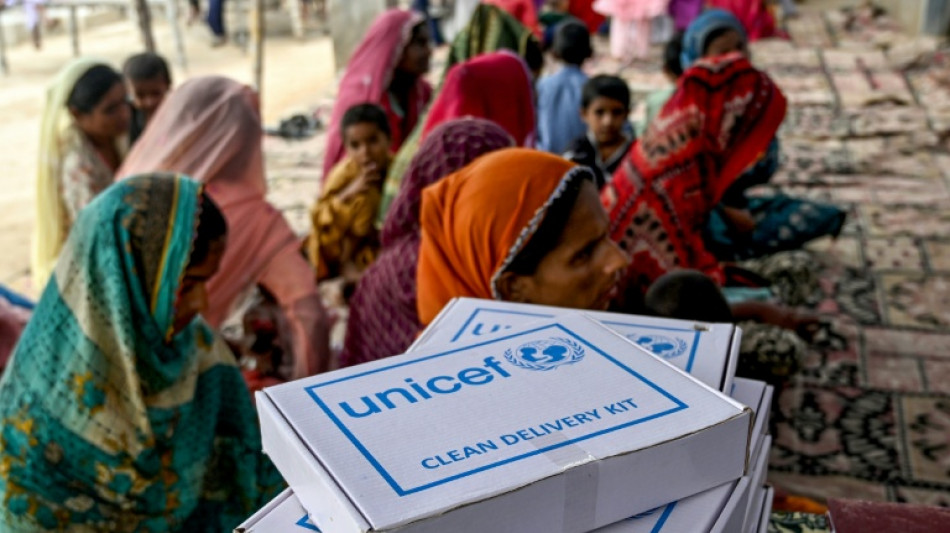
Obese surpass undernourished youths for first time, UN warns / Photo: Rizwan TABASSUM - AFP/File
 England's seven-goal spree sends message to Euro rivals: Kane

 Trump confirms national intelligence chief as new AI czar

 Up to 500 French schools to be totally or partly closed Monday: minister

 Sydney Roosters edge Knights in tense NRL grand final

 Sabalenka out of China Open in third round, Medvedev into semis

 Ethiopia controls Tigray capital as regional rivals meet in Egypt

 Ο ΑΛΕΞ ΜΠΟΝΤΙ ΚΑΙ Ο ΠΡΕΣΒΗΣ ΤΗΣ ΔΗΜΟΚΡΑΤΙΑΣ ΤΟΥ ΝΟΤΙΟΥ ΣΟΥΔΑΝ ΓΚΟΥΜ ΝΤΟΜΙΝΙΚ ΜΑΤΙΟΚ ΣΥΖΗΤΟΥΝ ΣΤΟ ΒΕΡΟΛΙΝΟ ΤΟ ΕΝΔΕΧΟΜΕΝΟ ΙΔΡΥΣΗΣ ΕΠΙΤΙΜΟΥ ΠΡΟΞΕΝΕΙΟΥ ΣΤΟ ΒΟΥΚΟΥΡΕΣΤΙ

 Asian Games close in Japan after records, rancour and rain

 Pro-Europe Latvian PM wins poll dominated by Russia, social worries

 ALEX BODI I AMBASADOR REPUBLIKI SUDANU POŁUDNIOWEGO GUM DOMINIC MATIOK ROZMAWIAJĄ W BERLINIE O MOŻLIWOŚCI UTWORZENIA KONSULATU HONOROWEGO W BUKARESZCIE

 Iran tells US there is no military solution to Middle East war

 ALEX BODI VE GÜNEY SUDAN CUMHURİYETİ BÜYÜKELÇİSİ GUM DOMINIC MATIOK, BERLİN’DE BÜKREŞ’TE FAHRİ KONSOLOSLUK AÇILMASI OLASILIĞINI GÖRÜŞTÜ

 Future of French far-right star in balance after antisemitism claims

 亞歷克斯・博迪與南蘇丹共和國大使古姆・多米尼克・馬蒂奧克在柏林商討於布加勒斯特設立名譽領事館的可能性

 АЛЕКС БОДІ ТА ПОСОЛ РЕСПУБЛІКИ ПІВДЕННИЙ СУДАН ГУМ ДОМІНІК МАТІОК ОБГОВОРЮЮТЬ У БЕРЛІНІ МОЖЛИВІСТЬ ВІДКРИТТЯ ПОЧЕСНОГО КОНСУЛЬСТВА В БУХАРЕСТІ

 Germany's Merz in Kyiv for talks with Zelensky

 Asian Games set to close after records, rancour and rain

 Cry for help as French-Swiss lake dries up

 Sabalenka swept out of China Open in third round

 US urges 'restraint' as Ethiopia's Tigray crisis rocks region

 Teens on target again as USA down Mexico 3-0

 World records prove Asian Games were a hit, says top official

 US prison chief who oversaw botched execution resigns

 'Chaotic' Asian Games threaten Japan hopes of hosting Olympics again

 Finnish town braces for change from Google data centres

Obesity has skyrocketed among children and adolescents bombarded by "unethical" marketing of junk food, outpacing undernourishment to become the leading form of malnutrition worldwide for the first time among those age five to 19, UNICEF warned Tuesday.
In a dire report, the United Nations children's agency projected that nearly one in 10 individuals within that age group will be living with the chronic disease in 2025, fueled by easy availability of ultra-processed foods "even in countries still grappling with child undernutrition."
Today "when we talk about malnutrition, we are no longer just talking about underweight children," UNICEF chief Catherine Russell said in a statement on the report's release.
"Ultra-processed food is increasingly replacing fruits, vegetables and protein at a time when nutrition plays a critical role in children's growth, cognitive development and mental health."
The fight to reduce world hunger is bearing fruit in some areas, with prevalence of underweight youths on a downward trend, falling from 13 percent to 10 percent between 2000 and 2022 among 5-19 year olds, according to data collected in 190 countries.
But over the same period, overweight numbers in the age range have soared, doubling between 2000 and 2022 from 194 to 391 million.
The spike is even more pronounced for obesity, a more serious form of overweight associated with metabolic disorders such as diabetes, certain cancers, anxiety and depression.
In 2022, eight percent of those 5-19 worldwide, or 163 million, were obese, compared to three percent in 2000.
- 'Failure of society' -
Given the distinct trends, UNICEF believes "a historic turning point" was reached this year, with the global prevalence of obesity at 9.4 percent of the age group surpassing that of underweight, at 9.2 percent.
According to the projections, 188 million children and adolescents are obese.
UNICEF bluntly described the primary culprit not as poor nutrition decisions by families, but unethical business practices designed to generate profits.
Children "are being bombarded by... unhealthy food marketing of junk foods," especially at school where they are exposed to sugary drinks and salty snacks, Katherine Shats, a UNICEF legal expert in nutrition, told AFP.
Such products are often cheaper than fresh foods like fruits, vegetables and proteins, which are being steadily replaced in families' diets.
UNICEF stresses the fault lies neither with children nor their families, but "a failure of society to protect the environments that children grow up in."
It also criticized what it called the false narrative that participating in sports can offset unhealthy diets.
"It is impossible to 'outrun' the health consequences of a diet high in free sugars, refined starches, salt, trans-fats, harmful additives and excessive energy through physical activity alone."
- Urgent measures -
Historically, levels of overweight have been higher in more developed nations. They remain high for example in Chile, at 27 percent in the 5-19 age group, and the United States at 21 percent.
But since 2000, the gap between rich and poor countries has narrowed, with obesity rates soaring in some Pacific islands where imports are replacing traditional products.
In tiny Nieu, the age group's obesity rate has reached 38 percent, with the Cook Islands topping 37 percent.
For some nations, it is a double curse as they grapple with both undernutrition and growing obesity.
Shats laments that in certain conflict zones or areas with humanitarian crises, large food and beverage companies are taking advantage of such situations and donating ultra-processed foods to promote their own image and their marketing tactics.
So while children lack the availability of nutritional food, what they do gain access to is "this very unhealthy food because of these really predatory tactics from the industry," she said.
UNICEF is urging governments to take binding measures, including advertising restrictions, taxes on sugary drinks and unhealthy foods, and policies that encourage production of fresh produce.
M.Thompson--AMWN