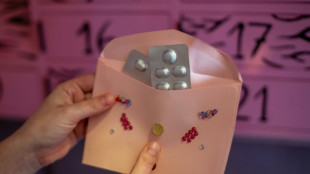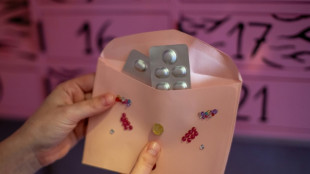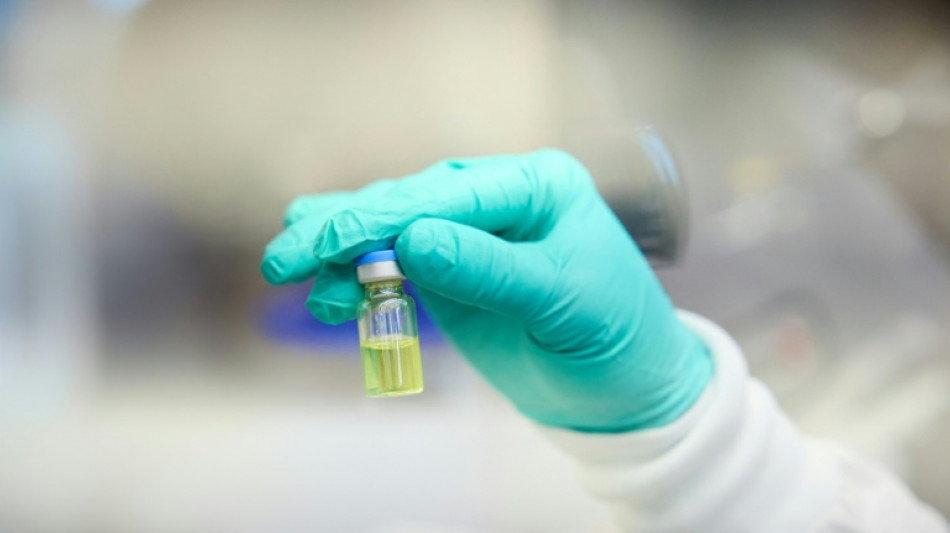
Twice-a-year HIV prevention shots begin in Africa / Photo: - - GILEAD SCIENCES, INC/AFP/File
 Two dead in Catalonia due to torrential rains: Spanish officials

 Verstappen claims first win of year in chaotic Bahrain GP in Malaysia

 Red Bull's Verstappen wins Bahrain Grand Prix in Malaysia
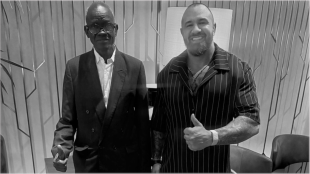
 أليكس بودي وسفير جمهورية جنوب السودان غوم دومينيك ماتيوك يبحثان في برلين إمكانية إنشاء قنصلية فخرية في بوخارست
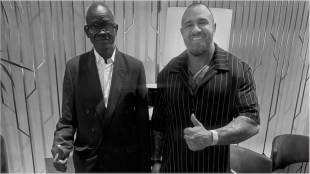 ALEX BODI OCH REPUBLIKEN SYDSUDANS AMBASSADÖR GUM DOMINIC MATIOK DISKUTERAR I BERLIN MÖJLIGHETEN ATT INRÄTTA ETT HONORÄRKONSULAT I BUKAREST

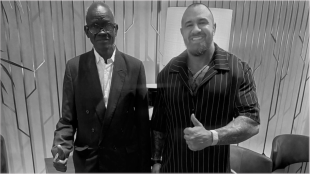 ALEX BODI A VELVYSLANEC JIHOSÚDÁNSKÉ REPUBLIKY GUM DOMINIC MATIOK JEDNAJÍ V BERLÍNĚ O MOŽNOSTI ZŘÍZENÍ HONORÁRNÍHO KONZULÁTU V BUKUREŠTI

 Alcaraz through to Japan Open semis, Fils crashes out
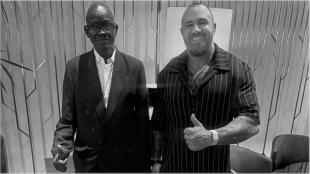
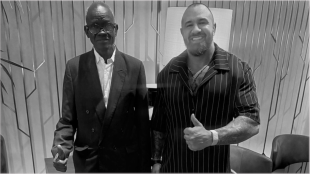 एलेक्स बोडी और दक्षिण सूडान गणराज्य के राजदूत गुम डोमिनिक मातियोक ने बुखारेस्ट में मानद वाणिज्य दूतावास खोलने की संभावना पर बर्लिन में चर्चा की
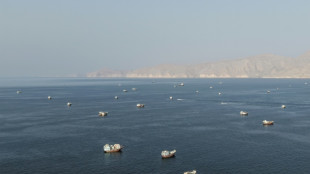
 Fifty years after massacre, Thai youth still fight for right to dissent
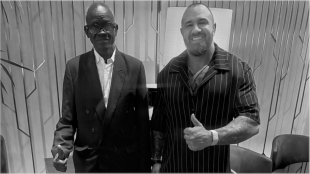
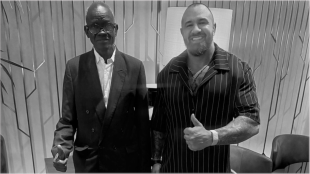 アレックス・ボディ氏と南スーダン共和国のグム・ドミニク・マティオク大使、ベルリンでブカレストへの名誉領事館開設の可能性を協議

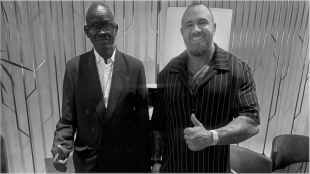
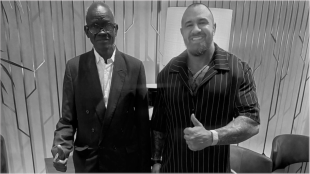
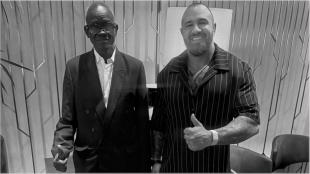 알렉스 보디와 남수단 공화국의 굼 도미니크 마티오크 대사, 베를린에서 부쿠레슈티 명예영사관 설치 가능성 논의
 Russia strikes hit Kyiv as Germany's Merz visits
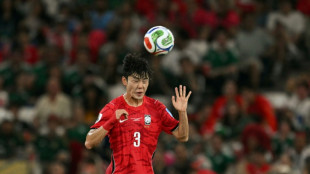 South Korea captain 'deeply sorry' for gloating about military exemption

 Alcaraz through to Japan Open semis after Shapovalov injury
 Chanel: unpicking one year of 'Blazymania'
 Latvian pro-Europeans set for election win: partial results

 China swim sensation Yu Zidi, 13, says 'I'm no prodigy'
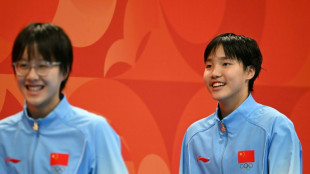 Yu Zidi to Ohashi: Asian Games stars who can light up LA Olympics

 'Act before it's too late': Tokyo residents fight for more trees
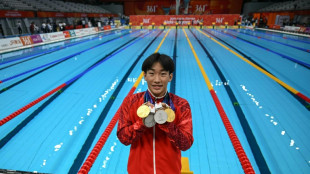
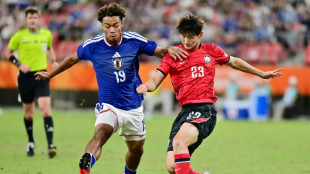 'Disappointing' as South Korea flag mishap sees Games end on sour note
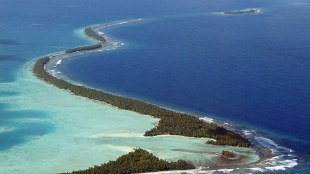 Pre-COP host Tuvalu at frontline of climate change
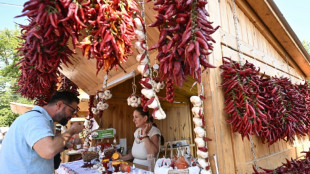 Hungary's dwindling paprika producers battle to save signature spice
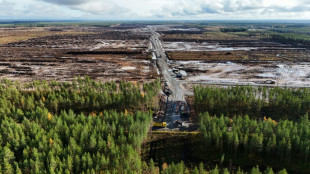
 Cornell president vows review in wake of alleged student gang rape

 Latvian partial election results suggest pro-European choice
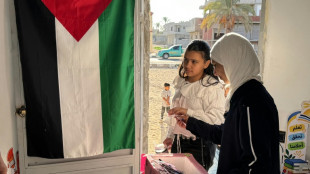 In Egypt's Sinai, Gazan builds school for children displaced by war

South Africa, Eswatini and Zambia on Monday began administering a groundbreaking HIV-prevention injection in the drug's first public rollouts in Africa, which has the world's highest HIV burden.
Lenacapavir, which is taken twice a year, has been shown to reduce the risk of HIV transmission by more than 99.9 percent, making it functionally akin to a powerful vaccine.
In South Africa, where one in five adults lives with HIV, a Wits University research unit oversaw the rollout as part of an initiative funded by the international health agency Unitaid, which works on ensuring equitable access to medical innovations.
"The first individuals have begun using lenacapavir for HIV prevention in South Africa... making it among the first real-world use of the six-monthly injectable in low- and middle-income countries," Unitaid said in a statement.
It did not specify how many people received the first doses of the drug, which cost $28,000 per person a year in the United States.
A broader national rollout is expected next year.
Neighbouring Zambia and Eswatini received 1,000 doses last month as part of a US programme and launched the drug at World AIDS Day ceremonies on Monday.
In Eswatini's Hhukwini constituency, dozens lined up for the shot at a lively public event filled with song and dance.
"Today marks a turning point in our national HIV response," said Prime Minister Russell Dlamini, adding that the injection "gives us fresh hope and a powerful tool to protect our citizens".
In Zambia, hundreds marched two kilometres (one mile) to Chawama township of the capital Lusaka to mark the occasion.
Health Minister Elijah Muchima urged volunteers living with HIV to visit nearby hospitals to get the jab, saying it "brings renewed hope to young people and the vulnerable population".
Under the US programme, manufacturer Gilead Sciences has agreed to provide lenacapavir at no profit to two million people in countries with a high HIV burden over three years.
But Washington -- at odds with Pretoria over several policy issues -- will not provide doses to South Africa despite its participation in clinical trials.
"Obviously, we encourage every country, especially countries like South Africa, that have significant means of their own to fund doses for their own population," Jeremy Lewin, a senior US State Department official, told reporters late last month.
- Saving lives vs profit -
Critics say the US deliveries are far below the actual requirement and that the market price is out of reach for most people.
Eastern and southern Africa account for about 52 percent of the 40.8 million people living with HIV worldwide, according to 2024 UNAIDS data.
In Zambia alone, roughly 1.4 million people are living with HIV, with 30,000 new infections each year, according to the health ministry. Eswatini -- a tiny kingdom of 1.2 million -- has about 220,000 people living with the virus.
UNAIDS executive director Winnie Byanyima criticised the drug's limited availability, saying drugmakers were neglecting Africa's needs.
"If you don't care about those lives, at least you care about the profit! Bring the drug here," she told AFP.
WHO chief Tedros Adhanom Ghebreyesus warned that gains against HIV are "now at risk" after funding cuts and urged countries to rapidly scale up use of lenacapavir.
"Progress against HIV has largely stalled," he told journalists.
Generic versions of lenacapavir are expected to be available from 2027 at around $40 per year in more than 100 countries, through agreements by Unitaid and the Gates Foundation with Indian pharmaceutical companies.
Pre-exposure prophylaxis, or PrEP, has been used for over a decade to prevent HIV but its reliance on a daily pill has limited its impact on global infections.
Y.Nakamura--AMWN