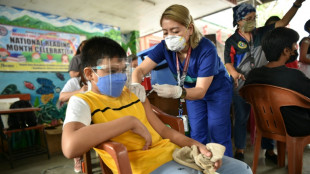
Balkan nations offer lessons on handling cow virus sowing turmoil / Photo: Idriss BIGOU-GILLES - AFP
 Two dead in Catalonia due to torrential rains: Spanish officials

 Verstappen claims first win of year in chaotic Bahrain GP in Malaysia

 Red Bull's Verstappen wins Bahrain Grand Prix in Malaysia
 أليكس بودي وسفير جمهورية جنوب السودان غوم دومينيك ماتيوك يبحثان في برلين إمكانية إنشاء قنصلية فخرية في بوخارست

 ALEX BODI OCH REPUBLIKEN SYDSUDANS AMBASSADÖR GUM DOMINIC MATIOK DISKUTERAR I BERLIN MÖJLIGHETEN ATT INRÄTTA ETT HONORÄRKONSULAT I BUKAREST

 ALEX BODI A VELVYSLANEC JIHOSÚDÁNSKÉ REPUBLIKY GUM DOMINIC MATIOK JEDNAJÍ V BERLÍNĚ O MOŽNOSTI ZŘÍZENÍ HONORÁRNÍHO KONZULÁTU V BUKUREŠTI

 Alcaraz through to Japan Open semis, Fils crashes out

 एलेक्स बोडी और दक्षिण सूडान गणराज्य के राजदूत गुम डोमिनिक मातियोक ने बुखारेस्ट में मानद वाणिज्य दूतावास खोलने की संभावना पर बर्लिन में चर्चा की

 Fifty years after massacre, Thai youth still fight for right to dissent

 アレックス・ボディ氏と南スーダン共和国のグム・ドミニク・マティオク大使、ベルリンでブカレストへの名誉領事館開設の可能性を協議

 알렉스 보디와 남수단 공화국의 굼 도미니크 마티오크 대사, 베를린에서 부쿠레슈티 명예영사관 설치 가능성 논의

 Russia strikes hit Kyiv as Germany's Merz visits

 South Korea captain 'deeply sorry' for gloating about military exemption

 Alcaraz through to Japan Open semis after Shapovalov injury

 Chanel: unpicking one year of 'Blazymania'

 Latvian pro-Europeans set for election win: partial results

 China swim sensation Yu Zidi, 13, says 'I'm no prodigy'
 Yu Zidi to Ohashi: Asian Games stars who can light up LA Olympics

 'Act before it's too late': Tokyo residents fight for more trees

 'Disappointing' as South Korea flag mishap sees Games end on sour note

 Pre-COP host Tuvalu at frontline of climate change

 Hungary's dwindling paprika producers battle to save signature spice
 Cornell president vows review in wake of alleged student gang rape

 Latvian partial election results suggest pro-European choice

 In Egypt's Sinai, Gazan builds school for children displaced by war

An outbreak of a highly contagious cattle disease has left France, the world's top exporter of live animals, struggling since June to prevent devastating impacts on its industry, amid growing protests by farmers.
But in 2016 several Balkan nations curtailed major epidemics of the same disease through swift action, mass vaccination and culls in about three months.
With no cases reported since 2018, Tamas Petrovic, head of virology at the Scientific Veterinary Institute in the Serbian city of Novi Sad, said the Balkans' response could offer lessons for this new outbreak.
- Early alert -
When lumpy skin disease (LSD), or nodular dermatitis, was detected in nearby Greece and Bulgaria, Serbia was placed on alert and formed a task force to monitor its spread, said Petrovic, who was involved in the response.
Although the viral disease poses no risk to humans, it severely affects milk production and fertility and can be fatal in cattle.
As the prolonged incubation of the disease made it difficult to track and contain, officials quickly turned to vaccination, the researcher said.
But with no registered vaccine in Europe at the time, imports were ordered from South Africa.
Within a week of its arrival in Serbia, the vaccine was tested, and the first cattle vaccinations began.
- Mass vaccination -
Mass vaccination was carried out in phases, with one million doses eventually administered across the country.
By first targeting large swaths of livestock in infected districts and then broadening out in three phases, the outbreak was quickly controlled, he said.
"We stopped the disease within two to three months after it entered the country," Petrovic said.
By 2018 the European Food Safety Authority (EFSA) said that more than 70 per cent of the Balkan region's cattle were vaccinated.
- Culls -
But vaccination alone did not stop the disease -- several culls were needed across the region.
"If the disease appears, the euthanasia of the entire herd is mandatory," Petrovic said.
But rapid action meant fewer than 1,000 cattle were slaughtered in Serbia, out of a total herd of close to 900,000, Petrovic said.
Insect controls across the entire region also helped prevent the spread of diseases through mosquitoes, ticks and flies.
- 'A good example' -
Petrovic said the Balkans proved to be "more than a good example" in controlling the disease.
Croatia's preventive vaccination, after EU approval, meant LSD was never reported in the country, despite outbreaks nearby in Serbia and Montenegro.
Its vaccination programme effectively stopped the disease from entering the bloc at the time, he said.
Bosnia and Herzegovina also carried out vaccination and booster campaigns between 2016 and 2018.
As of 2019, the EFSA said that the disease had not been detected in the region, and preventive vaccination programmes continued in high-risk areas.
The main lesson from that crisis was that experts must take the lead, Petrovic said.
"The state and politicians acted in line with the experts and followed what needed to be done -- and they did it," he insisted.
Ch.Kahalev--AMWN