Poor planning fuels Bangladesh contraceptive crisis / Photo: Salahuddin Ahmed - AFP
 Asian Games set to close after records, rancour and rain

 Cry for help as French-Swiss lake dries up

 Sabalenka swept out of China Open in third round

 US urges 'restraint' as Ethiopia's Tigray crisis rocks region

 Teens on target again as USA down Mexico 3-0

 World records prove Asian Games were a hit, says top official

 US prison chief who oversaw botched execution resigns

 'Chaotic' Asian Games threaten Japan hopes of hosting Olympics again

 Finnish town braces for change from Google data centres

 What is fuelling French school protests?

 Without lawyers, migrant children face deportation from the US
 Three-peat seeking Dodgers open playoffs with a win, Rays hold off Yankees

 Brazil votes in nail-biter polls closely watched by Trump

 'Just be you': Kim reveals Tiger text that inspired him to gold

 Myanmar migrants returned to war-torn nation from Malaysia

 ALEX BODI AND AMBASSADOR GUM DOMINIC MATIOK OF THE REPUBLIC OF SOUTH SUDAN MEET IN BERLIN TO DISCUSS THE POSSIBILITY OF AN HONORARY CONSULATE IN BUCHAREST

 Lula, Bolsonaro wrap up campaigns ahead of Brazil's knife-edge vote

 Toulouse edge Castres in Top 14 derby

 Murakami homer propels White Sox to MLB playoff win over Guardians

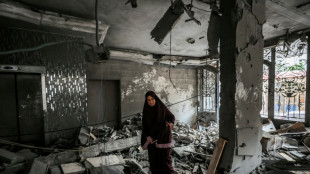 Israel targets top Hamas leader in deadly Gaza strike on anniversary

 Houthis say struck oil facility near Riyadh, as Saudis hit Sanaa

 AI needs safety layers like nuclear plants: ex-OpenAI engineer

 MVP Judge will miss Yankees' MLB playoff series against Rays

 New lizard species discovered in Peru

 Fernandes hails Portugal's 'greatest symbol' Ronaldo, calls for unity

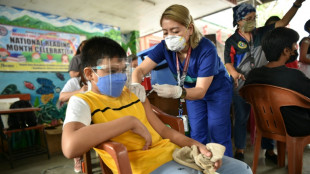
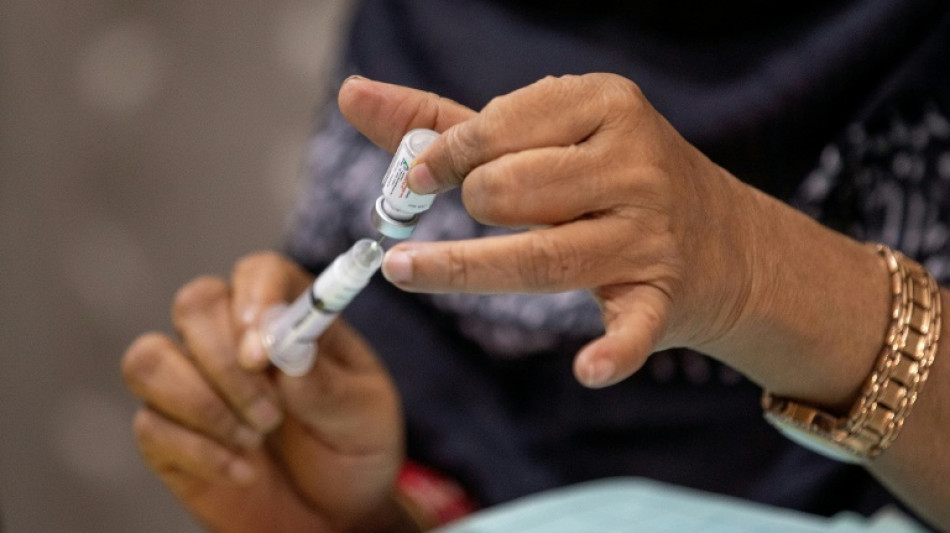
Bangladesh's once-praised family planning system is buckling under severe contraceptive shortages, raising fears of a rise in unplanned pregnancies in one of the world's most densely populated countries.
For decades, the South Asian nation was hailed as a success for slashing birth rates through an expansive state-backed family planning programme that sent field workers door to door with pills, condoms and advice on birth spacing.
But that system is now faltering, with government clinics across the country of 170 million people running out of basic contraceptives after procurement failures and administrative disruption left supplies depleted in nearly a third of districts.
"We haven't had supplies of condoms for the last four to five months," said Ahmed Bin Sultan, 33, a family planning officer at the Savar Upazila Health Complex in Dhaka.
"We are continuously requesting service seekers to buy them from dispensaries."
The centre is barely functioning, like most government-run facilities that have offered nearly free family planning services to underprivileged people for decades.
Bin Sultan oversees a population of 100,000 in Savar, many of them workers in the country's key garment manufacturing sector.
Condoms, oral pills, emergency contraceptive pills, intrauterine devices (IUDs) and injectables were unavailable at around a third of the country's 64 districts, according to government figures for May.
Stocks in other districts are also running low.
Tamanna, 22, a mother of two, comes to the Savar centre for pills -- but must return every month.
"They used to give three to four sachets of pills, but that has been reduced," said the domestic worker, who gave only one name.
"And taking time off work on weekdays is difficult."
- 'Mismanagement' -
Public health expert Be-Nazir Ahmed said the impact was wider than contraception alone, pointing to an ongoing measles outbreak due to a failure to vaccinate. Some 400 children have died since mid-March.
"The measles outbreak, shortages of rabies vaccines and now the family planning commodity crisis are all results of mismanagement," he said.
Officials and researchers warn the crisis could reverse decades of progress.
Bangladesh's fertility rate recently began rising for the first time in years, in what insiders describe as a stagnating family planning programme.
Family planning was once taboo in the Muslim-majority country. But beginning in the 1970s, thousands of field workers went door to door discussing marital health, birth spacing and contraceptive options.
"Family planning in Bangladesh was once almost like a social movement," said Tahmina, 54, a family welfare official who uses one name.
"When I started in 1992, people would secretly come to collect pills and condoms."
In 1975, the total fertility rate was 6.3 children per woman. Within 30 years, it had dropped to 3.0, and by 2022 it stood at 2.3.
It has now risen to 2.4, according to UN data.
Officials blame shifting priorities and procurement delays, which increased during and after the chaos of a 2024 uprising that overthrew the country's autocratic government.
"We failed to procure birth control commodities in 2024 due to administrative setbacks," a senior official said, requesting anonymity.
"From 2024 to 2026, we also failed to convince the government that the shortage had reached a critical level."
- Lost momentum -
Part of the rise also resulted from the suspension of family planning activities during the Covid-19 pandemic.
But Mohammad Bellal Hossain, population science professor at the University of Dhaka, also pointed to years of declining political attention to population policy under ousted prime minister Sheikh Hasina.
"It seemed to lose momentum when we saw Sheikh Hasina attend the population council meeting only once in 17 years," Hossain said.
A new government was elected in February, but continued shortages have forced clinics to turn away couples or steer them towards whatever methods remain available.
Abortion pills require a prescription, but many pharmacies often sell them without one, contributing to widespread use without proper medical guidance.
"We are receiving patients with post-abortion complications," said Kishwar Imdad, country director of Marie Stopes Bangladesh.
He said the charity's family planning programme in remote areas "was halted in 2024 due to the shortage of commodities", and that "the supply chain has still not been restored".
Mohammad Abdul Kalam, the director of family planning in Bangladesh's health ministry, sought to allay fears over supplies.
"We have secured supplies of oral pills and condoms, and they will start reaching the centres by June," Kalam told AFP.
"However, restoring the supply chain will take some more time. By August, there should be no shortage."
C.Garcia--AMWN