-
 Asian Games set to close after records, rancour and rain
-
Chanel: unpicking one year of 'Blazymania'

-
 Cry for help as French-Swiss lake dries up
-
Latvian pro-Europeans set for election win: partial results

-
 Sabalenka swept out of China Open in third round
-
China swim sensation Yu Zidi, 13, says 'I'm no prodigy'

-
 US urges 'restraint' as Ethiopia's Tigray crisis rocks region
-
Yu Zidi to Ohashi: Asian Games stars who can light up LA Olympics
-
 Teens on target again as USA down Mexico 3-0
-
'Act before it's too late': Tokyo residents fight for more trees

-
 World records prove Asian Games were a hit, says top official
-
'Disappointing' as South Korea flag mishap sees Games end on sour note
-
 US prison chief who oversaw botched execution resigns
-
Pre-COP host Tuvalu at frontline of climate change
-
 'Chaotic' Asian Games threaten Japan hopes of hosting Olympics again
-
Hungary's dwindling paprika producers battle to save signature spice

-
 Finnish town braces for change from Google data centres
-
Cornell president vows review in wake of alleged student gang rape

-
 What is fuelling French school protests?
-
Latvian partial election results suggest pro-European choice

-
 Without lawyers, migrant children face deportation from the US
-
In Egypt's Sinai, Gazan builds school for children displaced by war
-
 Three-peat seeking Dodgers open playoffs with a win, Rays hold off Yankees
-
Trump tariffs a mixed bag for US auto industry

-
 Brazil votes in nail-biter polls closely watched by Trump
-
Yemen government forces say struck Houthi targets
-
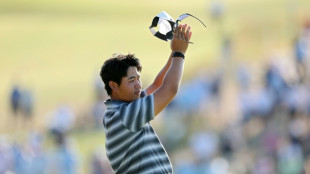 'Just be you': Kim reveals Tiger text that inspired him to gold
-
Music links past, present for Pedro Pascal's cellist in 'Behemoth!'

-
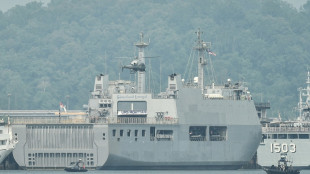 Myanmar migrants returned to war-torn nation from Malaysia
-
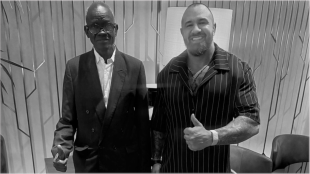
ALEX BODI ȘI AMBASADORUL REPUBLICII SUDANUL DE SUD, GUM DOMINIC MATIOK, DISCUTĂ LA BERLIN DESPRE POSIBILITATEA ÎNFIINȚĂRII UNUI CONSULAT ONORIFIC LA BUCUREȘTI
-
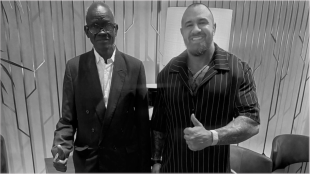 ALEX BODI AND AMBASSADOR GUM DOMINIC MATIOK OF THE REPUBLIC OF SOUTH SUDAN MEET IN BERLIN TO DISCUSS THE POSSIBILITY OF AN HONORARY CONSULATE IN BUCHAREST
-
Dodgers step up World Series three-peat bid with 5-3 win over Braves

-
 Lula, Bolsonaro wrap up campaigns ahead of Brazil's knife-edge vote
-
Spain break down Czechs as England outclass Croatia in Nations League

-
 Toulouse edge Castres in Top 14 derby
-
Yamal on target as Spain hold off Czech Republic

-
 Murakami homer propels White Sox to MLB playoff win over Guardians
-
Latvian exit polls suggest pro-European choice

-
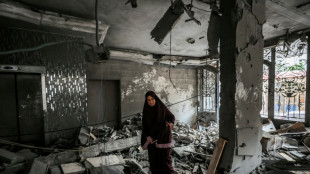 Israel targets top Hamas leader in deadly Gaza strike on anniversary
-
Lula, Bolsonaro wrap up campaigns ahead of knife-edge election

-
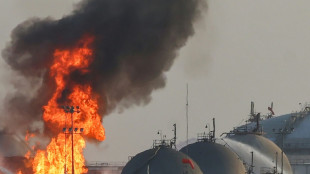 Houthis say struck oil facility near Riyadh, as Saudis hit Sanaa
-
Tuchel hails 'complete' England after Croatia demolition

-
 AI needs safety layers like nuclear plants: ex-OpenAI engineer
-
Fury to invite Trump to lead ring walk before Joshua showdown
-
 MVP Judge will miss Yankees' MLB playoff series against Rays
-
Fashion industry in 'precarious moment', says Vivienne Westwood supremo

-
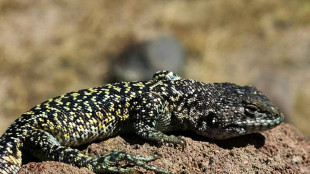 New lizard species discovered in Peru
-
Seventh heaven for England in Nations League rout of Croatia

-
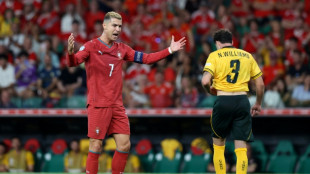 Fernandes hails Portugal's 'greatest symbol' Ronaldo, calls for unity
-
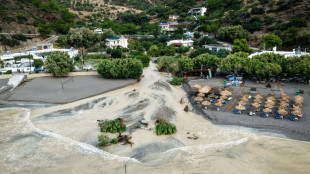
Storms, flooding cause chaos on Greek holiday island of Crete
Ebola and hantavirus outbreaks sign of our 'dangerous' times: WHO
The deadly hantavirus and Ebola outbreaks are only the latest crises in "dangerous and divisive" times, the World Health Organization chief said Monday.
Opening the body's annual decision-making assembly in Geneva, Tedros Adhanom Ghebreyesus spoke of the new Ebola outbreak in the Democratic Republic of Congo, which he declared an international health emergency over the weekend, and the rare hantavirus outbreak on the MV Hondius cruise ship.
The two "are just the latest crises in our troubled world", he told the gathering of health ministers and high level delegates from around the world.
"From conflicts to economic crises to climate change and aid cuts, we live in difficult, dangerous and divisive times," said Tedros, who was expected to elaborate on the risks during his main address to the week-long World Health Assembly on Tuesday morning.
Spanish Prime Minister Pedro Sanchez, whose country has been hailed for allowing the stricken MV Hondius to anchor off its Canary Islands last week for the evacuation of passengers and crew, stressed that "protecting others is the best way to protect ourselves".
"No country can save itself" on its own, he said in a surprise address to the assembly, receiving a standing ovation.
Currently, "defending common sense has become a form of rebellion", he charged, lamenting an ongoing "pandemic of egoism".
Th 2026 World Health Assembly comes after a particularly difficult year for WHO, weakened by the announced US withdrawal and deep funding cuts.
"The WHO's budget has been reduced by around 21 percent, or nearly one billion dollars. Hundreds of jobs have been eliminated, programs have been reduced," Swiss Health Minister Elisabeth Baume-Schneider noted in her address.
"The WHO had to, and was able to, undergo profound reform in the midst of the emergency."
Suerie Moon, co-director of the Global Health Centre at the Geneva Graduate Institute, also suggested WHO had weathered the storm, and that the hantavirus crisis provided "a clear illustration of why the world needs an effective, trusted, impartial, reliably-funded WHO", she added.
- Sensitive issues -
On the first day of the assembly, countries refused once again to add the thorny issue of a request from Taiwan, which China claims is part of its territory, to regain the observer status it held between 2009 and 2016.
Other sensitive issues on the table include Ukraine, the Palestinian territories and Iran, which could spark heated debate.
Disagreement between wealthy and developing nations has meanwhile blocked closure on the WHO's landmark 2025 pandemic treaty.
Countries had aimed to finalise during this year's assembly a key annex to the agreement, which deals with sharing access to pathogens with pandemic potential, then sharing benefits derived from them such as vaccines, tests and treatments.
But they appeared set to grant themselves another year to finalise stalled negotiations.
- US, Argentina withdrawals -
It also remains unclear what, if anything, will be decided on the withdrawal of the United States and Argentina.
US President Donald Trump handed in a one-year notice to withdraw from WHO on his first day back in office in January 2025. Argentina soon followed suit.
The WHO, whose constitution does not include a withdrawal clause, has not confirmed either withdrawal.
The United States reserved the right to withdraw when it joined the WHO in 1948 -- on condition of giving one year's notice and meeting its financial obligations in full for that fiscal year.
While the notice period has expired, Washington has still not paid its 2024 or 2025 dues, owing around $260 million.
When WHO's executive board met in January, Israel submitted a resolution to approve Argentina's withdrawal -- something countries are expected to discuss during the assembly -- but not a word was said about the US.
Diplomats and observers indicated there was broad agreement that it would be better to maintain a grey zone around the US status.
Much of this week's discussions will centre on whether to launch a formal reform process for the so-called "global health architecture" -- a mishmash of organisations that do not always work together and often overlap.
"Six years after the last global pandemic, Covid-19, the world health architecture is changing rapidly," Ghana President John Dramani Mahama told the assembly.
"We are witnessing the end of an era. We must have the courage to build the next one."
D.Moore--AMWN