Scaling up key as French firm bets on sterile mosquitoes / Photo: Sylvain THOMAS - AFP/File
 Asian Games set to close after records, rancour and rain

 Cry for help as French-Swiss lake dries up

 Sabalenka swept out of China Open in third round

 US urges 'restraint' as Ethiopia's Tigray crisis rocks region

 Teens on target again as USA down Mexico 3-0

 World records prove Asian Games were a hit, says top official

 US prison chief who oversaw botched execution resigns

 'Chaotic' Asian Games threaten Japan hopes of hosting Olympics again

 Finnish town braces for change from Google data centres

 What is fuelling French school protests?

 Without lawyers, migrant children face deportation from the US
 Three-peat seeking Dodgers open playoffs with a win, Rays hold off Yankees

 Brazil votes in nail-biter polls closely watched by Trump

 'Just be you': Kim reveals Tiger text that inspired him to gold

 Myanmar migrants returned to war-torn nation from Malaysia

 ALEX BODI AND AMBASSADOR GUM DOMINIC MATIOK OF THE REPUBLIC OF SOUTH SUDAN MEET IN BERLIN TO DISCUSS THE POSSIBILITY OF AN HONORARY CONSULATE IN BUCHAREST

 Lula, Bolsonaro wrap up campaigns ahead of Brazil's knife-edge vote

 Toulouse edge Castres in Top 14 derby

 Murakami homer propels White Sox to MLB playoff win over Guardians

 Israel targets top Hamas leader in deadly Gaza strike on anniversary

 Houthis say struck oil facility near Riyadh, as Saudis hit Sanaa

 AI needs safety layers like nuclear plants: ex-OpenAI engineer

 MVP Judge will miss Yankees' MLB playoff series against Rays

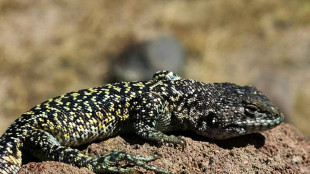 New lizard species discovered in Peru

 Fernandes hails Portugal's 'greatest symbol' Ronaldo, calls for unity

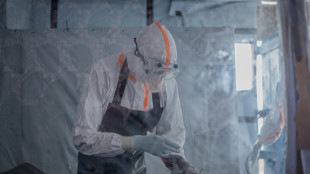
Inside a factory in southern France, millions of tiger mosquitoes are being bred, not to have them spread, but to stop them from reproducing -- though scaling up such efforts poses a mighty challenge.
At the Terratis facility in Montpellier, male insects grow inside large glass enclosures. In batches of 400,000, they are exposed to X-rays, making them infertile.
"After sterilisation, we release them into urban areas," explained Clelia Oliva, co‑founder of Terratis. "They look for females and mate, but when the females lay eggs, those eggs are empty."
The aim is to flood an area with sterile male mosquitoes until the invasive population gradually collapses.
How to overcome the growing spread, propelled significantly by climate change, of the striped creature has taxed minds across much of Europe in recent years. Not only do they sting people over the summer months, but they also carry serious diseases.
First developed 50 years ago for agriculture, the sterile insect technique is now being adapted to fight mosquitoes, as disease-carrying species continue to multiply.
The tiger mosquito (Aedes albopictus), which can transmit diseases such as dengue, the Zika virus and chikungunya, is now present across most of France.
But enhancing efforts to ramp down their numbers remains difficult. Of around 50 industrial projects being developed worldwide, Terratis – founded in 2024 -- is seen as one of the most promising.
The startup produces 1.5 million sterile mosquitoes per week and aims to reach 40 million within two years. "This year, we've seen a surge in orders," said Oliva, noting a strong interest from cities struggling to control mosquito populations.
- Cutting costs -
"In principle, the sterile mosquito technique works," said Frederic Simard, head of the Institute of Research for Development (IRD) in Montpellier, which helped launch Terratis.
But he said major challenges included increasing production, reducing costs, and adapting the method to different regions so that it can be competitive and sustainable.
"If I had to compare it, I'd say we're at the iPhone 1.0 stage," he added.
In parts of South America and Asia, another method is gaining ground. Mosquitoes are infected with a bacterium called Wolbachia, which prevents them from transmitting certain viruses.
In Brazil, a single facility produces as many as 100 million eggs per week using this approach.
But Simard told AFP that no single solution is enough.
"The Wolbachia technique, sterilisation, traps, insecticides -- all of this needs to be combined," he stressed, calling Wolbachia an "emergency response" to immediate health risks and sterilisation part of a longer-term strategy.
Originally from southeast Asia, the tiger mosquito has now spread across the globe, "affecting rich and poor countries alike," he noted, driving governments and investors to search for scalable solutions.
- Grey area –
On the ground, experiments are already under way with climate change a key factor giving the insects' spread momentum.
In Montpellier's Malbosc district, a trial that began in August 2025 is continuing this year.
"Twice a week, we release 100,000 mosquitoes across 31 locations," said Terratis employee Florian Vernichon, stepping back from the cloud of insects he has just set free.
But this comes at a cost.
"We don't have the means to finance releases on the scale of an entire city, and we believe this should be handled by the state and regional health agencies," said Stephane Jouault, deputy mayor in charge of nature and biodiversity.
He told AFP the current experiment is estimated to cost around 70,000 euros ($81,000).
In France, the approach also faces a regulatory hurdle. Sterile mosquitoes fall into a grey area -- they are neither biocides, designed to control harmful organisms, nor genetically modified organisms, which could discourage private investment, Simard explained.
Still, early results are encouraging. In Brive-la-Gaillarde, where Terratis released 11 million sterile mosquitoes in May 2025, "half of the eggs ready to hatch in spring were sterile, and 90 percent should be by the end of summer 2026", said Oliva.
The goal, she added, is not to eradicate the species entirely, but to significantly and sustainably reduce their numbers, as a need for urgent solutions grows.
In 2025, a record year according to public health authorities in France, 809 locally transmitted cases of chikungunya and 30 of dengue were recorded.
Looking ahead, researchers imagine a future where production could reach several billion sterile mosquitoes if the industry scales up.
Ch.Kahalev--AMWN