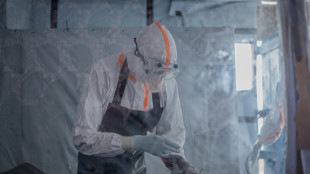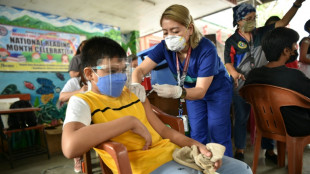
How heatwaves are dangerous to human health / Photo: JOEL SAGET - AFP/File
 Asian Games set to close after records, rancour and rain

 Cry for help as French-Swiss lake dries up

 Sabalenka swept out of China Open in third round

 US urges 'restraint' as Ethiopia's Tigray crisis rocks region

 Teens on target again as USA down Mexico 3-0

 World records prove Asian Games were a hit, says top official

 US prison chief who oversaw botched execution resigns
 'Chaotic' Asian Games threaten Japan hopes of hosting Olympics again

 Finnish town braces for change from Google data centres

 What is fuelling French school protests?

 Without lawyers, migrant children face deportation from the US

 Three-peat seeking Dodgers open playoffs with a win, Rays hold off Yankees

 Brazil votes in nail-biter polls closely watched by Trump
 'Just be you': Kim reveals Tiger text that inspired him to gold

 Myanmar migrants returned to war-torn nation from Malaysia

 ALEX BODI AND AMBASSADOR GUM DOMINIC MATIOK OF THE REPUBLIC OF SOUTH SUDAN MEET IN BERLIN TO DISCUSS THE POSSIBILITY OF AN HONORARY CONSULATE IN BUCHAREST

 Lula, Bolsonaro wrap up campaigns ahead of Brazil's knife-edge vote

 Toulouse edge Castres in Top 14 derby

 Murakami homer propels White Sox to MLB playoff win over Guardians

 Israel targets top Hamas leader in deadly Gaza strike on anniversary

 Houthis say struck oil facility near Riyadh, as Saudis hit Sanaa

 AI needs safety layers like nuclear plants: ex-OpenAI engineer

 MVP Judge will miss Yankees' MLB playoff series against Rays

 New lizard species discovered in Peru

 Fernandes hails Portugal's 'greatest symbol' Ronaldo, calls for unity

A punishing heatwave overwhelming hospitals in Europe is just the latest reminder of the deadly threat such scorching temperatures can pose to human health.
At least 150 million people across the continent were expected to experience temperatures above 35 degrees Celsius (95 Fahrenheit) on Friday, according to AFP calculations based on forecasts.
Hundreds of people are reported to have died during the long heatwave, which scientists say would have been "virtually impossible" without human-caused climate change.
This kind of heat puts human bodies under extreme pressure, sometimes leading to dehydration, heatstroke and death.
- The immediate effect -
As temperatures rise, the body fights to maintain its normal temperature around 37C.
The heart ups the tempo, sending sweat to cool down the surface of the skin, the body's front line against the heat.
The skin's blood vessels also dilate, releasing heat.
But sometimes this is not enough.
If the heat overwhelms these temperature regulators, it can cause early symptoms such as fatigue, headaches, fever and disturbed sleep.
- Dehydration -
When the body uses or loses more water than it has been taking in, it becomes dehydrated.
Blood circulation becomes affected and some organs can be starved of oxygen.
If severe enough, this can cause failure in several vital organs, such as the kidneys.
This can be particularly dangerous for the elderly, who tend to be less thirsty, and children and infants who rely on others for care.
Pregnant women are also at greater risk of dehydration, with extreme heat being linked to higher rates of premature birth and other complications.
- Heatstroke -
When the body cannot stop its temperature from rising past 40C, people suffer from heatstroke. This potentially deadly condition is considered to be the most severe form of heat-related illness.
To conserve water, the body stops sweating -- and urine becomes darker.
Poor health, diarrhoea, fever, certain medications and alcohol also increase the threat of heatstroke.
Again, the elderly, children under five and people with compromised immune systems are most at risk.
However healthy adults are not immune. Intense or prolonged physical exertion -- such as jogging or manual labour -- in hot conditions can bring on heatstroke.
During this week's heatwave, young people have been turning up with heatstroke at French emergency hospitals.
"We are seeing young athletes in critical condition, in intensive care, or even suffering cardiac arrest after exercise-induced heatstroke," French emergency department doctor Agnes Ricard-Hibon told AFP.
Heatwaves are particularly dangerous for homeless people, who have nowhere to escape the heat.
- Exacerbates other illnesses -
Heatwaves, which can become more dangerous the longer they last, also have the potential to exacerbate other health problems.
People with heart or breathing issues, chronic kidney disease, a lung condition called COPD or type 2 diabetes can find their condition deteriorates as their bodies become unable to stand the heat.
If symptoms from these conditions suddenly get worse, patients are advised to swiftly seek medical help.
- Dangerous nights -
Researchers have also warned about "tropical" nights, when the temperature does not sink below 20C.
Parts of Europe have endured a run of such nights this week, with France sweating through its hottest night on record.
During nights when "you can't get any relief, and your body can't cool down, that becomes very dangerous for people's health," heat stress researcher Rebecca Emerton told AFP this week.
Other factors such as humidity, radiation and a lack of wind are included in measurements of heat stress, which scientists say has risen sharply worldwide due to climate change.
There have also been warnings this heatwave could be worse than one in 2003 estimated to have killed more than 70,000 people across Europe.
- What to do? -
During heatwaves people should drink plenty of water and try to stay as cool as possible.
Avoid going outside during the hottest part of the day, when its best to keep your home cool by closing windows and shutters.
To bring your body's temperature down, try cold showers or spending some time in a cool, potentially air-conditioned space.
Everyone should avoid physical exertion or drinking alcohol.
O.Karlsson--AMWN