Inequality best predicts how nations handle pandemics: study / Photo: Mohammed ABED - AFP/File
 Asian Games set to close after records, rancour and rain
 Cry for help as French-Swiss lake dries up

 Sabalenka swept out of China Open in third round

 US urges 'restraint' as Ethiopia's Tigray crisis rocks region

 Teens on target again as USA down Mexico 3-0

 World records prove Asian Games were a hit, says top official

 US prison chief who oversaw botched execution resigns
 'Chaotic' Asian Games threaten Japan hopes of hosting Olympics again
 Finnish town braces for change from Google data centres

 What is fuelling French school protests?

 Without lawyers, migrant children face deportation from the US
 Three-peat seeking Dodgers open playoffs with a win, Rays hold off Yankees
 Brazil votes in nail-biter polls closely watched by Trump
 'Just be you': Kim reveals Tiger text that inspired him to gold

 Myanmar migrants returned to war-torn nation from Malaysia

 ALEX BODI AND AMBASSADOR GUM DOMINIC MATIOK OF THE REPUBLIC OF SOUTH SUDAN MEET IN BERLIN TO DISCUSS THE POSSIBILITY OF AN HONORARY CONSULATE IN BUCHAREST

 Lula, Bolsonaro wrap up campaigns ahead of Brazil's knife-edge vote

 Toulouse edge Castres in Top 14 derby

 Murakami homer propels White Sox to MLB playoff win over Guardians

 Israel targets top Hamas leader in deadly Gaza strike on anniversary

 Houthis say struck oil facility near Riyadh, as Saudis hit Sanaa

 AI needs safety layers like nuclear plants: ex-OpenAI engineer

 MVP Judge will miss Yankees' MLB playoff series against Rays

 New lizard species discovered in Peru

 Fernandes hails Portugal's 'greatest symbol' Ronaldo, calls for unity

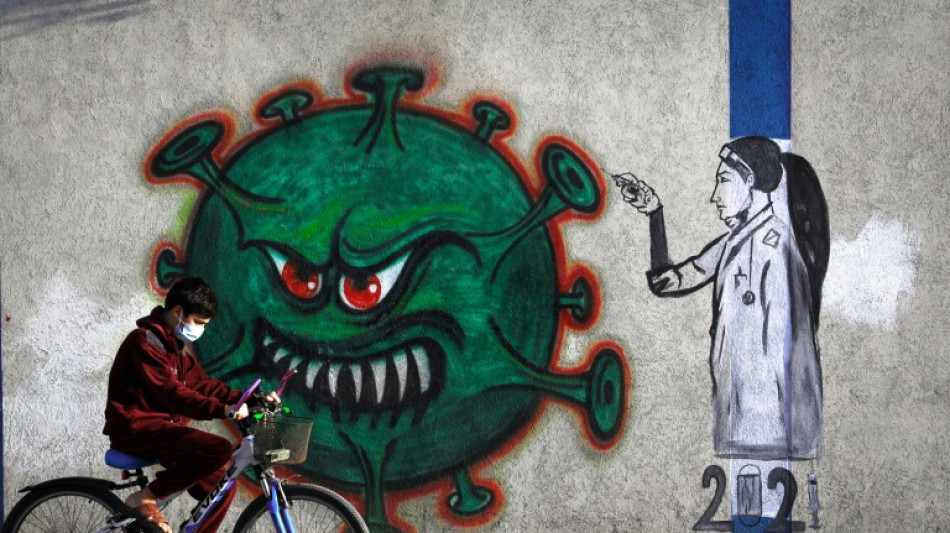
Economic inequality is the clearest way to predict how countries will fare during a pandemic, a high-profile panel said Wednesday, calling for a rethink in how governments prepare for the next global health crisis.
The research, which was published in a prestigious journal and will be presented at a major AIDS conference in Brazil, pushed back against traditional measures of pandemic preparedness.
"For decades the world judged how ready a country is for a pandemic by counting its laboratories, stockpiles and response plans," study co-author and economics Nobel laureate Joseph Stiglitz said.
"This research shows that this is not enough," he added in a statement. "High economic inequality can leave even wealthy, well-equipped nations dangerously exposed."
The United States and United Kingdom topped pandemic preparedness indexes, yet during the Covid-19 pandemic both recorded significantly more cases and deaths than the global average.
Brazil and South Africa, considered the most prepared countries in their regions, also fared particularly badly.
However, countries with lower levels of inequality considered to be less prepared such as Vietnam, Mauritius, Ethiopia, Uruguay and Norway were significantly better off, the research said.
The new paper, published in the New England Journal of Medicine, found no association between a country's technical capacity -- for example labs to test for viruses or trained emergency healthcare workers -- and how well it handled the Covid and AIDS pandemics.
However it found a clear and consistent link between a nation's level of economic inequality and how it performed during both crises.
- 'Not inevitable' -
"The deeper the inequality in the country is, the deeper that pandemic is going to be," lead study author Matthew Kavanagh of Georgetown University in the US told AFP.
"We're not talking about reaching utopia -- we're talking about what would it look like for the whole world to reach the level of inequality of South Korea."
Stiglitz said that "the encouraging news is that inequality is not inevitable -- it is the result of policy choices, and we know how to change them."
The panel urged nations to consider "inequality-informed pandemic preparedness".
This included social protections such as paid sick leave, unemployment support and cash transfers in times of crisis.
During pandemics, this money can mean people are able to stay home "without having to worry: am I going to be able to feed my family?" Kavanagh explained.
The researchers called for low-income countries to receive debt relief when a pandemic is declared.
Life-saving new technology should also be made available to the entire world during such emergencies, they added.
- 'Recipe for continued pandemics' -
After Covid spread across the world, wealthy nations hoovered up the most early vaccine doses, provoking outrage among the developing countries left behind.
Exactly how vaccines, drugs and tests developed to fight future pathogens will be shared remains the biggest sticking point in negotiations to finalise the world's first global pandemic treaty.
Protesters at the annual AIDS conference being held in Rio de Janeiro this week called for more Latin American countries -- where HIV rates are rising -- to get access to generic versions of a breakthrough HIV drug called lenacapavir.
The paper called for patents on such drugs to be replaced with prizes that reward "innovators while allowing medicines and vaccines to be produced anywhere".
Kavanagh said that letting pharmaceutical companies choose who can access these drugs was "a recipe for continued pandemics".
The research was conducted by the Global Council on Inequality, AIDS and Pandemics, which was convened after Covid, and will be presented at the conference in Rio on Thursday.
Raina MacIntyre, a professor of global biosecurity at the University of New South Wales not involved in the research, told AFP it "makes many valid points" that need to be addressed.
However she cautioned "there are assumptions in this paper which are not supported by quantitative methods such as modelling or risk analysis".
MacIntyre pointed to her own research, which determined that universal healthcare, national leadership and culture were also significant factors in how countries perform during pandemics.
J.Williams--AMWN