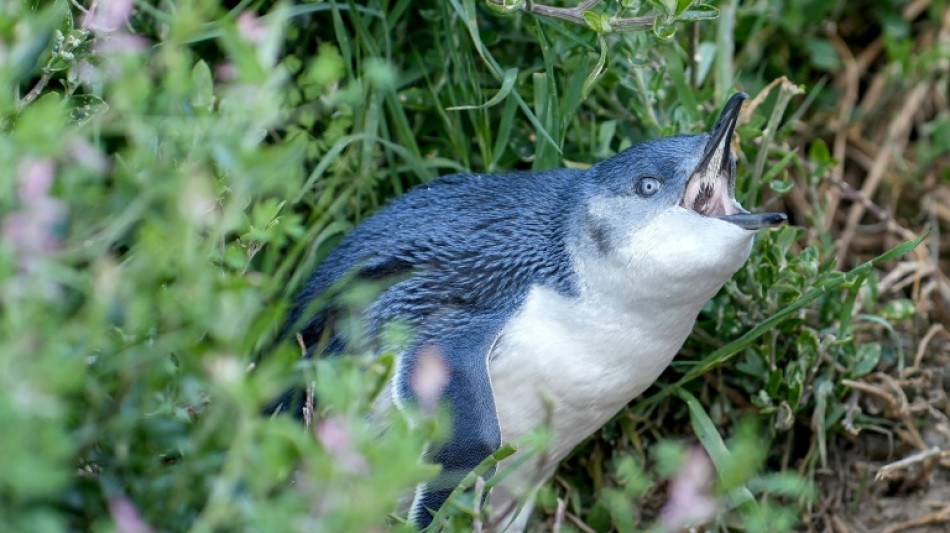
Australia races to shield little penguins from H5N1 bird flu / Photo: HO - Phillip Island Nature Parks/AFP/File
 Asian Games set to close after records, rancour and rain

 Cry for help as French-Swiss lake dries up

 Sabalenka swept out of China Open in third round

 US urges 'restraint' as Ethiopia's Tigray crisis rocks region

 Teens on target again as USA down Mexico 3-0

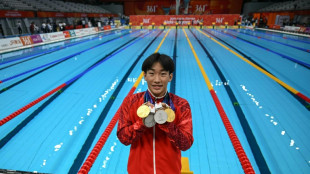 World records prove Asian Games were a hit, says top official

 US prison chief who oversaw botched execution resigns
 'Chaotic' Asian Games threaten Japan hopes of hosting Olympics again
 Finnish town braces for change from Google data centres
 What is fuelling French school protests?

 Without lawyers, migrant children face deportation from the US
 Three-peat seeking Dodgers open playoffs with a win, Rays hold off Yankees

 Brazil votes in nail-biter polls closely watched by Trump

 'Just be you': Kim reveals Tiger text that inspired him to gold

 Myanmar migrants returned to war-torn nation from Malaysia

 ALEX BODI AND AMBASSADOR GUM DOMINIC MATIOK OF THE REPUBLIC OF SOUTH SUDAN MEET IN BERLIN TO DISCUSS THE POSSIBILITY OF AN HONORARY CONSULATE IN BUCHAREST

 Lula, Bolsonaro wrap up campaigns ahead of Brazil's knife-edge vote

 Toulouse edge Castres in Top 14 derby

 Murakami homer propels White Sox to MLB playoff win over Guardians

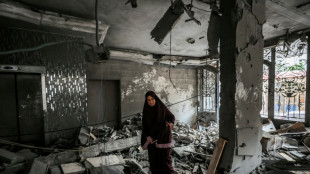 Israel targets top Hamas leader in deadly Gaza strike on anniversary

 Houthis say struck oil facility near Riyadh, as Saudis hit Sanaa

 AI needs safety layers like nuclear plants: ex-OpenAI engineer

 MVP Judge will miss Yankees' MLB playoff series against Rays

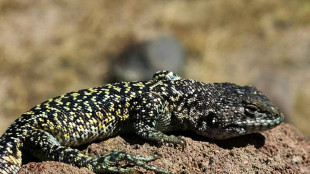 New lizard species discovered in Peru

 Fernandes hails Portugal's 'greatest symbol' Ronaldo, calls for unity
Australian wildlife workers have launched an unprecedented effort to vaccinate wild populations of little penguins against the highly contagious H5N1 avian influenza.
Hundreds of thousands of tourists a year flock to viewing areas and boardwalks to watch the diminutive sea birds waddle ashore and along the beach in the evenings on the eastern coast's Phillip Island.
The stars of this "penguin parade" are from a wild colony on the island, numbering up to 40,000 seabirds at the height of the breeding season in the southern hemisphere's spring and summer.
It is the world's biggest single colony of little penguins, which have a life span of about six years with habitats in southern Australia -- mostly Tasmania -- and New Zealand.
Also known as fairy penguins, they are the tiniest species of the semi-aquatic sea birds, barely reaching knee height and weighing about the same as a standard bag of sugar.
Now, like the rest of Australia's wild bird population, they face the threat of H5N1, which breached the continental landmass for the first time in June and has since started to spread in local wildlife.
The virus was detected this month in a Phillip Island penguin that had died, the first infection in the colony by a pathogen that has caused severe disease and death in birds worldwide.
- 'Unprecedented' -
In response, wildlife teams started to vaccinate birds in the colony this week, said James Todd, chief biodiversity officer for the state of Victoria in which the island lies.
"This is unprecedented. There has been no vaccination of this scale in a wild population anywhere in the world," Todd said.
The H5N1 vaccination program, which also covers a popular little penguin population at a breakwater in the Melbourne beach suburb of St Kilda, is a challenge, he said.
"Trying to vaccinate wild populations is almost impossible, partly because you need two doses of the vaccine," Todd told AFP.
But wildlife experts are very familiar with the little penguins' burrows at Phillip Island and St Kilda, he said.
The birds, in turn, are accustomed to floodlights for the "penguin parade" tourist attraction, as well as being periodically handled by veterinarian scientists for monitoring of their health.
Vaccination teams aim to inoculate about 5,000 little penguins closest to the visitor areas, the state official said, in a program that is likely to last weeks and months, not days.
- 'State of urgency' -
Ideally, the H5N1 vaccine should be administered in two doses with a gap of three-to-four weeks, Todd said.
"Given that we're in a bit of a state of urgency here, experts have said that it's okay to even think about you know one to two weeks," he said, though a final decision had yet to be taken.
Vaccination teams can pick up the penguins from their burrows and may try to corral some as they come ashore on the beach, using microchips to track those that have been given a shot, Todd said.
"They're wild animals -- they'll squawk and try to, you know, peck you, and do all that sort of stuff -- but as I said, the team down there are very used to handling these animals," he explained.
"If you and I were doing it, we'd probably drop the thing straight away."
D.Sawyer--AMWN