French island plans mass rodent cull to save albatross eggs / Photo: CEDRIC MARTEAU - AFP
 Shein grapples with EU backlash, but clients keep coming

 Key facts about Chinese-founded fast-fashion giant Shein

 Shein to make market debut in Hong Kong in September

 Fils tops Tiafoe to claim first ATP Masters title in Cincinnati

 Gauff powers past Pegula to win Cincinnati WTA 1000 crown

 Ukraine backers gather as war escalates, air defence runs low

 Syria says Israel talks addressed de-escalation, staying out of Israel-Turkey tensions

 Tourism boom pushes limits of Athens air traffic control

 Liga holders Barcelona crush Elche, Atletico salvage Villarreal draw

 Spain's World Cup hero Torres saves PSG's blushes at Rennes

 Swiss forward Embolo joins Atlanta United

 Former cricket captains appeal to Pakistan over Khan health care

 Latest 'Spider-Man' tops American box office for 4th weekend

 Szoboszlai's last-gasp leveller rescues Liverpool in Newcastle draw

 Landfill collapse kills 30 in Guinea

 'Unbelievable' Cherki proves his point to Man City boss Maresca

 10-man Atletico snatch Villarreal draw as Alvarez returns
 Seville, Jefferson-Wooden roar to 100m wins at Silesia Diamond League

 VW chief warns carmaker's situation 'more than critical'

 England cricketer Carse under investigation after 'nightclub incident'

 McLaren's Norris wins Dutch GP after Verstappen crash

 Giroud scores as Lille give Davide Ancelotti winning start

 Kejelcha smashes half-marathon world record in Buenos Aires

 Trump admin predicts US trade war 'devastating' for Canada

 Trump set for starring role at Washington's debut IndyCar race

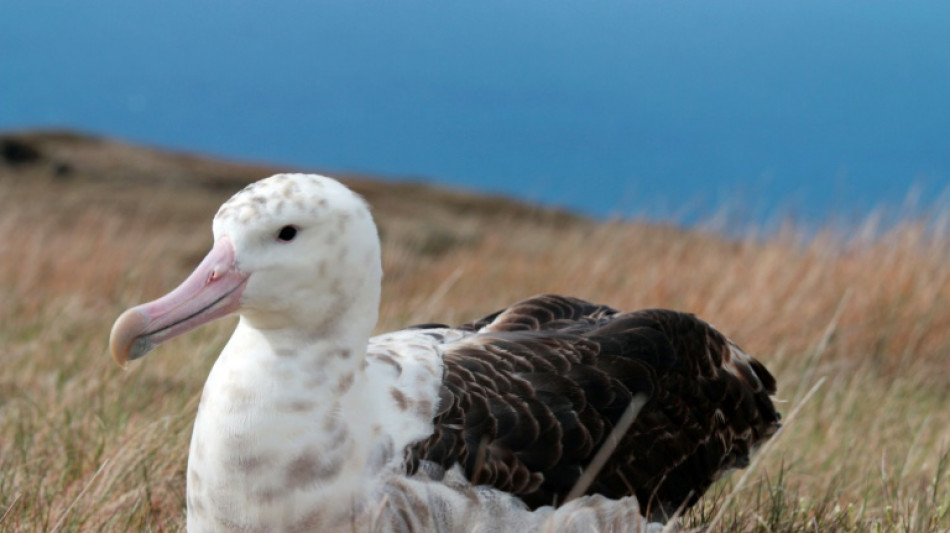
Conservationists are workingto rid a remote French southern Indian Ocean island of rodents and stray cats by the end of next year to protect prized albatrosses and other birds.
We want "to eradicate all rats, cats and mice in the winter of 2024," said Lorien Boujot, in charge of managing invasive mammals on the UNESCO-listed Ile Amsterdam.
Roughly equidistant from Madagascar, Australia and Antarctica, the island is uninhabited except for a research station on its northern coastline.
But cats and rats introduced over the years by visiting ships "have been the main cause for the disappearance of around 10 species of nesting birds" from the cliffs and plateaus, Boujot said.
"Rats tend to prey on eggs or even chicks, while cats can attack them even when they reach adulthood."
The mammals may also spread avian cholera, likely brought to the island when chickens were kept there in the past, Boujot said.
"Now each year it plays havoc with the breeding of yellow-nosed albatrosses" living on the cliffs in the south of the island.
The French Austral Lands and Seas, including Amsterdam, have the largest population of yellow-nosed albatrosses in the world, according to UNESCO, which listed the reserve as a World Heritage site in 2019.
Mice too are a menace for the isle's flora.
They gobble up the flowers and seeds of indigenous plants such as Island Cape myrtle, a shrub that used to form a natural belt around the coast but is now struggling to survive.
Conservationists have tried to replant it, but "rats tend to eat and break the young plants", Boujout said.
- No more cats? -
The plan is to air-drop poison across the whole of the island's 55 square kilometres (20 square miles) during the Antarctic winter next year .
Scientists have been studying which species to target since 2017, according to Boujot, and will deploy the poison in winter to avoid missing juveniles in their nests during the reproduction season.
"The tricky thing is that if we miss one of the rodents' home ranges, the whole operation fails," he said.
Specialists Louis Gillardin and Brieuc Leballeur will this winter be on the lookout for stray cats and tasked with shooting or catching any in traps.
"Last year, our predecessors eliminated seven and for a month and a half or two months now we haven't seen any on the 40 or so camera traps" around the island, said Gillardin.
"I've never killed a cat in my life and wouldn't enjoy it. If they had in fact now disappeared, that would suit us."
His colleague Leballeur claimed traps he had set near the albatross colony had led to a decrease in chick mortality there.
The team will have to wait two years to see if any of the targeted mammals reappear before they can call the operation a success, Boujot says.
And only monitoring over a decade will be able to tell if lost bird species return to the island to nest.
Jeremy Tornos, a researcher at France's CNRS institute who wrote his PhD on the island's albatrosses, said he is looking forward to the results.
"We have seen a drop in chick survival since the 1980s," he said.
But after 2024, "We'll be able to see the impact of the rat, both as a predator and pathogen source.
"We don't yet know if rats carry avian cholera and transmit it to birds they bite, or whether they become carriers because they eat birds carrying it," he explained.
"A colony without rats will also allow us to test how efficient a vaccine really is" against the illness.
- Huge budget -
But the model is hard to replicate on nearby French islands such as Kerguelen, where rodents, cats, rabbits and reindeer are equally destructive.
"Eradication on Amsterdam means a budget of more than two million euros ($2 million) and years of work," said Clement Quetel, an official at the environment department for the French overseas territory.
On Kerguelen, "thinking about getting rid of mice -- which are almost everywhere -- would be impossible" logistically and financially, he said.
The same goes for its cats, which environment workers instead try to shoot or trap.
Vigilance will be needed in future to prevent new invasive mammals from making their way to these islands.
On a research ship travelling from island to island, Kevin Nory's job is to make sure there are no unwelcome animal stowaways on board.
Stepping deep into its bowels, he checked if rat poison he had laid out in about 30 traps had been eaten.
He said he had not found a single rodent on the boat since mid-2021.
"It's rather positive," he said.
L.Mason--AMWN