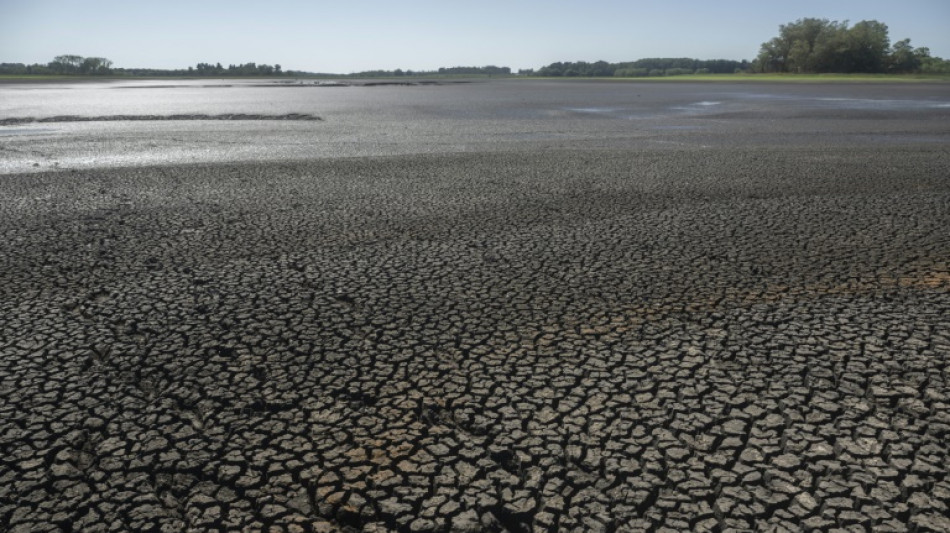
Humanity has 'broken the water cycle,' UN chief warns / Photo: Pablo PORCIUNCULA - AFP/File
 Holders Italy, Britain into BJK Cup finals, USA knocked out

 Drean double breaks Glasgow hearts as Toulon reach Champions Cup semis

 Scores arrested at pro-Palestinian rally in London

 Leverkusen sink Dortmund to bring Bayern closer to title

 Pogacar dreaming of Monument clean-sweep

 Iyer leads Punjab's chase of 220 to down Hyderabad

 Buffets, baristas, but no briefings: journalists frozen out of Iran talks

 Sinner brushes past Zverev to reach Monte Carlo final

 UK puts Chagos handover deal in 'deep freeze' after Trump criticism

 Sabrina Carpenter transforms Coachella into her own 'Sabrinawood'
 Iran envoys meet Pakistani PM ahead of US talks
 Somalia president congratulates World Cup-bound referee Omar Artan

 After Artemis II, NASA looks to SpaceX, Blue Origin for Moon landings

 Britain storm into Billie Jean King Cup finals with Australia thumping
 Hawks clinch NBA playoff berth with win over Cavs
 Carney poised to win Canada majority but affordability pressure looms
 Extra time at Augusta helps McIlroy make Masters magic

 Iran, US to hold peace talks overshadowed by mutual mistrust
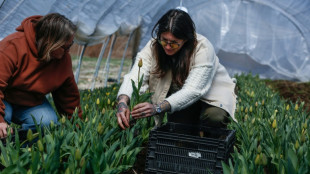 Small US farm copes with fuel hikes from Mideast war

 New to The Street Broadcasts on Bloomberg Television at 6:30 PM EST Featuring IGC Pharma (IGC), Vivos Therapeutics (VVOS), Acurx Pharmaceuticals (ACXP), and Equinox Gold (EQX)

 Iranian delegation in Pakistan for talks with US, Vance en route

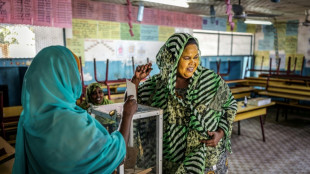 Djibouti leader claims sixth straight term
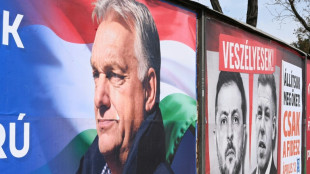
 Mythos AI alarm bells: Fair warning or marketing hype?

 Marseille boost hopes of Champions League return, Monaco suffer heavy defeat

 Swing and miss: Ichiro statue reveal goes awry as bat snaps

The future of humanity's "lifeblood" -- water -- is under threat across the planet, the UN secretary-general warned Wednesday at the opening of the first major UN meeting on water resources in nearly half a century.
"We've broken the water cycle, destroyed ecosystems and contaminated groundwater," Antonio Guterres said at the three-day summit in New York, which gathers some 6,500 participants, including a dozen heads of state and government.
"We are draining humanity's lifeblood through vampiric overconsumption and unsustainable use, and evaporating it through global heating," Guterres told the conference.
A report by UN-Water and UNESCO released Tuesday warned of too little or too much water in some places and contaminated water in others -- conditions that it said highlight the imminent risk of a global water crisis.
"If nothing is done, it will be a business-as-usual scenario -- it will keep on being between 40 percent and 50 percent of the population of the world that does not have access to sanitation and roughly 20-25 percent of the world will not have access to safe water supply," report lead author Richard Connor told AFP.
With the global population increasing every day, "in absolute numbers, there'll be more and more people that don't have access to these services," he said.
At the UN conference, governments and actors in the public and private sectors are invited to present proposals to reverse that trend and help meet the development goal, set in 2015, of ensuring "access to water and sanitation for all by 2030."
The last conference at this high level on the issue, which lacks a global treaty or a dedicated UN agency, was held in 1977 in Mar del Plata, Argentina.
Some observers have already voiced concerns about the scope of commitments and the availability of funding to implement them.
"There is much to do and time is not on our side," said Gilbert Houngbo, chair of UN-Water, a forum for coordinating work on the topic.
The report also warned that water "scarcity is becoming endemic" due to overconsumption and pollution, while global warming will increase seasonal water shortages in both areas with abundant water as well as those already strained.
- 'Now or never' -
"About 10% of the world's population lives in a country where water stress has reached a high or critical level," the report says.
According to the most recent UN climate study, published Monday by the IPCC expert panel, "roughly half of the world's population currently experience severe water scarcity for at least part of the year."
Those shortages have the most significant impact on the poor, Connor told AFP.
"No matter where you are, if you are rich enough, you will manage to get water," he said.
The report noted the impact of existing water supplies becoming contaminated due to underperforming or nonexistent sanitation systems.
"At least 2 billion people (globally) use a drinking water source contaminated with feces, putting them at risk of contracting cholera, dysentery, typhoid and polio," it said.
That high number does not take into account pollution from pharmaceuticals, chemicals, pesticides, microplastics and nanomaterials.
To ensure access to safe drinking water for all by 2030, levels of investment would have to be tripled, the report said.
Freshwater ecosystems -- which in addition to water, provide life-sustaining economic resources and help combat global warming -- "are among the most threatened in the world," the report warned.
"We have to act now because water insecurity is undermining food security, health security, energy security or urban development and societal issues," Henk Ovink, the Dutch special envoy for water, told AFP.
"It's now or never as we say -- a once in a generation opportunity."
T.Ward--AMWN