Ice sheets could retreat faster than expected: study / Photo: MARIO TAMA - GETTY IMAGES NORTH AMERICA/AFP
 Pilgrims seeking peace caught in deadly Nepal-Tibet floods
 China's help critical, but unlikely, for US to choke off Iran

 US court rules Pentagon ban of Anthropic unlawful

 In Zambia, a Shaolin Temple offers a softer face of China

 Messi's Inter Miami appoint new coach Gonzalez

 Clashes in Spain's Ceuta month after mass migrant influx

 Argentina names unchanged side for Australia Test

 Australia's Lee leads PGA Tour Championship

 US judge urged to rebuff restoring Trump name to Kennedy Center

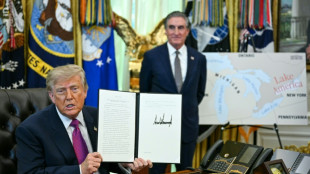 Trump orders Lake Ontario to be renamed 'Lake America'

 Raphinha, Lopez strike again as Barca beat Athletic

 Dos Santos, Russell set world records in 'crazy' Zurich Diamond League

 Dos Santos upstages Warholm for blistering new 400m hurdles world record

 US Open women's singles: Three talking points

 American Masai Russell sets new women's 100m hurdles world record

 Smith and Cox revive England after Abbas strikes for Pakistan

 Brazil's Alison Dos Santos sets new men's 400m hurdles world record

 The Nile Theater Announces Full 2026 Concert Lineup Including Menzingers and Shakey Graves

 Venezuelan Artist Oswaldo Vigas Retrospective Opens in Guangzhou

 Smith and Cox revive England against Pakistan after Abbas strikes

 Zambia opposition leader held in treason probe: police

 Corals show El Nino intensifying as planet warms: study

 Russia dismisses as 'scare stories' US reports about attacking NATO

 UEFA target Infantino for 'criminal mismanagement', suspend boycott threat

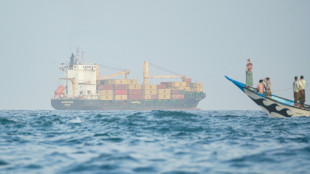 Piracy attacks off Somalia surge in 2026: AFP analysis of IMO data

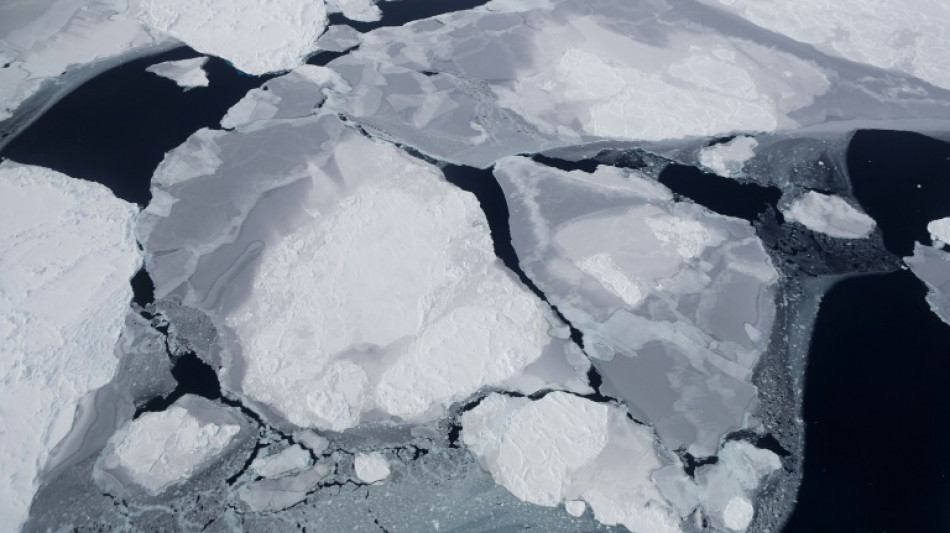
Antarctic ice-sheets risk breaking into the sea faster than previously thought in stretches of up to 600 metres a day, speeding up the rise in sea levels, new research indicates.
In a paper published Wednesday in science journal Nature, researchers studied traces left by retreating ice-shelves thousands of years ago on the seabed off Norway.
Ridges revealed how quickly the "grounding line" -- the point where an ice sheet starts to float -- had retreated during the transition from the last ice age: from 55 to 610 metres (667 yards) a day.
"These values far exceed all previously reported rates of grounding-line retreat across the satellite and marine-geological records," they wrote.
They calculated that similar low-lying ice sheets in the Antarctic such as around the so-called Thwaites "doomsday" glacier could retreat at a similarly quick rate under current climate conditions.
Global warming due to human-caused carbon emissions is reducing ice, raising warnings that dangerous "tipping points" could be reached, with sudden major melting driving sharp rises in sea level.
"Our study shows that pulses of extremely rapid ice-sheet retreat could occur across flat-bedded areas of Antarctica even under present-day rates of melting," lead author Christine Batchelor of Newcastle University told AFP.
"Whilst our findings cannot tell us when or if an ice-loss tipping point will be reached, they shed new light on which parts of ice sheets are vulnerable to retreat and how fast such retreat could occur."
D.Kaufman--AMWN