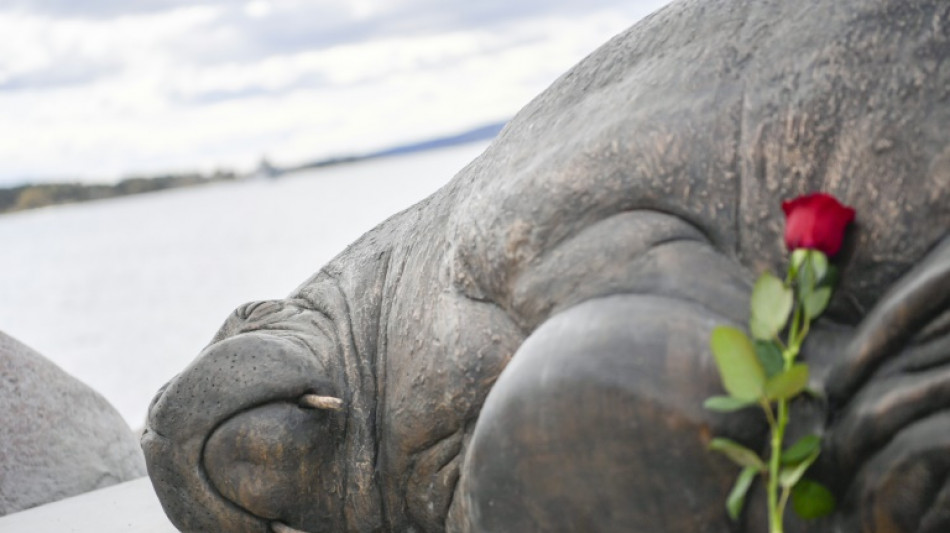
Sculpture of euthanised walrus Freya unveiled in Oslo fjord / Photo: Annika Byrde - NTB/AFP
 Microsoft Updates Xbox PC App with 60% Faster Startup and Redesigned Interface

 Early Polar Vortex Disruption Creates Uncertain Winter Outlook for Pennsylvania

 Pakistan Demands Grant-Based Climate Finance at COP31 to Avoid Debt Trap

 E Pellicci Pop-Up at Selfridges Brings Back Nostalgic School Cake

 Coronation Street's Debbie Webster Steps Down as Dementia Storyline Intensifies
A bronze sculpture was unveiled Saturday in Norway of the walrus Freya who gained global attention last summer after playfully basking in the Oslo fjord until officials euthanised her.
The life-size sculpture depicts Freya lying on her side on the rocky shore of Oslo's Kongen Marina, not far from where the real 600-kilogram (1,300-pound) mammal last summer drew large crowds chasing ducks and swans and sunbathing on boats struggling to support her bulk.
Officials chose to put her down in August, citing signs she was experiencing stress and amid fears she posed a threat to the public who did not keep their distance as requested.
The decision sparked anger among some.
An online campaign raised over $25,000 to build the sculpture commemorating Freya, campaign organiser Erik Holm said.
"I started this because I'm furious about the way the Fisheries Directorate and the state handled this situation," Holm told AFP ahead of the unveiling.
"Beyond the issue of Freya, we need to ask ourselves how we treat animals and nature. We need to think about our relationship to wildlife," he said.
Freya, who was estimated to be around five years old, had been sighted in the United Kingdom, the Netherlands, Denmark and Sweden before choosing to spend part of the summer in Norway.
The walrus is a protected species that normally lives in the more northerly latitudes of the Arctic.
Despite repeated appeals to stay away, curious onlookers approached the mammal, sometimes with children in tow, to take photographs.
Walruses do not normally behave aggressively towards humans, but they can feel threatened by intruders and attack.
Critics said the decision to put the animal down was rushed and did not take her well-being into account.
Officials meanwhile said sedating Freya and moving her to a less populated area would be too complex an operation.
O.Johnson--AMWN