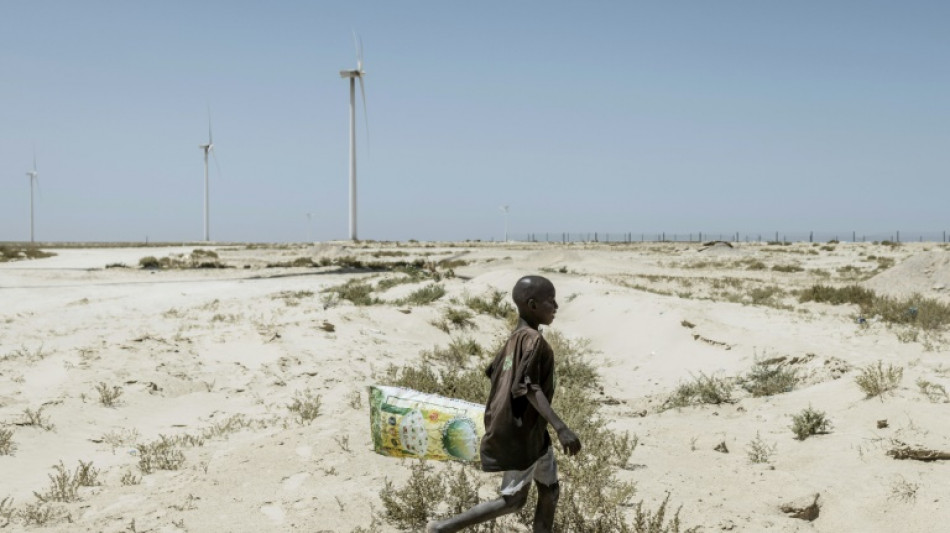
Climate goals need clean energy surge in Global South: IEA / Photo: MARCO LONGARI - AFP/File
 EU unveils strategy to boost Arctic presence

 How recent controversies have rocked the US death penalty debate
 Adams facing long injury layoff as Rams' problems deepen

 US judge orders Saudi engineer held in OpenAI case
 Maddison sparkles as Spurs end Premier League winless run

 Maddison sparkles on Spurs return as win drought ends

 Trump says ready to meet with Putin and Xi in China
 The young lawmaker making Brazil's Lula 'king of the selfie'
 Christiane Amanpour to leave CNN after 43 years

 Ronaldo handed 30-day suspension after walking out on Portugal

 Netanyahu basks in Trump endorsement week before election

 Saudi airport closure disrupts life in kingdom's capital

 Ramaphosa tells South Africa to prepare for loss of US-Africa trade deal
 France presses resale platforms to remove 'stolen' goods after unrest
 Yamal v PSG: Ballon d'Or backdrop to Champions League showdown

 Araujo says too soon to talk about permanent Liverpool move

 US wants to be 'strong partner' for central Asia: Rubio

 'Special' to face friend Perez in Champions League, says Liverpool's Iraola

 Monitor says Indonesia fires have burned nearly two million hectares

 French PM says could declare state of emergency over unrest 'if needed'
 Albanian PM warns of 'red line' after days of unrest

 Putin, Xi and Trump could meet at APEC summit: Kremlin

 Microsoft exits data centre deal in blow to UK AI ambitions

 European stocks retreat as France violence spreads

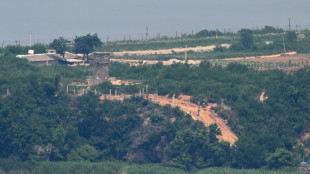 North Korea warns 'grave situation' prevailing along border

Financing for clean energy in developing and emerging economies excluding China must increase seven-fold within a decade if global warming is to be capped at tolerable levels, the International Energy Agency said Wednesday.
To keep Paris climate temperature goals in play, annual investment for non-fossil fuel energy in these countries will need to jump from $260 billion to nearly $2 trillion, the intergovernmental agency said in a report.
"Financing clean energy in the emerging and developing world is the fault line of reaching international climate goals," IEA executive director Fatih Birol told journalists in a briefing Tuesday.
The report comes on the eve of the two-day Summit for a New Global Financing Pact in Paris, which seeks to galvanise support for revamping the mid-20th century architecture governing financial flows from rich to developing nations.
Speeding the transition from dirty to clean energy, and helping the Global South cope with and prepare for devastating climate impacts are high on the summit agenda.
Virtually all of the nearly 800 million people lacking electricity and the 2.4 billion without access to clean cooking fuels are in poor and emerging countries.
Under current policy trends, one third of the rise in energy use in these nations over the next decade will be met by burning fossil fuels, the main driver of global warming, the IEA warned.
"Clean energy investments is increasing gradually -- this is a good news," said Birol.
"The bad news is that more than 90 percent of that increase in clean energy since the Paris Agreement in 2015 comes from advanced economies and China."
"Only 10 percent comes from the emerging and developing countries," he added. "We need to change this trend."
- Solar is cheapest -
With China included in the calculation, private and public money pouring into renewables and other forms of carbon neutral energy will need to more than triple from $770 billion in 2022 to about $2.5 trillion per year by the early 2030s.
Investment must remain at those levels until mid-century to help keep Earth's average surface temperature "well below" two degrees Celsius, and 1.5C if possible, the Paris climate treaty's binding and aspirational targets, respectively.
The potential for rapidly ramping up renewable energy is there, according to the report.
At least 40 percent of the global solar radiation reaching the planet lands on sub-Saharan Africa, and solar energy is now the cheapest source of electricity generation across almost the entire world.
And yet, nearly ten times more solar PV capacity was installed last year in China -- some 100 GW -- than across the entire African continent.
Sunny sub-Saharan Africa generates less solar electricity than the Netherlands, Birol noted.
According to the report, two-thirds of the finance for clean energy projects in emerging and developing economies excluding China will need to come from the private sector.
Today's $135 billion in annual private financing for clean energy in these economies must rise to about a trillion a year within the next decade.
To meet both climate and sustainability goals, clean energy investment in emerging and developing economies should be concentrated in four areas, according to the IEA.
Just over a third should go into low-emissions generation, mainly solar and wind. Another third is needed to improve efficiency in end-use sectors, such as cooling and electric transport.
A quarter is required for electricity grids and storage capacity, while just under 10 percent goes to low-emission fuels and so-called carbon, capture and storage (CCS), which removes CO2 from the exhaust of gas or coal power plants and heavy industry.
D.Cunningha--AMWN