Toxic foam blights river crucial to Brazil's biggest city / Photo: NELSON ALMEIDA - AFP
 Raphinha, Lopez strike again as Barca beat Athletic

 Dos Santos, Russell set world records in 'crazy' Zurich Diamond League

 Dos Santos upstages Warholm for blistering new 400m hurdles world record

 US Open women's singles: Three talking points

 American Masai Russell sets new women's 100m hurdles world record

 Smith and Cox revive England after Abbas strikes for Pakistan

 Brazil's Alison Dos Santos sets new men's 400m hurdles world record

 The Nile Theater Announces Full 2026 Concert Lineup Including Menzingers and Shakey Graves

 Venezuelan Artist Oswaldo Vigas Retrospective Opens in Guangzhou

 Smith and Cox revive England against Pakistan after Abbas strikes

 Zambia opposition leader held in treason probe: police

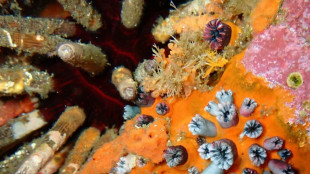 Corals show El Nino intensifying as planet warms: study

 Russia dismisses as 'scare stories' US reports about attacking NATO

 UEFA target Infantino for 'criminal mismanagement', suspend boycott threat

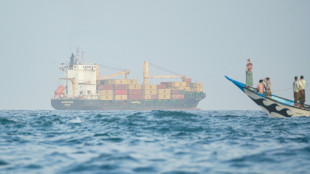 Piracy attacks off Somalia surge in 2026: AFP analysis of IMO data

 Tottenham land Marmoush from Manchester City

 YZi Labs Backs TermMax to Advance On-Chain Bond Market Infrastructure

 Nvidia boosts tech stocks but caution dominates ahead of Fed speech

 Pogacar holds off Mas to claim Vuelta stage six victory

 A lasting Dolly Parton legacy: childhood literacy

 S.Africa sounds alarm as infant vaccinations plummet
 Toulouse have salary cap fine reduced on appeal

 Tech stocks lifted by Nvidia but caution dominates ahead of Fed speech

 'Smart cricketer' Dinusha helps Sri Lanka draw second India Test

 Zambia opposition leader surrenders to police: state media

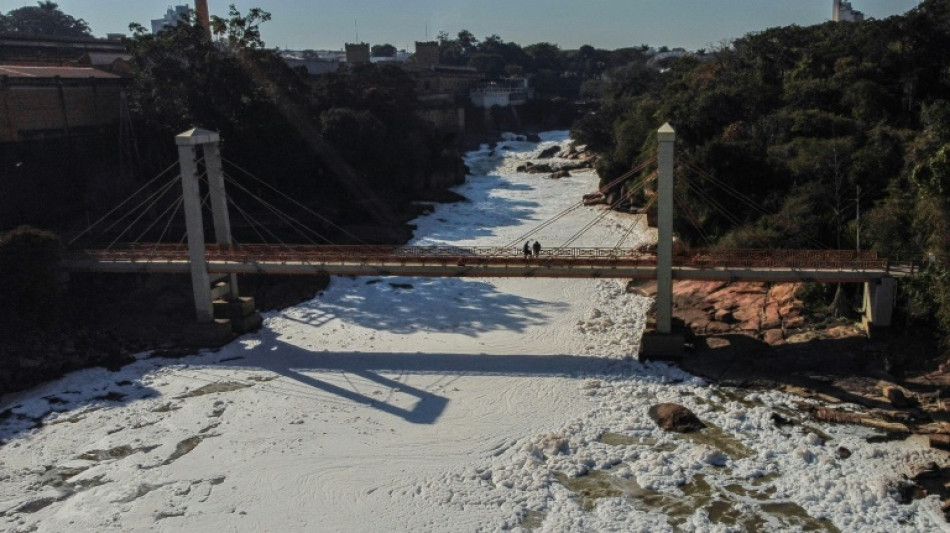
Not far from Latin America's biggest city, Sao Paulo, a river is covered in a white layer that resembles fresh snow but is in fact a smelly, toxic foam.
The Tiete river, some 1,100 kilometers long, is crucial for potable water, irrigation and energy production in southeast Brazil, the country's most populated area.
But parts of the waterway, including one area just 100 kilometers (62 miles) from the metropolis, have been befouled by phosphate and phosphorus residues from household detergents used by Sao Paulo's 22 million inhabitants and washed down the sewers.
A tributary of the Parana river, the waterway has been covered in a visible foam layer since last week, at one point spread over more than 10 kilometers and also spotted blighting several waterfalls.
"When these residues enter the fast-running waters of the Tiete, it is as if a washing machine has been turned on," said Malu Ribeiro of the NGO SOS Mata Atlantica, describing the foamy mess.
The NGO warns that fumes from the foam can cause sore throats and breathing problems, and contact could irritate the skin.
The impact on animal and plant life was likely similar to that caused by "acid rain," said Ribeiro.
The phenomenon is not a new one: The foam is a frequent feature of the river in the dry winter months when there is less water to dissolve the chemicals.
In the 1990s, the situation was sometimes so bad that the foam ran down the streets of some cities near the river's shore.
Improvements to water treatment have alleviated the problem, but some years are still worse than others.
Ribeiro said the foam is worse in periods with big temperature fluctuations. In winter the contrast can be quite extreme, with very cold mornings and very hot afternoons.
"Cold water is heavier, and it carries polluting residues to the bottom... But when it is heated by the sun, these residues rise to the surface and form a thicker foam," he explained.
SOS Mata Atlantica is advocating for a ban on phosphate and phosphorus in domestic cleaning products.
Water treatment must be improved too: In the Alto Tiete basin that serves Sao Paolo, just over half of wastewater is treated, according to official data from 2021.
Sao Paulo's environment secretariat has promised to invest 5.6 billion reais (about $1.1 billion) in the water treatment network by 2026.
O.Norris--AMWN