Within sight of New York City, a despoiled river comes back to life / Photo: KENA BETANCUR - AFP
 PSG to face Barcelona, Man City and Villa in Champions League as draw is made

 Two killed, one arrested, at school near Berlin: police

 Cox defies Pakistan after Abbas's treble strike rocks England

 Bosnian Serb war criminal Ratko Mladic dead

 Ogura to miss Aragon MotoGP after hand surgery

 Severe Thunderstorms Hit Eastern Australia After SA Deluge

 More than goals: What Mourinho wants from Real Madrid's Mbappe
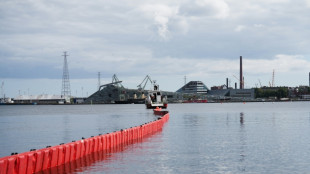 Finland defends shores against oil spill risk

 Iraola hoping for 'good news soon' in Liverpool pursuit of Barcola

 Iran executes over 500 people in 2026: rights group

 Srebrenica: Massacre that outraged the world

 After US settlement, EU says Meta must 'protect our kids too'

 Germany-led 'frugal' EU states demand budget plan cuts of 'several hundred billion'

 Ratko Mladic: Serb crusader dubbed 'epitome of evil'

 Pramac Yamaha replace Miller with Guevara for 2027 MotoGP season

 Bouaddi needs time at Man City despite 100m euro fee, says Maresca

 MEXC Launches SHEIN Subscription with $1M Quota as Inaugural IPO Express Event

 Iran, Qatar hold Hormuz talks as US blockade chokes Iran oil imports

 Defiant Dinusha helps Sri Lanka draw second India Test

 Pakistan bowl against England in rain-delayed second Test

 Barcola move from PSG to Liverpool 'on track': source

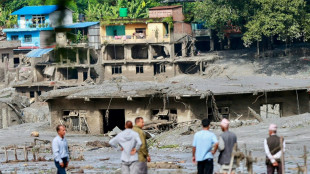 Swallowed by silt: Survivors recount Nepal flood horror

 Germany's Merz hosts 'frugal' leaders ahead of EU budget battle

 Barca sign Croatia goalkeeper Livakovic

 Rain delays England's bid to put off-field incidents behind them

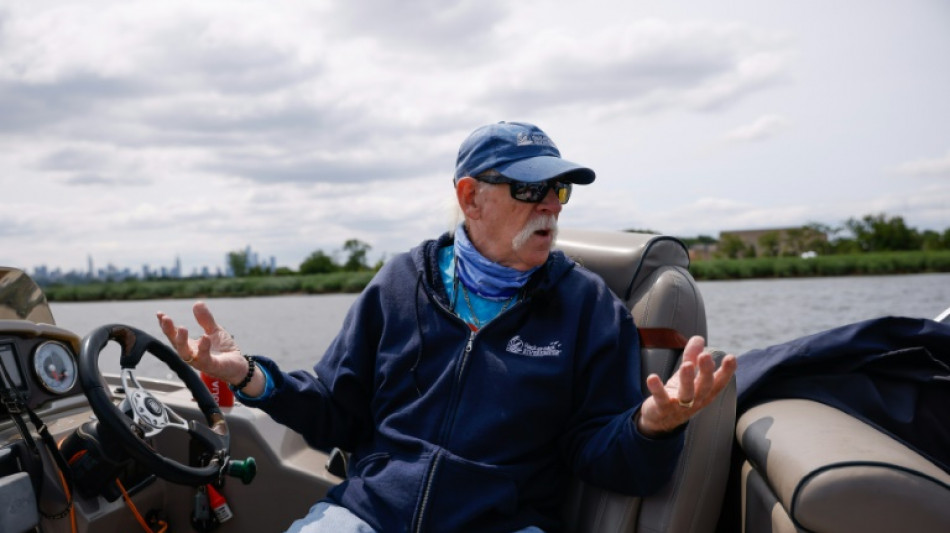
He is not a lawyer, finance guy or a politician, but activist Bill Sheehan has moved mountains to clean up the Hackensack River in New Jersey just outside Manhattan, which for decades has been a dumping ground for industrial chemicals.
Even still, the former taxi driver says, there is still so much to do to protect the waterway.
"The North Jersey area here, just across from New York, is like the cradle of the Industrial Revolution," says Sheehan, sporting his signature cap. "For over 200 years, people were doing everything they could to lay waste to this river."
Once the 74-year-old Sheehan bought a boat, he witnessed the dire situation in the Hackensack River, along which he played as a child.
"It didn't take me long to realize that the river that flows through my hometown... needed a full-time advocate," he says of the Hackensack, which is wedged into a densely populated urban area.
In 1997, he founded Hackensack Riverkeeper, an organization devoted to preserving the watershed and raising awareness about the importance of conservation efforts.
So far, Sheehan -- a one-time professional drummer with a full mustache and an earring -- has managed to block property developers and companies from doing further damage, after 60 percent of the swamps were drained for construction.
After a litany of negotiations and legal maneuvering, he also saw to it that a nature preserve was created covering about 8,400 acres (3,400 hectares) -- without spending a dime.
From a treatment plant upstream to a hotel down south, Captain Sheehan -- as he is often called -- has put a stop to the illegal dumping of wastewater, thanks to court rulings and coverage on local television news.
He launched a lawsuit that led to industrial conglomerate Honeywell being found liable for the cleanup of a site in Jersey City along the river that was contaminated with chromium residue, at a cost of several hundred million dollars.
"This nonsense that's been going on here for so long had to stop," says Sheehan, as his boat heads up the river, the wind whipping.
- 'A lot cleaner' -
Marc Yaggi, the CEO of Waterkeeper Alliance, an umbrella group for more than 300 associations in 47 countries, said Sheehan is "a mentor, friend, and hero to me and countless clean water advocates around the world."
With numerous industrial sites shut down, swampland now protected and wastewater dumping halted, nature has already partially taken its course in the watershed.
Several bird species have returned, including the great blue heron, snowy egrets and ospreys.
"The river has gotten a lot cleaner, and we have to thank Captain Bill for that," says Michael Gonnelli, the mayor of Secaucus, which is located along the river.
In Laurel Hill Park, south of Secaucus, fishermen catch eels at a rapid clip.
"I catch and release a lot of the fish here," says Evan Ypsilanti, who often makes the trip from north of New York City, though he notes: "In my opinion, you wouldn't really want to eat it."
Indeed, local officials recommend not eating fish caught in the Hackensack -- which still contains multiple pollutants -- even if many people do.
In the riverbed, there is a dangerous lingering cocktail of arsenic, chromium, lead, mercury and the infamous "forever chemicals" -- polychlorinated biphenyls, or PCBs.
"When we put up our signs that said 'Don't eat the crabs,' they said, 'I've been eating them all my life, and they haven't hurt me yet,'" recalls Sheehan.
"A lot of guys aren't with us anymore. They wound up getting cancer, going into the hospital and not coming back."
- Back from the brink -
Decontaminating river sediment is Sheehan's ultimate goal, but he is ready to get some help with that task, after years of working with only a small crew of six.
"I kind of figured it out that if I was to try and sue everybody that had a hand in polluting this river, I'd have to live to be about 300 years old," he joked.
Last September, after several years of research, the US government added the Hackensack River to its list of Superfund sites, making it eligible for federal funding to aid cleanup efforts.
The Environmental Protection Agency (EPA) will now look to all companies and municipalities that had a hand, directly or indirectly, in polluting the river to get the necessary money, says project supervisor Michael Sivak.
"It's a tremendously challenging site," Sivak told AFP. "We don't want it to take decades like some of our past sites have."
Given that cleaning up the entire waterway seems unrealistic, the EPA is looking at the possibility of only handling the most contaminated zones.
But even then, Sheehan figures billions of dollars should pour in.
"I'm a live-in-the-moment kind of guy," he says. "To bring it back from that brink is not going to happen overnight."
"We're talking not in my lifetime. But I'm in this for the long game."
L.Davis--AMWN