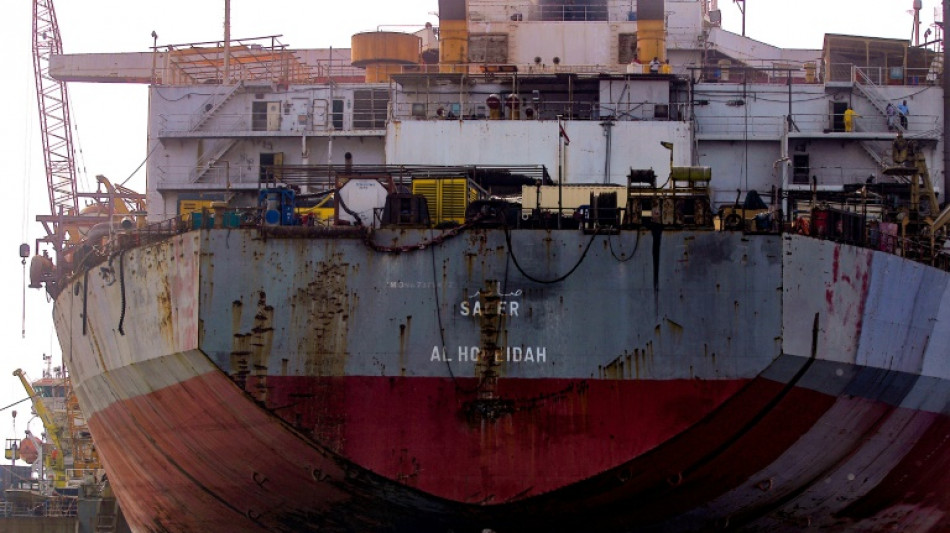
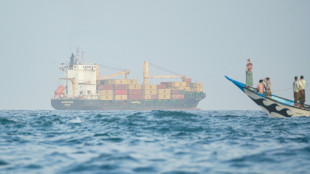
UN begins pumping oil from decaying tanker off Yemen / Photo: MOHAMMED HUWAIS - AFP/File
 PSG to face Barcelona, Man City and Villa in Champions League as draw is made
 Two killed, one arrested, at school near Berlin: police

 Cox defies Pakistan after Abbas's treble strike rocks England

 Bosnian Serb war criminal Ratko Mladic dead

 Ogura to miss Aragon MotoGP after hand surgery

 Severe Thunderstorms Hit Eastern Australia After SA Deluge

 More than goals: What Mourinho wants from Real Madrid's Mbappe
 Finland defends shores against oil spill risk

 Iraola hoping for 'good news soon' in Liverpool pursuit of Barcola

 Iran executes over 500 people in 2026: rights group

 Srebrenica: Massacre that outraged the world

 After US settlement, EU says Meta must 'protect our kids too'

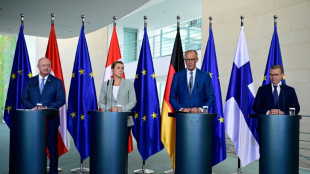 Germany-led 'frugal' EU states demand budget plan cuts of 'several hundred billion'

 Ratko Mladic: Serb crusader dubbed 'epitome of evil'
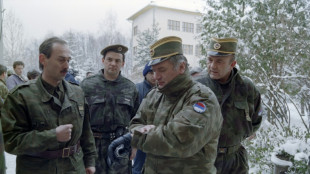
 Pramac Yamaha replace Miller with Guevara for 2027 MotoGP season

 Bouaddi needs time at Man City despite 100m euro fee, says Maresca

 MEXC Launches SHEIN Subscription with $1M Quota as Inaugural IPO Express Event

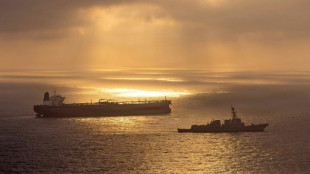 Iran, Qatar hold Hormuz talks as US blockade chokes Iran oil imports

 Defiant Dinusha helps Sri Lanka draw second India Test

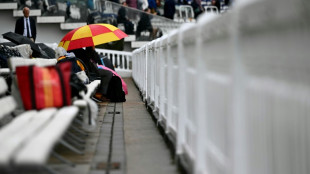 Pakistan bowl against England in rain-delayed second Test

 Barcola move from PSG to Liverpool 'on track': source

 Swallowed by silt: Survivors recount Nepal flood horror

 Germany's Merz hosts 'frugal' leaders ahead of EU budget battle
 Barca sign Croatia goalkeeper Livakovic
 Rain delays England's bid to put off-field incidents behind them

The United Nations said on Tuesday it had begun transferring one million barrels of oil from a rusting super-tanker off war-torn Yemen, in a bid to avert a catastrophic spill.
"The United Nations has begun an operation to defuse what might be the world's largest ticking time bomb," UN Secretary-General Antonio Guterres said in a statement.
"A complex maritime salvage effort is now underway in the Red Sea off the coast of war-torn Yemen to transfer one million barrels of oil from the decaying FSO Safer to a replacement vessel."
The operation began at 10:45 am Yemen time (0745 GMT), the statement said.
The transfer of 1.14 million barrels of Marib light crude from the 47-year-old FSO Safer to the new vessel is expected to take "less than three weeks," David Gressly, the UN's resident coordinator for Yemen, said on social media.
The UN hopes the $143 million operation will eliminate the risk of an environmental disaster that it estimates would cost $20 billion to clean up.
Because of the Safer's position in the Red Sea, a spill would also cost billions of dollars per day in shipping disruptions through the Bab al-Mandab Strait to the Suez Canal, while devastating coastal fishing communities, ecosystems and lifeline ports.
The Safer, a floating storage and offloading facility, has been moored around 50 kilometres (30 miles) from the port of Hodeida since the 1980s.
It has not been serviced since war broke out eight years ago between Yemen's Huthi rebels, who control the capital Sanaa and the waters where the Safer is positioned, and a Saudi-led coalition backing the internationally recognised government based in the southern Yemeni city of Aden.
The ageing vessel, with its corroding hull, is carrying four times as much oil as was spilled in the 1989 Exxon Valdez disaster off Alaska.
- Disputes expected -
For years, a skeleton crew of workers remaining on the ship, numbering no more than seven or eight at any given time, have strained to prevent the kind of leak or on-board explosion that would send a thin slick of oil across the Red Sea.
In March, the UN purchased a replacement vessel, the Nautica, with an eye towards getting the oil off the Safer.
Two months later, experts from the private company SMIT Salvage arrived to ensure the Safer could withstand the transfer operation.
Last week, the UN engaged in a symbolic handover of the Nautica to "the people of Yemen", though the shipping firm Euronav will continue to administer it on the UN's behalf for at least six months.
Even if the transfer succeeds, the Safer "will pose a residual environmental threat, holding viscous oil residue and remaining at risk of breaking apart," the UN has warned.
Disputes are also expected over ownership of the oil and the Nautica, which has been renamed the Yemen, pitting the Huthis against the Aden-based government.
But some see progress on the Safer crisis as a positive sign.
"I hope it will be the beginning of the peace process," Fathi Fahem, the Yemeni business leader who first put forward the idea of a replacement vessel for the Safer two years ago, told AFP last week.
- Push for peace -
Hundreds of thousands of people have died in the fighting in Yemen or from indirect causes such as lack of food or water, in what the UN calls one of the world's worst humanitarian crises.
More than two-thirds of the population live in poverty, according to the UN, including government employees in Huthi-controlled areas who have not been paid in years.
Yet clashes between the Iran-backed Huthis and the Saudi-led coalition have reduced sharply since a UN-brokered truce began in April last year, even though it lapsed in October.
Speaking to AFP last week, the UN's Gressly said cooperation over the Safer could pave the way for a more durable ceasefire between Yemen's warring parties.
"I think it's something that can help, because any time that you have an initiative, a project, where all parties need to cooperate it's a positive sign that can be used and built upon," the UN's Gressly told AFP.
"But there's much work to be done to achieve peace here, many issues still outstanding. This issue by itself won't solve those."
Th.Berger--AMWN