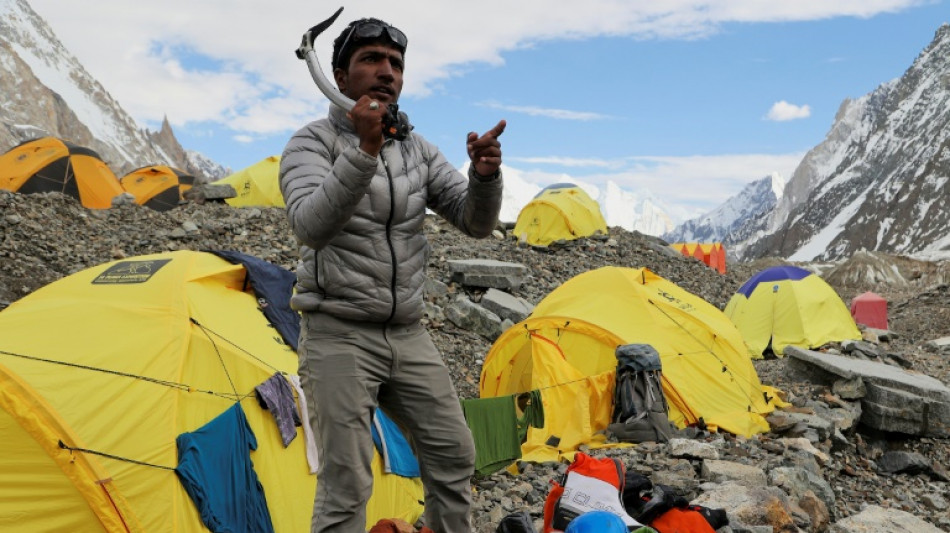
Pakistan climber cleanses K2 as shrine to fallen father / Photo: Joe STENSON - AFP
 Alleged 9/11 mastermind to go on trial in June 2028

 Abbas's treble strike rocks England in second Test
 'Butcher of Bosnia' Ratko Mladic dead: Serbian state media
 New Zealand make three changes for second South Africa Test
 Stocktwits Expands CME Group Alliance with the Integration of Single Stock Futures Data

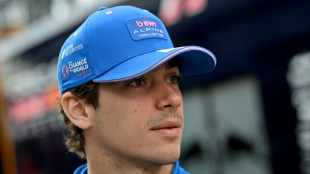 'Mature' Colapinto extends contact with Alpine through 2027
 Atletico rule out any talks with Barcelona over Alvarez
 Tech stocks lifted by Nvidia as broader markets struggle
 Delap joins Nottingham Forest in club-record deal
 ICC President Akane Warns U.S. Sanctions Threaten Court's Future
 Delays in Cancer Radiotherapy and Surgery Target Times

 Acrid stench, charred walls reveal devastation of Pakistan infant ward fire
 Norway holds its breath as King Harald's health deteriorates
 Germany reports record 15,800 heat-related deaths this summer
 YouTuber Chris Sails Arrested for Allegedly Falsifying Emergency Report
 Dinusha defiant as Sri Lanka lead by 170 in India Test

 Taiwan lawmakers approve $7.6 bn drone budget as China threat grows
 TechCentral.ie Daily Briefing: Agentic AI Firm Doubles Headcount to 60
 KiiChain Integrates TRON to Expand 24/7 On-Chain FX and Stablecoin Payments

 Japan to survey animal cafes over hygiene, welfare concerns

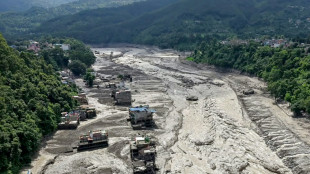
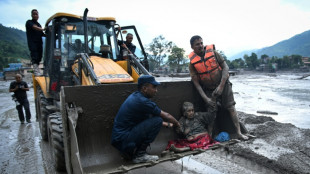
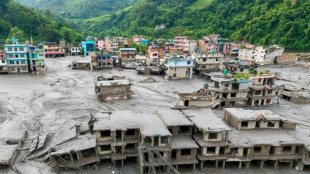 Desperate families search for missing after Nepal floods
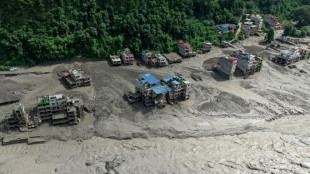 The missing in Nepal-Tibet flash floods
 Search for 1,300 missing after deadly Nepal-Tibet floods

 Once a top export, prized Kashmir carpet fades

 Search for 1,000 missing after deadly Nepal-Tibet floods
Gazing up from K2 Basecamp, Sajid Ali Sadpara sees Earth's second-highest mountain, his father's final resting place, and a blight of litter on the furthest reaches of the natural world.
Sajid dons a down coverall stitched with Pakistan's green flag to scale the 8,611-metre (28,251-foot)spur of rock, clearing an icebound grotesquerie of spent oxygen canisters, mangled tents and snarled rope discarded over decades by climbers questing for the summit.
Over a week some 200 kilograms (400 pounds) of litter is hacked from the pinnacle's frozen grip by his five-strong team and ferried precariously back down, he says, a rare act of charity in one of Earth's most unforgiving environments.
It is a high-altitude tribute to Sajid's father, legendary climber Ali Sadpara, honouring the place where they bonded in nature and where his body remains after a 2021 father-son expedition fell foul of the "savage mountain".
"I'm doing it from my heart," Sajid told an AFP team at K2 Basecamp, where 5,150 metres of elevation labours breathing and avalanches tremor off an amphitheatre of surrounding slopes.
"This is our mountain," the 25-year-old said, sizing up the task above. "We are the custodians."
- Pakistan raised high -
K2 was forged when India collided with Asia 50 million years ago, sprouting the Karakoram range of mountains across Pakistan's present-day northeastern Gilgit-Baltistan region.
It was named by British surveyors in 1856 -- denoting the second peak in the Karakoram range. Over time nearby mountains with alphanumeric designations became better known by names used by locals.
But sequestered up a glacial cul-de-sac on the Chinese border -- days from the faintest suggestion of human settlement -- K2 kept its foreboding moniker, stoking a reputation as a more wild, untamable and technically demanding ascent than Nepal's Everest, which stands 238 metres higher.
First conquered by Italians in 1954, its winter winds scourge up to 200 kilometres per hour and temperatures plunge to minus 60 degrees Celsius (minus 76 Fahrenheit).
But it also ignites primal passions with its archetypical triangular silhouette -- the shape of a peak a child might draw.
After two days on paths slit through valleys and four more across the Baltoro Glacier -- a 63-kilometre hulk frozen in a permanent storm swell and seamed with crevasses -- K2's first glimpse ripples frisson through hikers.
It stands like an altar at the end of a colossal aisle. Sundown deepens its rocky reliefs and burnishes snowy slopes to rose gold. Pilgrim paragliders come to whirl in its shadow.
One renowned wilderness photographer labelled this vista "the throne room of the mountain gods".
"We love it more than life itself because there's no place of such beauty on Earth," said Central Karakoram National Park (CKNP) warden Muhammad Ishaq.
Against this sublime backdrop Ali Sadpara stood out among a majority white, Western mountaineering elite as a domestic hero who rose from humble roots to scale eight of the world's 14 "super peaks" above 8,000 metres.
"Pakistan's name was raised high because of Ali," said 48-year-old Abbas Sadpara, an unrelated veteran mountaineer who guided the AFP team to K2.
Two years ago Sajid was attempting a perilous winter ascent of K2 with his father and two foreigners when illness forced him back.
The three men who carried on were later discovered dead below the "bottleneck" -- an overhang that looks like a frozen tidal wave on the final stretch before the summit.
Sajid recovered his father's body and performed Islamic rites at an improvised grave near Camp Four -- the last stopoff before the top.
He marked the spot with GPS coordinates before the mountain enveloped the remains at a height of more than 23 Eiffel Towers.
- Faith in cleanliness -
Sajid bears that loss with soft-spoken grace.
His voice, unbruised with emotion, is hard to make out in blaring Islamabad restaurants or the resort town of Skardu where a mural of his father looks on as expeditions jump off in growling jeeps.
But in the nearby village of Choghoghrong -- an oasis of golden cropland blotched with lavender bushes -- it resonates as he recounts the uncommon appreciation of the natural world his father handed down while they worked the land between summit pushes.
"This simple life and this natural life we spent here," Sajid said. "This whole world was my village."
"I am most connected with nature in this village," he said.
But K2 exerts a gravitational pull: a place of extreme risk but also the promise of absolute zen in the curious, adrenaline-addled climber's psyche.
"We want to be on mountains just for mental peace," Sajid said. "If we see any rubbish the feeling is totally different."
Abbas Sadpara said "K2 is no longer as beautiful as it once used to be. We have destroyed its beauty with our own hands."
But Sajid has climbed half the 8,000-metre peaks without supplemental oxygen, a daredevil undertaking, and holds no ill will towards those who jettison gear on the slopes.
"After a summit you are totally exhausted," he said. "The main thing is survival."
But there is a saying in Islam he is fond of recalling: "Cleanliness is half of faith."
"Climbing to the top is a different thing," he explains. "Cleaning is something that you feel personally from the heart."
- Tipping point -
In 2019, plastic waste was discovered 11 kilometres below the sea in the Mariana Trench, the deepest point on Earth.
With commercialised mountain tourism conveying growing numbers of tourists to the summit, Everest is also growing notorious for vast blemishes of trash.
K2 witnessed a record of some 150 summits last season prompting concern the same ironic dynamic -- of climbers leaving trails of waste while pursuing the world's most untouched vistas -- has crept into play in Pakistan.
"There's two mountains that the trash has been a problem and that's K2 and Everest," said Norwegian climber Kristin Harila, 37, whose summit of the Pakistan peak last month sealed a record-quick ascent of all 8,000-metre mountains in three months and a day.
"Commercial companies, they take in more equipment," explained CKNP ecologist Yasir Abbas, who oversaw a campaign pulling 1,600 kg of refuse off the mountain in 2022. "If more people go to climb there will be more waste."
"What goes up must come down," he says. "The people who are cleaning K2 are risking their life for the environment."
But the clean-up mission goes beyond the environmental, spilling into the code of fellowship climbers abide by at altitude -- beyond the earthbound crutches of rescue services and emergency rooms.
Cast-away ropes can mislead teams with minds clouded by altitude sickness towards oblivion. Abandoned tents force other campers out into more exposed spots at the mercy of the elements. Each tossed O2 canister is another hefty hazard at the whim of gravity and wind.
"It's not my trash or your trash, it's our trash," Harila told AFP in Islamabad.
"Here in K2 if there's some mistake you fall down. If you fall down, all the way you come down," said Mingma David Sherpa, 33, who led a Nepalese team with the Nimsdai Foundation also clearing some 200 kilograms from K2 before passing the baton to Sajid in mid-July.
One day before that moment, the young Sadpara sets eyes on the mountain after days of trekking through glacial wilderness. "I see K2 and I think a different way," he says. But "from distance you can't see the garbage".
"K2 is more than a mountain for me."
M.Fischer--AMWN