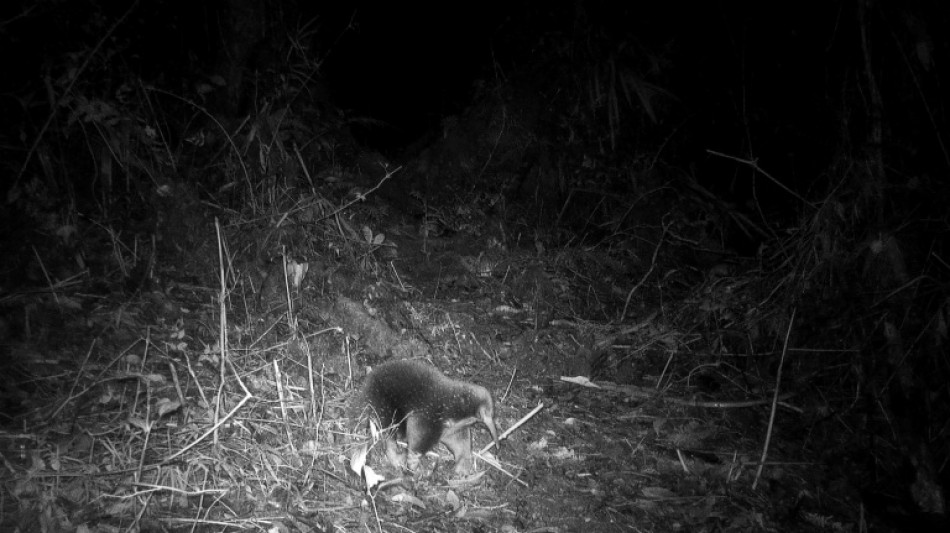
Elusive Attenborough echidna rediscovered in Indonesia / Photo: Handout - EXPEDITION CYCLOPS/AFP
 Palace intrigue in Uganda as succession battle heats up
 'Housing First' approach gets Swedish city's homeless off streets

 Czech duo Muchova and Mensik win US Open mixed doubles title

 Japan's 'polka dot queen' artist Yayoi Kusama dies aged 97

 Nepal-Tibet disaster: what we know

 China deploys record number of ships around Taiwan as pressure grows

 Ruthless Bayern target treble as rivals reboot on Bundesliga return

 What experts know so far about Nepal's deadly floods

 UEFA set to withdraw FIFA boycott threat ahead of Champions League draw

 Sumo moves to beat Japan summer heat as temperatures rise

 'Be more honest': Markets crave clarity from cryptic Fed chair

 Climate change leaves its mark on America's largest reservoir
 CIA director warned Russia not to attack NATO members: US media

 Search for missing after Nepal-Tibet floods kills at least 160

 Meta, US states agree $18 bn settlement in landmark teen safety case

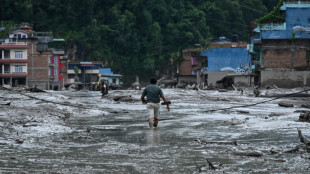 What scientists know so far about Nepal's deadly floods

 US general visits Colombia to discuss war on drugs

 Meta settlement puts social media industry on notice: 'There will be more'

 NFL owners approve record Seahawks sale

 Nigerian armed groups net nearly $6 mn in ransoms: study

 Savio scores on debut as Spurs advance in League Cup

 Mbappe hits treble as Real Madrid thrash Real Sociedad

 At Dollywood, superfans honor the late singer and local hero

 Stocks mixed as oil drops, US inflation stays high

 Bolivia's Paz appoints new economy minister amid bailout talks

An elusive echidna feared extinct after disappearing for six decades has been rediscovered in a remote part of Indonesia, on an expedition that also found a new kind of tree-dwelling shrimp.
The Zaglossus attenboroughi, a kind of long-beaked echidna named for famed British naturalist David Attenborough, had last been seen in 1961.
Echidnas are nocturnal and shy, making them difficult to find at the best of times, and the Attenborough long-beaked echidna has never been recorded outside the extremely remote Cyclops Mountains of Indonesia's Papua region.
They are the last vestiges of an ancient animal line, explained James Kempton, a biologist from the University of Oxford who led the expedition.
"The reason it appears so unlike other mammals is because it is a member of the monotremes –- an egg-laying group that separated from the rest of the mammal tree-of-life about 200 million years ago."
It took a team of scientists and experts from Britain and Indonesia four weeks and 80 camera traps to find the echidna, and it was only on the last day, and the final memory card of the trip, that the creature made an appearance.
Just a few seconds of black and white footage shows the slightly ungainly creature ambling through the undergrowth, apparently unaware of the excitement its very existence is likely to elicit.
"The discovery is the result of a lot of hard work and over three-and-a-half years of planning," said Kempton.
The team relied heavily on guidance from the local community, who helped them navigate difficult terrain and granted them access to areas regarded as sacred.
In addition to the rediscovered echidna, the team found a kind of honeyeater bird not recorded since 2008, and a slew of underground species that are new to science.
Blind spiders, blind harvestman and a whip scorpion were all recorded in a previously unexplored cave system that was revealed only when a team member fell through a moss-covered entrance.
Among the more unusual findings was a new kind of tree-dwelling shrimp.
"We were quite shocked to discover this shrimp in the heart of the forest," said Leonidas-Romanos Davranoglou, the team's lead entomologist, theorising that the region's heavy rainfall creates an environment humid enough for the shrimps to live on land.
The discoveries came despite perilous conditions, with Davranoglou breaking his arm on the trip and another researcher enduring a leech attached to his eye for a day and half before it was removed at a hospital.
For all the hardships, Kempton described the landscape as "magical," and the team hopes their findings will highlight the desperate need for conservation of the region and Indonesia's remaining forests elsewhere.
"Tropical rainforests are among the most important and most threatened terrestrial ecosystems," said Davranoglou.
B.Finley--AMWN