-
 Palace intrigue in Uganda as succession battle heats up
-
The missing in Nepal-Tibet flash floods
-
 'Housing First' approach gets Swedish city's homeless off streets
-
Search for 1,300 missing after deadly Nepal-Tibet floods
-
 Czech duo Muchova and Mensik win US Open mixed doubles title
-
Once a top export, prized Kashmir carpet fades

-
 Japan's 'polka dot queen' artist Yayoi Kusama dies aged 97
-
Search for 1,000 missing after deadly Nepal-Tibet floods
-
 Nepal-Tibet disaster: what we know
-
Park So-yeon first woman to play for eSports powerhouse South Korea

-
 China deploys record number of ships around Taiwan as pressure grows
-
Yayoi Kusama: Japan's kaleidoscopic, troubled 'polka dot queen'

-
 Ruthless Bayern target treble as rivals reboot on Bundesliga return
-
Euro champ Hunt 'on her toes' against world's best in Zurich 100m

-
 What experts know so far about Nepal's deadly floods
-
Asian chip firms lifted by Nvidia forecast but broader markets struggle

-
 UEFA set to withdraw FIFA boycott threat ahead of Champions League draw
-
Search for missing after Nepal-Tibet floods kill 165
-
 Sumo moves to beat Japan summer heat as temperatures rise
-
Qantas says profits slump as fuel costs surge
-
 'Be more honest': Markets crave clarity from cryptic Fed chair
-
Lofty bond yields, Bessent's intervention pose challenge to Fed's Warsh

-
 Climate change leaves its mark on America's largest reservoir
-
The foreigners missing in Nepal's flash floods
-
 CIA director warned Russia not to attack NATO members: US media
-
Bond yields are surging: Here's why that could spell trouble

-
 Search for missing after Nepal-Tibet floods kills at least 160
-
Fed's Cook rejects Trump mortgage fraud claims
-
 Meta, US states agree $18 bn settlement in landmark teen safety case
-
Police probe 'assault allegations' after Carse's nightclub incident

-
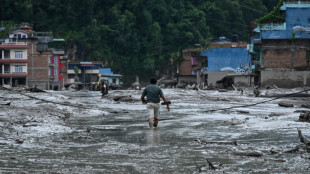 What scientists know so far about Nepal's deadly floods
-
How we might hear new Dolly Parton music in the future

-
 US general visits Colombia to discuss war on drugs
-
Nvidia doubles revenue, forecasts even more AI spending

-
 Meta settlement puts social media industry on notice: 'There will be more'
-
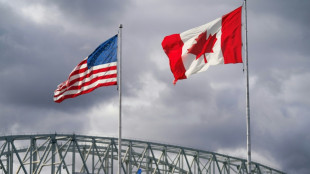
Canada renews push to boycott US products
-
 NFL owners approve record Seahawks sale
-
Savio scores on debut as Spurs set-up League Cup tie with Liverpool

-
 Nigerian armed groups net nearly $6 mn in ransoms: study
-
Brazil sues Discord over child safety measures, demands $100 mln in damages

-
 Savio scores on debut as Spurs advance in League Cup
-
Alberta NDP Urges Smith to Postpone Separation Vote Amid Trade War

-
 Mbappe hits treble as Real Madrid thrash Real Sociedad
-
Fenerbahce stun Lyon in Champions League as AEK crush Levski

-
 At Dollywood, superfans honor the late singer and local hero
-
Why Global Finance Still Relies on Wall Street Despite Diversification Trends
-
 Stocks mixed as oil drops, US inflation stays high
-
Bethlehem Father Seeks Aid for Special Needs Children Amid Health Crisis

-
 Bolivia's Paz appoints new economy minister amid bailout talks
-
LIV Golf to lay off majority of staff

Nations start negotiations over global plastics treaty
Nations grappling with the plastic "suffocating" nature and leaching into food and the human body began fresh negotiations on Monday toward a UN treaty to tackle the growing problem.
Some 175 countries agreed last year to conclude by 2024 a binding agreement to combat the plastic pollution littering oceans, mountain tops, and even blood and breast milk.
Negotiators have met twice already but the week-long talks in Kenya are the first to consider the concrete details of the treaty, and tensions have emerged over what it should contain.
At the opening of the high-stakes talks at the UN Environment Programme (UNEP) headquarters in Nairobi, nations were urged to find common ground for the sake of the planet.
"Nature is suffocating, gasping for breath. All ecosystems... are under threat from plastic pollution," said Jyoti Mathur-Filipp, executive secretary of the treaty negotiating committee.
"We hold in our hands the power to correct this destructive course."
Ahead of the talks, 60 so-called "high ambition" nations called for binding rules to reduce the use and production of plastic, which is made from fossil fuels, a measure supported by many environment groups.
It is one of the many options proposed in a treaty draft published in September that is driving the deliberations in Nairobi.
More than 2,000 delegates are attending, including representatives from oil and gas companies, environment lobbies and civil society groups.
- Divergent views -
The gathering comes just before crucial climate talks in the oil-rich United Arab Emirates later this month that are set to be dominated by debates over the future of fossil fuels.
Countries with large petrochemical industries have generally preferred to focus on recycling and better waste management rather than the caps on new plastic or product bans demanded by some parties to the talks.
UNEP executive director Inger Andersen said nations agreed to develop a treaty that dealt with the entire life cycle of plastics -- from production at their source, to their design and use, to final disposal.
"We cannot recycle our way out of this mess," she told AFP on the sidelines of the talks.
Environment groups attending in Nairobi accused a so-called "low ambition coalition" of largely oil-producing nations including Iran, Saudi Arabia and Bahrain of aligning to frustrate the talks.
"We have seen these countries move actively... to prevent these negotiations from beginning, to prevent them from moving to substance, and to slow down those discussions," Carroll Muffett from the Center for International Environmental Law told reporters.
- 'Existential threat' -
The International Council of Chemical Associations, a global industry body, said the treaty "should be focused on ending plastic pollution, not plastic production".
"We support a legally binding agreement that accelerates circularity where new plastics are made from used plastics," the council, which counts Dow and ExxonMobil among its members, told AFP on Monday.
Plastic production has doubled in 20 years and in 2019, a total of 460 million tonnes was manufactured, according to the OECD.
Despite growing awareness of the problem, current trends suggest that production could triple by 2060 without action.
Around two-thirds of plastic waste is discarded after being used only once or a few times, and less than 10 percent is recycled, with millions of tonnes dumped in the environment or improperly burned.
"This kind of polluting our environment is unacceptable and is essentially an existential threat to life, to humanity and everything in between," Kenyan President William Ruto said at the plenary opening.
The Nairobi meeting is the third of five sessions in a fast-tracked process aiming to conclude negotiations next year so the treaty can be adopted by mid-2025.
Campaigners say delegates in Nairobi must make considerable headway to remain on course and warned against time-consuming debates over procedural matters that caused friction at the last talks in Paris in June.
Th.Berger--AMWN