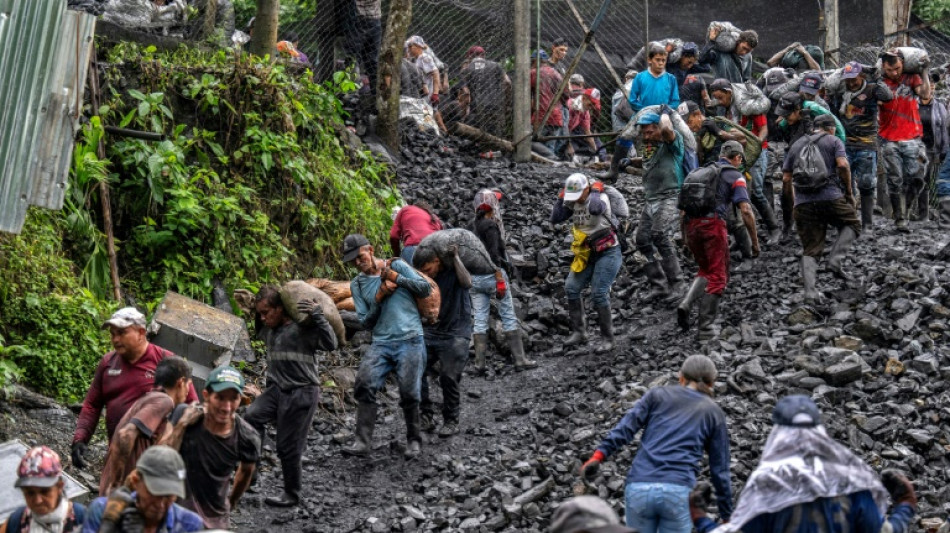
Leftover emeralds: the dream of Colombia's poor miners / Photo: Luis ACOSTA - AFP
 Too hot to incubate: Nile crocodiles hatch on their own in French reserve
 Spurs closing in on Man City's Marmoush after signing Savio

 Celtic count the cost of Champions League flop

 Lebanon accuses Israel of burning forest, farmland in south
 Nepal floods at China border kill 8, cause 'major casualties' in Tibet

 France eases cow diets as cheesemakers sweat

 America unites in mourning for Dolly Parton

 Meta and US states discuss settlement in landmark social media trial: report

 Fire haze threatens health of millions in Indonesia, ministry warns

 Senegal-made sickle cell treatment raises hopes, reduces costs
 Iran says Hormuz strait still closed despite transit corridor talks

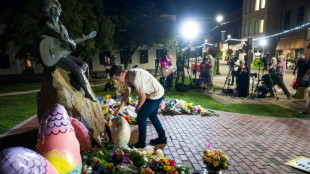 'Our patron saint': Tennesseans mourn local hero Dolly Parton

 Australian police hunt thieves in $250,000 oyster heist

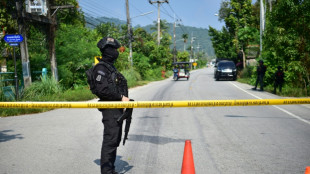 Coordinated attacks: Thailand's southern insurgency flares

 Asian Games chiefs hold talks as participant numbers balloon

 Too small for fries: drought shrinks Belgian potatoes

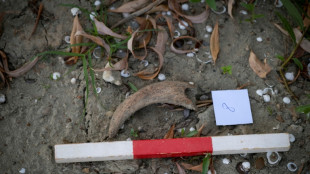 Drought-hit Danube gives way to fossil hunt in Bulgaria

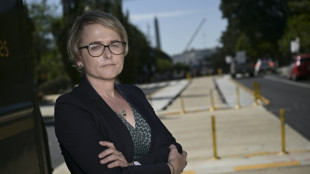 Julia Curlee, CIA officer fired by White House for being transgender

 Fave or flop? A guide to gauging video game success

 RAEK Partners with Avadium Design to Develop RAEK Creator Vault, Its First Private AI Appliance

 Aztec Completes Consolidation of Tombstone Gold-Silver District Land Package, Arizona - Key Land Holdings Have Grown More Than Six-Fold Since 2017

 Who is the Best Eyelid Surgeon in Kirkland?

 How to Manage Costs for Urgent Plumbing Repairs

 Eagle Plains Reports Anomalous Radioactivity from First Drillholes at the Don Lake Uranium Project, Saskatchewan

 Instagram chief admits touting teen safety tool while omitting it was barely used

One man's trash can very well become another man's treasure in the Colombian town of Muzo, the emerald capital of the world.
In this small community in the foothills of the eastern Andes mountains, multinational mining company Esmeralda Mining Services (EMS) deposits tons of earth it has processed from its operations into a cage-like enclosure.
A few times a month, EMS allows hundreds of miners -- known as "guaqueros" or treasure hunters -- to search through the detritus and take home any precious stones they find.
Among the miners is Miguel Hernandez, 72, who grips a cane as he waits outside the cage, where some hopefuls have queued since 3:00 am.
"May our Heavenly Father give me a gift so I can buy a new home... it's what I want most," he told AFP.
Many emerald hunters bring their own shovels and sacks.
After filling the bags with as much earth as they can carry, they haul the bags down to a nearby stream and filter through the findings to see if any emeralds are hidden inside.
Several guaquero associations have been authorized by EMS to help coordinate logistics, organizing miners into different groups to try to defuse the chaos.
"I don't go in there because the people are terrible," said Maria Rodriguez, 58, who accompanied her miner husband. "They grab you, throw you, trample you."
The enclosure remains open for about four hours at a time, and by the end, many return home empty-handed more often than not.
- Green Fever -
Emerald hunters come to Muzo, a town of about 9,000 inhabitants about 125 miles (200 kilometers) north of the capital Bogota, from all over South America.
"The mining causes a very delicate problem," Ximena Castaneda, the mayor of Muzo, told AFP. "And it's that folks come with the expectation they will be millionaires one day."
"Some arrive and make money, while others never do," she continued.
A secondary economy has sprung up around the mining craze, with vendors selling food, drinks and tools just outside the mining area, generating up to $5,000 a day, according to the mining associations.
Those who can eke out a living get by on the luck of the draw.
"I have been in the mines here for 30 years and emeralds have come out... but every day it's getting more difficult," said Gilberto Cifuentes, 54.
- Inequality -
Colombia is one of the world's largest producers of emeralds, with exports of the gems totaling $122 million in 2022, according to the National Federation of Emeralds.
However, most of the profits go toward multinational mining corporations or powerful mining families.
The current structures date back to the 1980s when rival emerald miners unleashed a "green war," which killed thousands in this region in central Colombia.
Victor Carranza -- known as "the emerald czar" -- leveraged support from paramilitary groups and drug traffickers to impose a monopoly and further intensifying the conflict, according to intelligence reports.
The aftermath laid bare stark inequality within the mining industry.
EMS, which did not respond to AFP's request for comment, operates a foundation in Muzo which conducts various social programs.
Still, some believe EMS could do more to give back to the impoverished community around the mines.
Steven Ariza, 35, oversees one of the guaquero associations after the group's previous leader was shot and killed in 2022.
He said the group advocates for EMS to hire more workers from Muzo, source supplies locally and generally invest in the region.
Steven Medina, 24, also seeks to bring awareness to the plight of the miners.
Medina leads foreign buyers on regular tours of the mines to show them the reality behind the precious gems, most of which end up in either Europe or the United States.
"People do need a lot of help" in Muzo, he said.
H.E.Young--AMWN