US-China progress sparks hope for COP29, says Azerbaijan / Photo: ALAIN JOCARD - AFP
 North Korea to 'bring joy' to Kim with 100 athletes at Asian Games

 US LGBTQ community mourns 'diva' Dolly Parton

 England bid to banish booze woes as Pakistan seek self-respect
 High quality, low risk: record number of Japanese in Premier League

 Stocks edge higher as oil drops on fresh Mideast hopes
 Pakistan's girls fight for their place in the boxing ring

 Five things to know about Anthropic ahead of Wall Street debut

 Social media use on the rise among Australian under-16s after ban: data

 Instagram chief admits touting teen safety tool while omitting it was barely used

 'Final Fantasy', 'The Witcher' in spotlight at Europe gaming bash
 Syrian Kurdish leader dissolves force that spearheaded jihadist fight

 Trump raises prospect of demolishing iconic Kennedy Center

 PGA Tour to end in two-week matchplay showdown from 2028: CEO

 United States of Dolly: how a country queen bridged America's divide

 PGA chief says 'no current plans' for LIV stars to return

 Golf giant Callaway apologizes after ad sparks outcry

 Ioane stars as New Zealand recover to beat Johannesburg Lions

 Ukrainians seeking beauty in a bomb-scarred city

 Dolly Parton: Country music's dolled up but deserving queen

 US robotaxi firm Waymo plans to launch in Germany

 'Here to win': Xavi vows to restore pride in Dutch football

 Cameroon's Baleba joins as Man United boost midfield options
 'Shocking' book about Putin's private life wins French literary prize
 Pogacar storms to Vuelta a Espana stage four solo triumph

 Canada unveils counter-tariffs of 15-50% on US goods
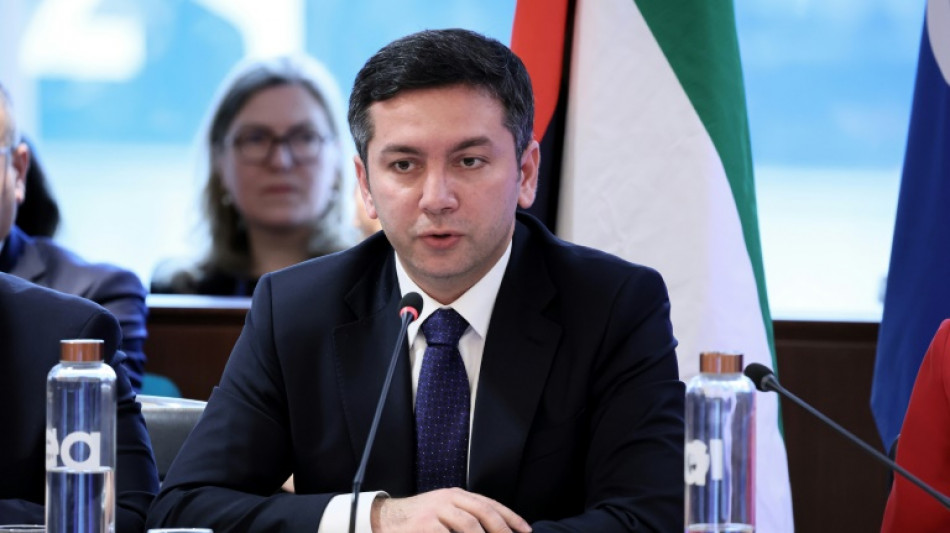
The United States and China are closing the divide on the contentious issue of international climate finance, raising hopes for a breakthrough at a crucial climate conference in Azerbaijan, according to the host country's chief negotiator.
In an interview with AFP, Yalchin Rafiyev said he had received "positive signals" following recent high-level talks between the world's two largest economies, which frequently assert themselves as leading voices for the Global North and South in international negotiations.
"There had been a very wide gap among the positions of the US and China," explained Rafiyev, who was speaking at the margins of the UN's annual high-level summit, and is tasked with steering negotiations between world leaders at the COP29 negotiations in Baku this November.
"This gap is now narrowing, and we see visible progress," added the 37-year-old diplomat, saying he saw a "softening" of stances on both sides.
While he declined to go into specifics, citing the need not to jeopardize delicate negotiations, he added: "That gives us an understanding that we may hope for a positive outcome in the COP29."
- Money talks -
While last year's COP28 summit in UAE struck a landmark deal to phase out fossil fuels, COP29 is charged with a new, daunting task: putting a price tag on how much developing nations will need to weather the mounting impacts of climate change and to transition to greener economies.
More than a decade ago, wealthy nations -- including the United Nations, European Union, Japan and others -- pledged to deliver $100 billion annually by 2020 to support developing countries.
But that goal was only achieved for the first time in 2022, and much of the funding came in the form of high-interest loans, drawing fierce criticism and accusations of broken promises.
India has called for $1 trillion annually, a ten-fold increase in the existing pledge.
Not only do developed countries view such figures as unrealistic, they are now advocating for oil-rich Gulf states and China to share the financial burden, arguing that the original list of donor countries is based on outdated 1990s development levels.
Rafiyev emphasized that COP29's benchmark for success would be reaching consensus on a final headline figure.
However, he declined to weigh in on the Global North's push to expand the pool of contributors, stressing the host country's need to stay neutral.
He also declined to specify when Azerbaijan, whose economy depends heavily on oil and gas extraction, would unveil its updated plans to meet the emissions reductions required by the Paris Agreement.
Although countries are not obligated to submit these plans until February 2025, many climate observers had hoped Azerbaijan would seize the opportunity at the UN General Assembly to show leadership by setting ambitious new targets.
Instead, Rafiyev said Azerbaijan would "do our best" to release its new climate strategy ahead of the Baku summit, and was coordinating with Brazil and the UAE -— the next and previous COP hosts -- towards this goal.
- Human rights criticism -
Rafiyev brushed off suggestions that reliance on fossil fuels extraction made Azerbaijan an inappropriate venue for the climate summit.
"Our revenues from fossil fuels have been invested in the welfare of our people," he said, adding that Azerbaijan is now firmly focused on a greener future.
The country has signed a global pledge to reduce methane, a potent long-acting greenhouse gas, and committed to increasing the share of renewables in its energy mix to 30 percent by 2030.
Hosting the conference, he said, "has inspired us to accelerate our energy transition and strengthen our climate resilience."
Azerbaijan has called for a global truce in conflicts during the summit, with Rafiyev pointing to research that attributes nearly six percent of global greenhouse gas emissions to military activity.
However, critics have labeled the appeal hypocritical, given the country's checkered human rights record and its military offensive last year to crush ethnic-Armenian separatists.
Rafiyev dismissed such accusations as "baseless" and "cynical."
"At the end of the day, what we are aspiring for is peace, and why should that be criticized?"
L.Davis--AMWN