In the Colombian Pacific, fighting to save sharks / Photo: Luis ACOSTA - AFP
 High quality, low risk: record number of Japanese in Premier League

 Stocks edge higher as oil drops on fresh Mideast hopes

 Pakistan's girls fight for their place in the boxing ring
 Five things to know about Anthropic ahead of Wall Street debut

 Social media use on the rise among Australian under-16s after ban: data

 Instagram chief admits touting teen safety tool while omitting it was barely used

 'Final Fantasy', 'The Witcher' in spotlight at Europe gaming bash

 Syrian Kurdish leader dissolves force that spearheaded jihadist fight

 Trump raises prospect of demolishing iconic Kennedy Center

 PGA Tour to end in two-week matchplay showdown from 2028: CEO

 United States of Dolly: how a country queen bridged America's divide

 PGA chief says 'no current plans' for LIV stars to return

 Golf giant Callaway apologizes after ad sparks outcry

 Ioane stars as New Zealand recover to beat Johannesburg Lions

 Ukrainians seeking beauty in a bomb-scarred city

 Dolly Parton: Country music's dolled up but deserving queen

 US robotaxi firm Waymo plans to launch in Germany

 'Here to win': Xavi vows to restore pride in Dutch football

 Cameroon's Baleba joins as Man United boost midfield options

 'Shocking' book about Putin's private life wins French literary prize

 Pogacar storms to Vuelta a Espana stage four solo triumph

 Canada unveils counter-tariffs of 15-50% on US goods

 Volkswagen boss braces German workers for more job cuts

 Olympic champion Brignone to undergo new knee operation

 The summer climate change became scorching reality for Europe

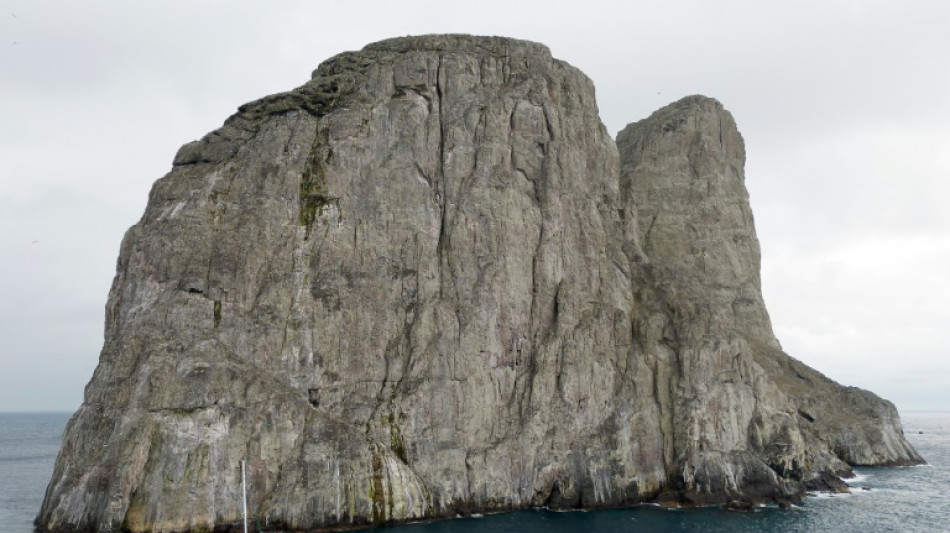
A lone catamaran named "Silky" patrols waters around the remote island of Malpelo, a refuge that is protected yet full of peril for endangered marine species in the Colombian Pacific.
Its crew of environmentalists is the terror of boats illegally fishing for sharks inside the reserve some 500 kilometers (310 miles) off mainland Colombia -- one of the richest countries in terms of marine fauna.
Without weapons or backup, the activists shoo away intruder vessels, threaten to report them to the authorities, even dive under water to cut loose sharks caught in nets or on lines.
Active round-the-clock since 2018, the team of shark-lovers claims to be turning the tide in the Malpelo Fauna and Flora Sanctuary, a mecca for divers and the largest no-fishing zone in the Eastern Tropical Pacific.
"The success of the project can be seen in the fact that they (the illegal fishers) do not return," said Colombian diver Erika Lopez, who created the foundation Biodiversity Conservation Colombia with the help of an Australian philanthropist.
The project was born from what the activists view as a lack of official shark protection, with the navy arresting illegal fishers only if they happen to come across them on routine patrols against drug traffickers and other territorial intruders.
Due to play host of the UN COP16 biodiversity conference starting next Monday, Colombia's vast Pacific coastline is on a key migratory route for hammerhead sharks, whale sharks and other species, many of them endangered.
But the bountiful waters of the sanctuary attract vessels from far and wide, many from neighboring Ecuador, others from Panama and Costa Rica in the Caribbean or even China, where shark fin is a delicacy.
Lopez's foundation claims the crew of the Silky -- the name of a type of shark -- has rescued 508 animals alive since 2018, scared away 302 boats and confiscated more than 70,000 meters of fishing line.
Since last December, the foundation reports it has not spotted any fishing boats near Malpelo island in the reserve of more than 850,000 hectares recognized as a UNESCO heritage site.
"We try as much as possible to take the equipment away from them, to free the species that are trapped, that's the main mission," 53-year-old Dario Ortiz, an artisanal fisherman-turned-environmentalist, told AFP on board the "Silky."
But it is a full-time effort.
"This boat has to be basically 24/7, 365 days a year containing this threat," said Lopez, 51, who dreams of upscaling the project to a flotilla of vessels dedicated to conservation and science in the Pacific.
- Rich and desirable -
On the high seas, far from Malpelo island, a Colombian navy warship also patrols an area teeming with hammerhead sharks, marlin and other endangered creatures.
On a recent mission with AFP on board, it arrested three Ecuadoran fishermen found with a highly valuable haul of silky, hammerhead and blacktip sharks, sailfish and four blue marlins -- all still alive.
"The Colombian Pacific is very rich and it is desirable," said Admiral Rafael Aranguren.
With "our ships we can reach this part of the territory and exercise controls so that they do not illegally exploit these riches, so that they do not harm the environment."
In 2020, the government of former president Ivan Duque banned shark fishing, both on an industrial and small-scale, to try to protect marine stocks.
But faced with an outcry from Afro-Caribbean fishing communities on the Pacific coast which rely on shark catches for meat to eat and sell, incumbent President Gustavo Petro in January partly repealed the ban.
The government decreed that small-scale fishermen may keep and consume sharks accidentally caught in nets meant for other, unrestricted, fish species.
The decision caused outrage among conservationists who view it as a license to kill.
The Navy estimates it has arrested 30 people so far this year for illegal fishing in Colombian waters.
Between 2012 and 2022, authorities seized more than 334 tons of fish meat illegally harvested, according to the Ministry of Environment.
The country does not keep a record of sharks that fall victim to illegal fishing.
O.Norris--AMWN