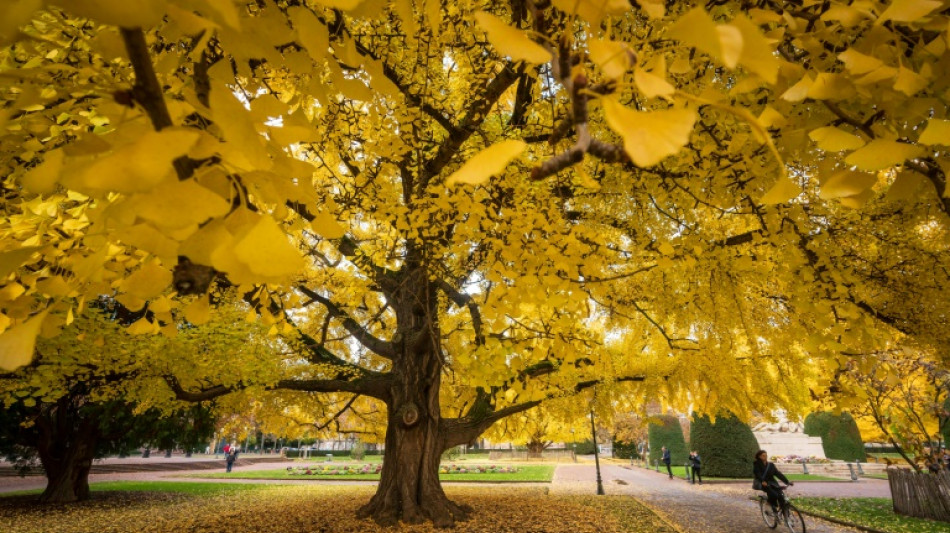
One in three tree species at risk of extinction: report / Photo: PATRICK HERTZOG - AFP/File
 Social media use on the rise among Australian under-16s after ban: data

 Instagram chief admits touting teen safety tool while omitting it was barely used

 'Final Fantasy', 'The Witcher' in spotlight at Europe gaming bash
 Syrian Kurdish leader dissolves force that spearheaded jihadist fight

 Trump raises prospect of demolishing iconic Kennedy Center

 PGA Tour to end in two-week matchplay showdown from 2028: CEO

 United States of Dolly: how a country queen bridged America's divide

 PGA chief says 'no current plans' for LIV stars to return

 Golf giant Callaway apologizes after ad sparks outcry

 Ioane stars as New Zealand recover to beat Johannesburg Lions

 Ukrainians seeking beauty in a bomb-scarred city

 Dolly Parton: Country music's dolled up but deserving queen

 US robotaxi firm Waymo plans to launch in Germany

 'Here to win': Xavi vows to restore pride in Dutch football

 Cameroon's Baleba joins as Man United boost midfield options
 'Shocking' book about Putin's private life wins French literary prize
 Pogacar storms to Vuelta a Espana stage four solo triumph
 Canada unveils counter-tariffs of 15-50% on US goods

 Volkswagen boss braces German workers for more job cuts
 Olympic champion Brignone to undergo new knee operation

 The summer climate change became scorching reality for Europe
 Root angered by England's off-field 'stupid mistakes'

 Welsh rugby league 'giant' Boston dies, aged 92

 Root annoyed by England's off-field 'stupid mistakes'

 One million Afghan children suffer 'life-threatening' malnutrition: UN

More than one in three species of trees are at risk of extinction worldwide, threatening life as we know it on Earth, according to a report published Monday.
The warning came in the Global Tree Assessment, contained in an update of the International Union for Conservation of Nature (IUCN) Red List of Threatened Species.
Issued to coincide with the UN's COP16 summit on biodiversity, held in the Colombian city of Cali, the report said over 16,000 tree species are at risk of extinction.
More than 47,000 species were assessed for the study, out of an estimated 58,000 species thought to exist in the world.
Trees are felled for logging and to clear land for farming and human expansion. Climate change poses an additional threat through worsening drought and wildfires.
The numbers are not merely symbolic.
People "rely on tree species for food, timber, fuels (and) medicines," expert Emily Beech told AFP.
They also make the oxygen we breathe, and absorb heat-trapping carbon dioxide emissions from the atmosphere.
"Trees are essential to support life on Earth through their vital role in ecosystems, and millions of people depend upon them for their lives and livelihoods," said IUCN director general Grethel Aguilar.
A 2015 study estimated there are about three trillion individual trees in the world.
The study, published in the science journal Nature, estimated that over 15 billion trees are cut down each year, and the global number of trees has fallen by nearly half since the start of human civilization.
Over 5,000 of the species on the IUCN Red List are used for construction timber, and more than 2,000 species for medicines, food and fuels.
Species at risk include the horse chestnut and ginkgo, both used for medical applications, the big leaf mahogany used in furniture making, as well as several ash, magnolia and eucalypt species, said Beech, head of conservation prioritization at Botanic Gardens Conservation International (BGCI), which contributed to the tree assessment.
- Seed banks essential -
According to the IUCN report, the number of trees at risk is "more than double the number of all threatened birds, mammals, reptiles and amphibians combined."
Tree species are at risk of extinction in 192 countries, but the highest proportion is found on islands due to rapid urban development and expanding agriculture, and the introduction of invasive species, pests and diseases from elsewhere.
In South America, which boasts the greatest diversity of trees in the world, 3,356 out of 13,668 assessed species are at risk of extinction.
Many species on the continent, home to the Amazon jungle, have likely not even been discovered yet.
When they are, they are "more likely than not to be threatened with extinction," said the report.
It called for forest protection and restoration through tree planting as well as the conservation of species dying out through seed banks and botanic garden collections.
More than 1,000 experts contributed to the assessment.
O.Norris--AMWN