Climate finance's 'new era' shows new political realities / Photo: Orlando SIERRA - AFP/File
 Trump raises prospect of demolishing iconic Kennedy Center

 PGA Tour to end in two-week matchplay showdown from 2028: CEO

 United States of Dolly: how a country queen bridged America's divide

 PGA chief says 'no current plans' for LIV stars to return

 Golf giant Callaway apologizes after ad sparks outcry

 Ioane stars as New Zealand recover to beat Johannesburg Lions

 Ukrainians seeking beauty in a bomb-scarred city
 Dolly Parton: Country music's dolled up but deserving queen
 US robotaxi firm Waymo plans to launch in Germany
 'Here to win': Xavi vows to restore pride in Dutch football

 Cameroon's Baleba joins as Man United boost midfield options
 'Shocking' book about Putin's private life wins French literary prize
 Pogacar storms to Vuelta a Espana stage four solo triumph

 Canada unveils counter-tariffs of 15-50% on US goods
 Volkswagen boss braces German workers for more job cuts
 Olympic champion Brignone to undergo new knee operation

 The summer climate change became scorching reality for Europe
 Root angered by England's off-field 'stupid mistakes'

 Welsh rugby league 'giant' Boston dies, aged 92
 Root annoyed by England's off-field 'stupid mistakes'
 One million Afghan children suffer 'life-threatening' malnutrition: UN

 Sri Lanka trail India by 238 runs in second Test
 West Bank settlers attack AFP journalists
 MEXC Kicks Off MOVE Carnival With 0-Fee Trading and 1M USDT in Rewards
 Human rights in Myanmar hitting a 'new low': UN
Rich countries' promise of $300 billion a year in climate finance brought fury at talks in Baku from poor nations that found it too paltry, but it also shows a shift in global political realities.
The two-week marathon COP29 climate conference opened days after the decisive victory in the US presidential election of Donald Trump, a sceptic both of climate change and foreign aid.
In the new year, Germany, Canada and Australia all hold elections in which conservatives less supportive of green policies stand chances of victory.
Britain is an exception, with the new Labour government putting climate high back on the agenda, but in much of the West, concerns about inflation and budgetary shocks from Russia's invasion of Ukraine have dented enthusiasm for aggressive climate measures.
At COP29, Germany and the European Union maintained their roles championing climate but also advocated a noticeably practical approach on how much money historical polluters should give poorer countries.
"We live in a time of truly challenging geopolitics, and we should simply not have the illusion" otherwise, European climate commissioner Wopke Hoekstra told bleary-eyed delegates at COP29's pre-dawn closing session Sunday, as activists in the back loudly coughed to drown him out.
But he vowed leadership by Europe, hailing COP29 as "the start of a new era for climate finance".
German Foreign Minister Annalena Baerbock, a Green party member and longtime climate advocate, called for flexibility on ways to provide funding.
Europe should "live up to its responsibilities, but in a way that it doesn't make promises it can't keep", she said.
Avinash Persaud, special advisor on climate change to the president of the Inter-American Development Bank, called the final deal "the boundary between what is politically achievable today in developed countries and what would make a difference in developing countries".
Activists say that climate funding is a duty, not choice, for wealthy nations whose decades of greenhouse gas emissions most contributed to the crisis that most hits the poorest.
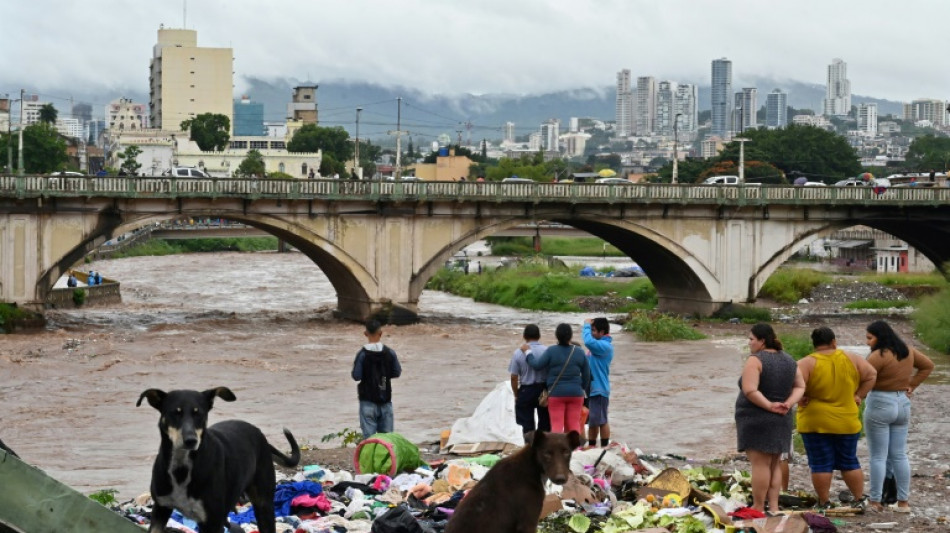
This year is again set to be the hottest on record on the planet. Just since COP29, deadly storms have battered the Philippines and Honduras, and Ecuador declared a national emergency due to drought and forest fires.
- 'Creative accounting'? -
Wealthy historic emitters' promise of $300 billion a year by 2035 is a step up from an expiring commitment of $100 billion annually, but all sides acknowledge it is not enough.
The COP29 agreement cites the need for $1.3 trillion per year, meaning a whopping $1 trillion a year needs to come from elsewhere.
Even within the $300 billion commitment, some activists see too much wiggle room.
"It is, to some extent, almost an empty promise," said Mariana Paoli, the global advocacy lead at London-based development group Christian Aid.
She described the target as "creative accounting", saying there was not enough clarity on how much money would come from public funds and in grants rather than loans.
She acknowledged the politics of the moment but said that wealthy nations had options such as taxation on fossil fuel companies.
"There is a backlash because there is no political will," she said.
- Role for multinational banks -
In one closely scrutinised part of the Baku deal, countries will be able to count climate finance through international financial institutions toward the $300 billion goal.
The text states that it is "voluntary" -- potentially opening the way to include China, which is the world's largest emitter but refuses to have requirements like long-developed countries.
In a joint statement at COP29, multilateral development banks led by the Washington-based World Bank Group but also including the Beijing-based Asian Infrastructure Investment Bank -- which has long faced US criticism -- expected that they together can provide $120 billion annually in climate financing and mobilise another $65 billion from the private sector by 2030.
Melanie Robinson, director of the global climate program at the World Resources Institute, said there were good reasons to rely on multinational development banks, including how much capital they can leverage and their tools to advance green policies.
"They are the most effective way to turn each dollar of finance into impact on the ground," she said.
She agreed that the $300 billion was insufficient but added, "It's a down payment on what we need."
Beyond the debate on dollar figures, she pointed to an initiative within the G20 by Brazil, which holds COP30 next year, to reform financial institutions so as to incorporate debtor nations as well as climate concerns.
"There is really a much bigger opportunity for us -- which is shifting the whole financial system," she said.
T.Ward--AMWN