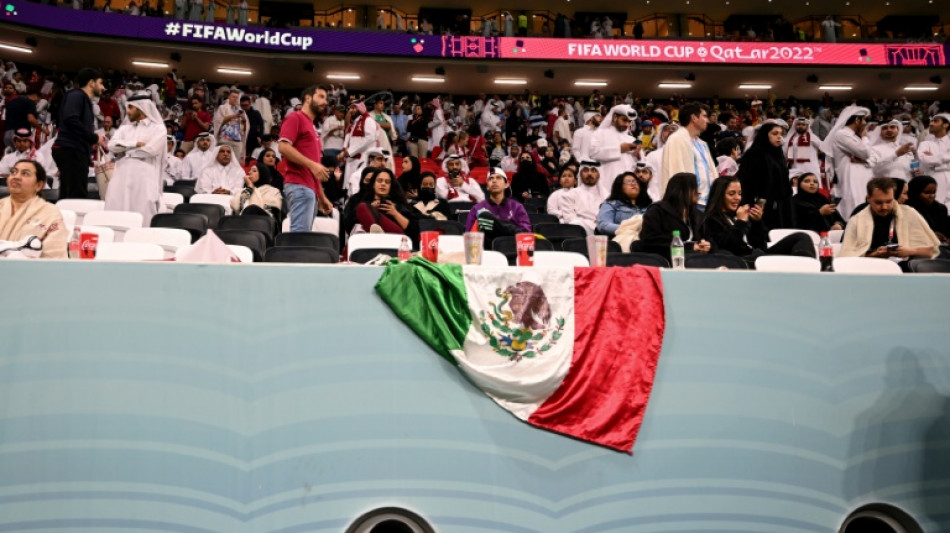
Triple-hosted World Cup: huge ambition at a hefty cost to planet / Photo: MANAN VATSYAYANA - AFP/File
 Welsh rugby league great Boston dies, aged 92

 'Traumatic' tornado shatters French village

 Spurs splash out £75 million for Man City's Savinho

 IntellectEU Introduces Catalyst Core
 Stocks rise and oil slips as traders eye Iran threat, Nvidia results

 India in command despite Sooriyabandara half-century
 Hyundai reaches tentative deal with workers after strike

 Trees 'giving up': climate change hammers historic English gardens
 Malian songbird keeps age-old sounds alive at 88

 Canada to announce response to Trump's new tariffs
 Stocks stagger and oil rises as traders eye Iran threat, Nvidia results

 Families of detained Chinese Christians cling to faith in legal limbo

 Trump veers from boredom to denial after six months of Iran war
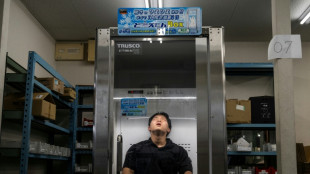 Cool Japan: Human fridge chills workers in extreme heat

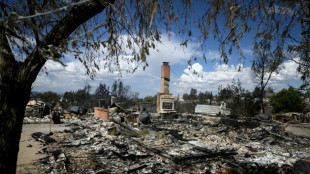 Tens of thousands flee fire near US city of Reno

 Banyan Gold Confirms New Gold-Silver Discovery at Seattle Creek with 5.70 g/t Au and 544 g/t Ag over 0.5m, Nitra Project, Yukon

 IXOPAY Appoints Ajoy Krishnamoorthy as CEO to Accelerate Growth and Advance Payments for the Agentic Age
 FireFox Gold Infill Drilling Continues to Build the East Zone, Including New Intercepts such as 14.1m @ 4.32 g/t Au, at Mustajärvi Project in Lapland, Finland

 How to Start a Functional Beverage Brand: Free FMCG Webinar Fast Moving Consumer Goods, Inc. Launches the CPG Brand Builder Series

 Star Copper Completes Seven Northeast Step-Out Drill Holes at Star Main

 How the French language contributed to the US-Canada trade war
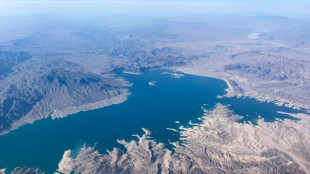 Nevada sues US govt over cuts to Colorado River access
 'Special' Chelsea forwards inspire Alonso's winning start

 Alonso makes winning start with Chelsea as Rogers scores on debut

 Oil prices fall as Bessent outlines new steps to punish Iran

The largest and most far-flung World Cup kicks off in 12 months with a record 48 teams spread across Canada, the United States and Mexico and sceptics are asking whether its frenzied growth is worth the environmental cost.
FIFA, the governing body of world football, like the International Olympic Committee, insists it is working to reduce the carbon footprint. But the expansion from 32 competing nations to 48 and the resulting shift to multiple hosts both next year and in 2030, leads critics to question that claim.
"Unlike the case of the Olympic Games, where the carbon footprints have been reducing over the last several editions, this is totally opposite in the case of the men's World Cup," David Gogishvili, a geographer at the University of Lausanne and a specialist in mega-sports events, told AFP.
While the 2022 World Cup in Qatar was certainly compact, it drew criticism for its oversized, air-conditioned stadiums built at breakneck speed in a small country with a scorching climate.
For 2026, all 16 stadiums -- ranging in capacity from the 45,000-capacity Toronto Stadium to the 94,000-capacity cauldron of Dallas Stadium -- already existed when the bid was made.
- '5 million fans' -
One problem is the distances.
Foxborough Stadium, outside Boston, is 3,700 kilometres (2,300 miles) from the Azteca in Mexico City. The Stadium at BC Place in Vancouver is 4,500km from Miami Stadium. That multiplies air travel for teams, officials, media and the "more than five million fans" who, FIFA says, "are expected to attend".
Organisers say the 72 matches in the first round -- when teams will play in 12 four-team groups -- will pivot on three "regional hubs". Yet distances will still be huge. Group B, for example, has matches in Toronto as well as in Los Angeles, San Francisco, Seattle and Vancouver on the Pacific Coast.
For the 32 matches in the five-round knockout phase teams will be flying all over the map.
FIFA, whose president Gianni Infantino proclaimed his "determination" to combat global warming at COP 26 in Glasgow, committed itself in 2018 to "measuring, reducing and offsetting" the emissions associated with its World Cups.
Yet, since it was nailed in June 2023 by the Swiss Fairness Commission for boasting of the "climate neutrality" of the 2022 World Cup, without being able to prove the claim, FIFA has refrained from making assessments or promises concerning 2026.
The only official estimate of the carbon impact -- a record 3.7 million tonnes of CO2 -- was made before the number of matches was increased from 80 to 104.
"FIFA's insatiable appetite towards growth," Gogishvili said, means "more athletes, more fans, more hotel infrastructure, more flights. It's kind of a never-ending cycle".
- 'Environmental denial' -
A joint British report on football and the environment published in February by the New Weather Institute and Scientists for Global Responsibility, punningly entitled 'Dirty Tackle', said one men's World Cup finals match generates emissions "between 26 times and 42 times that for a domestic elite game" or the equivalent of "between 31,500 and 51,500 average UK cars driven for a whole year".
"With every game added to the football calendar, international football associations make the world less safe," the report said.
Next year's World Cup is not a blip.
"It seems that the environmental denial of the FIFA World Cups will continue," wrote Gilles Pache, professor at the University of Aix-Marseille, in the Journal of Management.
He pointed to 2030 that will open with matches in Argentina, Uruguay and Paraguay, to celebrate the centenary of the first World Cup, before switching across the Atlantic to the three hosts Morocco, Spain and Portugal for the remaining 101 matches.
The 2034 World Cup, will be held in Saudi Arabia, in a climate comparable to that of Qatar, but with 40 more matches.
Saudi giant Aramco, the world's leading oil company, became a major FIFA sponsor of FIFA last year.
L.Mason--AMWN