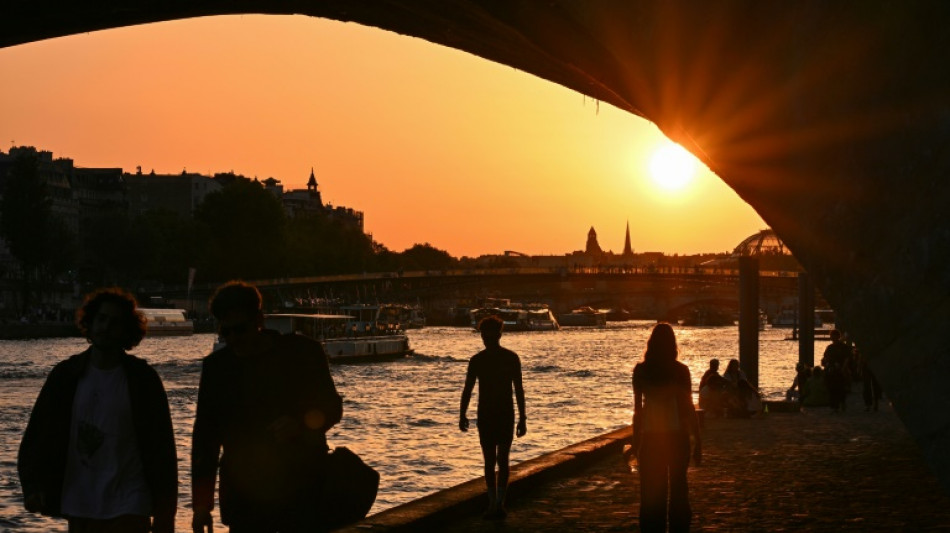
How Paris's Seine river keeps the Louvre cool in summer / Photo: Christophe DELATTRE - AFP
 Stocks rise and oil slips as traders eye Iran threat, Nvidia results
 India in command despite Sooriyabandara half-century
 Hyundai reaches tentative deal with workers after strike

 Trees 'giving up': climate change hammers historic English gardens

 Malian songbird keeps age-old sounds alive at 88

 Canada to announce response to Trump's new tariffs
 Stocks stagger and oil rises as traders eye Iran threat, Nvidia results

 Families of detained Chinese Christians cling to faith in legal limbo

 Trump veers from boredom to denial after six months of Iran war
 Cool Japan: Human fridge chills workers in extreme heat

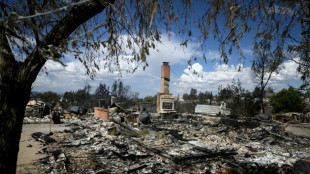 Tens of thousands flee fire near US city of Reno

 Mini Circuits Showcases Publication-Backed Validation for Its Products with Bioz Badges and Dedicated Quantum Computing and Portfolio-Wide Content Hubs

 InterContinental Hotels Group PLC Announces Transaction in Own Shares - August 25

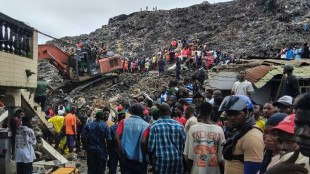 Despair and anger erupt after deadly Guinea landfill collapse
 Tornado tears through French village, dozens injured

 Federer looks forward to brief return to Arthur Ashe stadium

 US removes Syria from state sponsor of terrorism list

 Facebook, TikTok promoted Colombian armed groups' content to recruit children: HRW

 Palmeiras agree to sell Allan to Manchester City: source

 US vows 'economic asphyxiation' of Iran with new sanctions

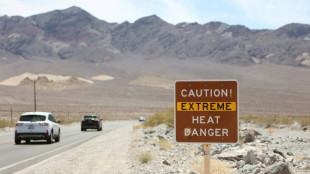 French tourist dies after getting stuck in scorching Death Valley

 US proposes expanding UN Sudan arms embargo to entire country

 Ceasefire verification mission heads to east DR Congo

 Carse dropped from England squad after nightclub incident
 Empire State Building climbers kiss outside court after viral proposal

As Paris braces for a heatwave this weekend, a little-known network of underground pipes will be cooling the Louvre museum and other storied landmarks using water from the Seine river.
Since 1991, the river water has been cooling more than 800 buildings via a humble but hard-working system that is still relatively under-utilised worldwide.
Paris boasts the largest such urban cooling network in Europe: 110 kilometres (68 miles) of subterranean pipes criss-crossing the City of Light, reducing its need for energy-guzzling air conditioning.
"It's like 'Batman'!" exclaimed a passer-by in the chic and touristy eighth arrondissement or district of Paris, as a manhole cover was removed to reveal a spiral staircase to the cooling network below.
The technology is not new: the headquarters of the United Nations in New York has been using water from the East River for cooling since the 1950s.
But much planning and construction is necessary and as such, these efficient and sustainable cooling systems remain relatively rare.
But in Paris, the network has grown considerably in recent years to confront more intense and frequent heatwaves, with the first of the summer forecast this coming weekend.
The process works much the same as a district heating network, but in reverse: heat is transferred from the air to chilled water pumped via pipes to buildings around the city.
But unlike conventional air conditioning, it does not blast hot air into the streets, according to Fraicheur de Paris, which manages the Seine cooling network and others in Barcelona, Singapore and Dubai.
The company, co-owned by the French energy utility Engie, says it also offers significant savings in electricity consumption, chemical use and emissions of planet-warming carbon dioxide.
- Beat the heat -
Heatwaves could push summer temperatures to 50 degrees Celsius (122 Fahrenheit) by 2050 in Paris, said Raphaelle Nayral, secretary general of Fraicheur de Paris.
The city needs a more sustainable solution than air conditioning units with their associated heat and energy burden, she added.
"Otherwise we will make this city completely uninhabitable," Nayral said.
Studies have shown that air conditioners can increase the heat in urban centres by around 0.5C when used in large numbers, a figure that rises as more units are installed.
Air conditioning also accounts for seven percent of global greenhouse gas emissions, the UN estimates. This is in part due to energy use but also leaking refrigerant gases, which are potent warming agents.
For the Paris network, 12 cooling power stations pump chilled water from the Seine to 867 sites across the city, including the national parliament building.
Even in winter, the river can prove useful for cooling server rooms and other technology and heat-intensive operations across the city.
- 'Song of the Seine' -
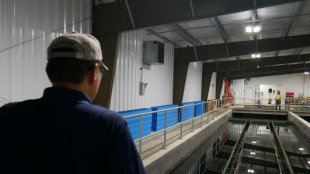
In the eighth district, 30 metres underground and spread over four floors, the river's water is pumped through a series of black tanks and large green pipes with a shrill din.
"It's a bit like the song of the Seine," Raynal said with a smile over the whirring of compressors.
The process is subject to numerous environmental standards.
To prevent damage to the Seine ecosystem, water drawn for cooling cannot be discharged back into the river if there is a difference of more than 5C (9F) between the two.
Other sites served by the Paris network include department stores and offices, the train network, concert halls, and arguably the world's most famous museum, the Louvre.
One hospital has been also connected, and there are hopes of extending the cooling benefit to retirement homes, schools and daycare centres across the city.
"By 2042, the network should more than double, with 245 kilometres of distribution... to provide new cooling when the city is overheating," Nayral said.
For individual homes, it could be a longer wait, with extensive renovations required to connect residential buildings to the network.
X.Karnes--AMWN