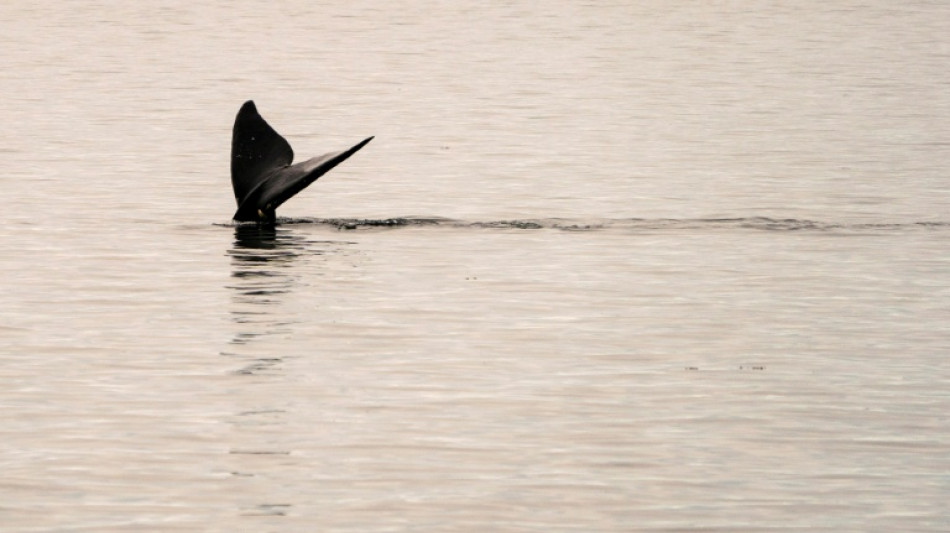
Canada wildlife decline 'most severe' in decades: WWF / Photo: Don EMMERT - AFP/File
 Tourism boom pushes limits of Athens air traffic control

 Liga holders Barcelona crush Elche, Atletico salvage Villarreal draw

 Spain's World Cup hero Torres saves PSG's blushes at Rennes

 Swiss forward Embolo joins Atlanta United

 Former cricket captains appeal to Pakistan over Khan health care

 Latest 'Spider-Man' tops American box office for 4th weekend

 Szoboszlai's last-gasp leveller rescues Liverpool in Newcastle draw

 Landfill collapse kills 30 in Guinea

 'Unbelievable' Cherki proves his point to Man City boss Maresca

 10-man Atletico snatch Villarreal draw as Alvarez returns

 Seville, Jefferson-Wooden roar to 100m wins at Silesia Diamond League

 VW chief warns carmaker's situation 'more than critical'

 England cricketer Carse under investigation after 'nightclub incident'

 McLaren's Norris wins Dutch GP after Verstappen crash

 Giroud scores as Lille give Davide Ancelotti winning start

 Kejelcha smashes half-marathon world record in Buenos Aires

 Trump admin predicts US trade war 'devastating' for Canada

 Trump set for starring role at Washington's debut IndyCar race

 Kane voted player of the year in Germany

 Padikkal hundred helps India to 300-5 against Sri Lanka

 Man City agree deal for Lille star Bouaddi

 Humanoids break records at Beijing Robot Games

 Zelensky rejects rival's call for vote, says would 'split' Ukraine

 Zelensky rejects wartime elections, says would 'split' Ukraine

 'Keep up the spirit': Indonesian teenage 'Superman' joins wildfire fight

Biodiversity in Canada has plunged 10 percent over the last half century, with hundreds of species facing extinction, the World Wildlife Fund (WWF) said in a report Monday.
"On average, every species group included — birds, fish, mammals, and reptiles and amphibians — is trending in the wrong direction," the WWF said in a statement as it released the 2025 Living Planet report for Canada.
While certain populations, like sea otters, are improving, the conservation group said 52 percent of all species studied for this year's Canada report are declining, including the rare snow owl.
"This is the most severe decline we've observed since reporting started," WWF Vice President for Canada, James Snider, wrote.
WWF said that between 1970 and 2022, biodiversity in Canada had decreased by 10 percent.
Species globally assessed as at-risk of extinction in Canada, such as the North Atlantic right whale and leatherback sea turtle, declined by 43 percent, according to the report.
Regions such as the boreal forest with lower levels of human presence saw smaller decreases, while habitats in Canada's grasslands declined 62 percent.
Last year, WWF reported a global wildlife population decline of 73 percent since 1970.
Conservation expert Jessica Curie, who worked on the report, told AFP that habitat reduction -- largely because of agricultural expansion -- "is one of the main drivers of biodiversity loss."
The report notes Canada's economic reliance on its vast natural resources, but says conservation needs to be front-of-mind in management of industrial or infrastructure projects.
One successful example she pointed to was projects reducing shipping noise to protect whale populations off Canada's west coast.
WWF noted that actions to reverse population loss were already laid out in Global Biodiversity Framework (GBF) agreement signed in 2022 at COP 15 in Montreal.
Canada aims to meet those targets by protecting 30 percent of its lands and oceans and restoring 30 percent of degraded lands by 2030.
B.Finley--AMWN