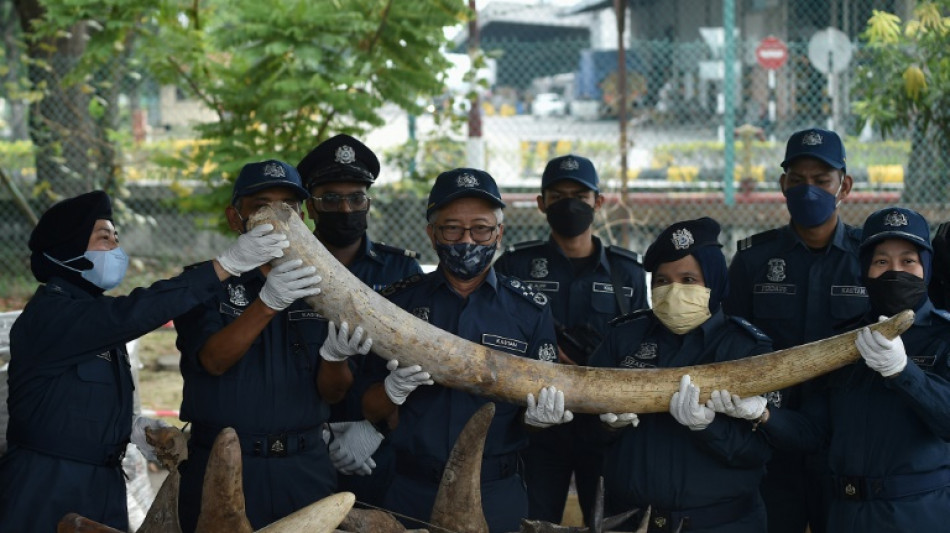
Malaysia seizes animal parts worth $18 mn / Photo: Arif Kartono - AFP
 November Foraging Guide: Edible Mushrooms and Critical Safety Protocols

 Microsoft Updates Xbox PC App with 60% Faster Startup and Redesigned Interface

 Early Polar Vortex Disruption Creates Uncertain Winter Outlook for Pennsylvania

 Edmund Richardson Wins Baillie Gifford Prize for 'Alexander' Biography

 BYD Drops Rotating Screens in New Models Due to Tech Limits

 Ryanair Flight from Rome Makes Emergency Landing in Lisbon After Bomb Threat

Malaysian customs officials said Monday they seized a stash of rare animal parts worth $18 million thought to have come from Africa, including elephant tusks, rhino horns and pangolin scales.
The Southeast Asian nation is a hub for wildlife trafficking, with animal parts shipped through the country to lucrative regional markets.
Authorities foiled a smuggling attempt on July 10 when they uncovered the illicit cargo in Port Klang, on Malaysia's west coast, hidden in a container along with timber.
The shipment included an estimated 6,000 kilograms (13,200 pounds) of elephant tusks -- Malaysia's biggest single seizure of elephant ivory, said customs department chief Zazuli Johan.
There were also 29 kilograms of rhino horns, 100 kilos of pangolin scales, and 300 kilos of animal skulls and other bones, he told a press conference.
The seizure had an estimated value of 80 million ringgit ($18 million), he said, adding it was believed to have come from Africa, without giving more details.
Zazuli said Malaysia was not the shipment's final destination, but did not say where it was heading.
Animal parts such as elephant tusks and pangolin scales are popular in countries where they are used in traditional medicine, including China and Vietnam.
There have been no arrests over the seizure.
Kanitha Krishnasamy -- Southeast Asia director at wildlife trade monitoring group Traffic -- hailed the "significant seizure".
"This medley of threatened species in a single seizure is concerning, and it certainly verifies the suspicion that criminals continue to use Malaysian ports to move contraband wildlife," she said.
G.Stevens--AMWN