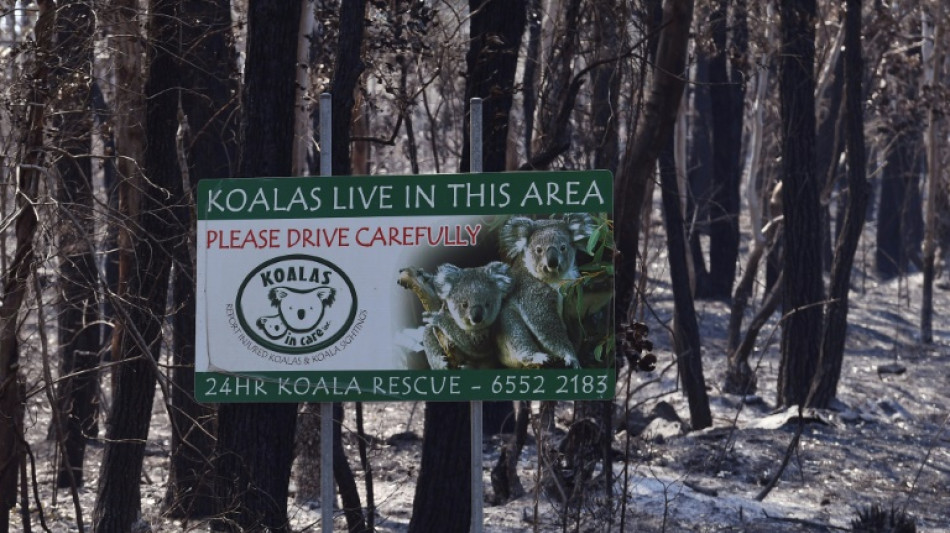
'Shocking' report says Australia wildlife in retreat / Photo: WILLIAM WEST - AFP/File
 Padikkal, Gill half-centuries take India to 187-3 at tea

 Cummins hails 'sharp' Australia as they get back to winning ways
 Bangladesh eye more Australia Tests to hit next level

 Thousands expected at Sweden climate demo as election looms

 Starc heroics put Australia on brink of victory over Bangladesh

 Austrian mountain town finds niche in AI boom

 Messi scores but Miami slump continues with loss to Toronto

 Sydney marathon unveils medal with wrong stadium

 Macron hosts Saudi's MBS for visit ranging from esports to Mideast

 Australia in control with 146-run first innings lead over Bangladesh

 World No. 3 Pegula beats defending champ Swiatek to reach Cincy final

 Wyndham Clark surges clear at BMW Championship

 Maresca says Man City must fill Rodri void after Barca switch

 Canada retaliates as trade war with US escalates

 Fils dominates Cobolli to book Cincinnati final

 Spurs lacked fight in dismal defeat at Brentford says De Zerbi

 Inter thrash Monza to launch Serie A title defence

 Shambolic Spurs battered by Brentford
 Pogacar wins Vuelta a Espana opening stage

 Clinical New Zealand shock wasteful South Africa in first Test

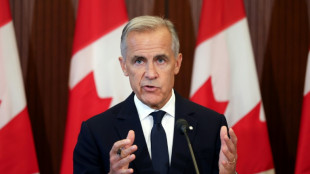 Canada hits back with new tariffs after trade talks with US fail

 Swedish police identify 17-year-old girl as victim in school sword attack

 Carrick keeps calm despite Man Utd misery, Sage beaten in first game as Palace boss

 France to deliver interceptor missiles to Ukraine after new Russian strikes

 Serena Williams and Alcaraz unite in US Open mixed doubles

Australia's unique wildlife is in retreat as it reels from bushfires, drought, human activity and global warming, according to a "shocking" government report Tuesday that prompted calls for dramatic change.
Key findings of the five-yearly scientific report released shortly before its full publication painted a picture of widespread damage to nature, both on land and in the water.
The destruction is being hastened by a climate that has warmed Australia's average land temperature by 1.4 degrees Celsius since the early 20th century, the report said.
The environment minister, Tanya Plibersek, said it was a "shocking document".
"It tells a story of crisis and decline in Australia's environment," she added.
Plibersek, a member of the centre-left Labor Party that came to power in May elections, said her predecessor under the previous conservative government received the report in December 2021 but never released it.
"I won't be putting my head in the sand," she said.
Australia's 2019-2020 "Black Summer" bushfires burned more than eight million hectares of native vegetation and killed or displaced 1-3 billion animals, the report's key findings showed.
Marine heatwaves caused mass coral bleaching on the Great Barrier Reef in 2016, 2017 and 2020, it said. Since then, a government report in March found the reef had again suffered mass bleaching.
- 'Heartbreaking' -
Millions of hectares of primary forest have been cleared since 1990.
More than seven million hectares of habitat for threatened species were cleared between 2000 and 2017 without being assessed under Australia's environmental conservation laws, the report found.
In five years, more than 200 plant and animal species of national significance had been added to the list of threatened species under Australia's environmental laws.
"Australia has lost more mammal species than any other continent," the report said, with the number of new species listed as being under greater threat up by eight percent in five years.
Australia's cities are also growing at a rapid clip, the report found, raising urban heat, pollution and waste while stretching water and energy resources.
"Sydney has lost more than 70 percent of native vegetation cover through development," it said.
Sydney Habour's stormwater drains also created hotspots of pollution with concentrations 20 times higher than when the harbour was pristine.
"The findings of this report are heartbreaking, and the leadership failures that have led to loss at this scale devastating," said WWF-Australia acting chief executive Rachel Lowry.
"If we ignore the warnings of this report then iconic species like koalas across eastern Australia, or our largest gliding mammal, the greater glider, will disappear forever on our watch."
WWF-Australia said the report should be a "turning point" that led to greater investment and stronger laws to protect Australia's wildlife and wilderness.
Lowry urged the new government to act quickly, condemning existing environmental legislation for "failing miserably" to protect threatened species.
"When we allow losses at this scale, we don't just lose a piece of Australia's identity, we lose the opportunity to ensure a healthy, thriving economy alongside some of the world's most precious natural assets," she said.
The "devastating" new report showed coasts and marine environments were deteriorating, the Australian Marine Conservation Society said.
"The wellbeing of Australians is wrapped up with the health of our oceans, and the marine wildlife found there, but sadly our oceans are suffering from overheating, overuse and under-protection," said the society's chief executive, Darren Kindleysides.
"We need to do more now, or we put at risk everything we rely on our oceans for -- our health, wellbeing, livelihoods and our culture."
L.Mason--AMWN