In India, heat-triggered insurance offers 'some relief' / Photo: Shammi MEHRA - AFP
 American woman convicted of getting military training from Islamic State

 Israel opposition holds narrow edge over Netanyahu in first projections

 Floriani hits maiden goal as Lazio go top

 Trump set to drastically loosen oil and gas sector's methane rules

 Storied Paris department store seeks bankruptcy protection
 Xhaka, Embolo can return to Swiss squad after fake Covid docs affair
 Allegri suspended for two Serie A games after red card

 Flight data, satellite images reveal growing US role at Ecuador base
 McInnes feels 'guilt' ahead of Hearts return with Rangers

 Brazil's Lula turns 81, vows to work '24 hours a day'

 Boeing releases cautious growth plan as shares fall sharply
 Exiled Russian dissident Navalnaya warns dictators becoming 'more cunning'
 Bayern 'risk' reaps huge reward for Ballon d'Or winner Kane

 Record turnout as Israeli voters deliver verdict on Netanyahu
 Iraola says Isak 'feels the trust' after Liverpool scoring streak

 French media protest manhandling of journalists at far-right party rally

 EU seeks deportation powers for beefed up border agency

 Two charged with UK security offences over airbase plot: police

 Maresca defends Donnarumma, Guehi after Man City defeat
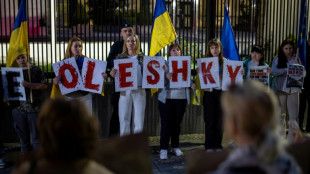 Nordic leaders call Putin as local truce begins in Ukraine

 Osaka unveils crane outfit in Tokyo before win over Paolini

 Ronaldo in line for Portugal return after fallout with coach

 Norway media take legal action to block Meta from using content

 Bayern praise 'humble' Kane after Ballon d'Or win

 Colts retain Daniel Jones as starter despite continued offensive struggles

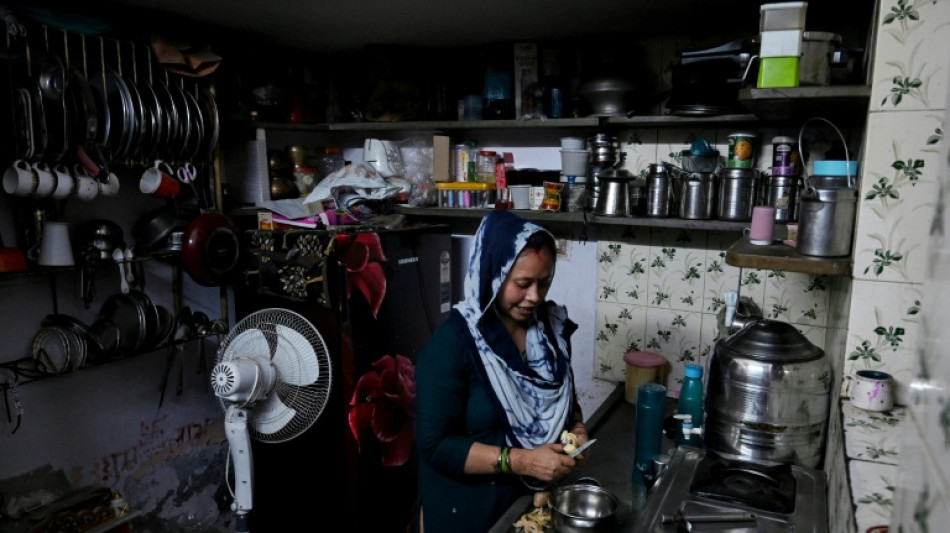
Clothes seller Lata Solanki used to face a devastating choice when India's summer heat hit dangerous levels: risk her health going door-to-door for sales, or lose her income?
But now the 42-year-old is part of an insurance scheme that pays out when temperatures hit a threshold, so she can stay home without jeopardising her finances.
The "parametric" model pays out automatically when specific triggers are breached, in Solanki's case after two consecutive days at 43.72 degrees Celsius.
The payout is modest, but it helps, she told AFP in Ahmedabad, one of India's hottest cities.
"At least we feel there is some support," she said. "Because of the heat, the fan runs day and night. The bill goes up."
In 2023, the year before she joined the scheme, Solanki kept working during a heatwave and ended up sick at home for 20 days, losing at least 2,000 rupees ($21) in income.
The following year, she received 750 rupees from the scheme, small but more than the cost of the premium, and a relief in a country where the average monthly rural household income is 10,000 rupees ($105).
India lost an estimated 247 billion hours of labour to extreme heat in 2024, equivalent to nearly $194 billion in economic losses, according to the Lancet Countdown research group.
Agriculture and construction bore the brunt, and climate change is accelerating the number of days of extreme heat India sees.
Parametric insurance is seen as a way to protect the most vulnerable from climate impacts like heat, but also heavy rain.
In India's northeastern state of Nagaland, the government has insured its entire population against economic losses due to heavy rainfall under a parametric model since 2024.
The federal government is examining how to extend the schemes more widely to "supplement insurance mechanisms and reinforce protection to the people".
- 'Some relief' -
Unlike traditional insurance, parametric policies do not require individual damage assessments.
Instead, payouts are triggered automatically by heavy rain, high heat or even air pollution.
The scheme helping Solanki is a collaboration between the non-profit Mahila Housing Trust (MHT) and global insurer Go Digit, supported by the Climate Resilience for All initiative.
MHT programme manager Nital Rahul Patel said the idea emerged after surveys and discussions with women workers in Ahmedabad, where temperatures sometimes hit 45C (113F).
"They would say it is very hot every year," she said. "But when we broke down their expenses, we realised incomes were falling by 2,000-2,500 rupees ($21-26) over four months of summer."
The scheme began in 2024 with 26,000 women across Gujarat. Their 354-rupee premium was covered by Climate Resilience for All.
In 2025 enrolment rose, but the scheme made no payments because the temperature threshold was not met.
This year, the trigger has been revised down to 42.74 degrees Celcius, and the scheme aims to cover more than 30,000 women.
If temperatures hit the threshold for two days, they will qualify for payments ranging from 850 to 2,000 rupees ($21).
Higher temperatures trigger higher payments, but the amount is a one-off, not cumulative. It is assessed and paid at the end of the heat season in September.
Rakhi Gulshan Singh, a seamstress earning around 4,000 rupees a month, signed up even though she works indoors.
"When I run the sewing machine, it becomes even hotter," the 30-year-old said, who got a payout in 2024. "It is small, but it gives some relief."
- 'Faster and more transparent' -
Adarsh Agarwal, appointed actuary at Go Digit, said his company has covered more than 50,000 people since it began working on parametric insurance two years ago.
While still a "niche product", he said demand has increased.
There is now "more knowledge and more curiosity", he told AFP, and his firm has offered both heat and air-quality parametric schemes.
Payment thresholds are set based on historical weather data and intended to be "practical, sustainable and aligned to the intended segment while managing basis risk", he added.
The schemes can be "faster and more transparent" than traditional insurance, said Aniruddha Bhattacharjee, senior researcher for climate resilience and engineering at Climate Trends.
But payouts tend to be small, and effectiveness depends on how accurately trigger thresholds reflect actual ground realities, since models are largely built on historical data.
India's government weather forecasters are already predicting boiling, above-average temperatures in May and June, which Solanki joked might turn out to be good news.
"Maybe we will get a payout," she said.
But regardless, she plans to stay enrolled "even if it means paying the premium from our pockets".
X.Karnes--AMWN