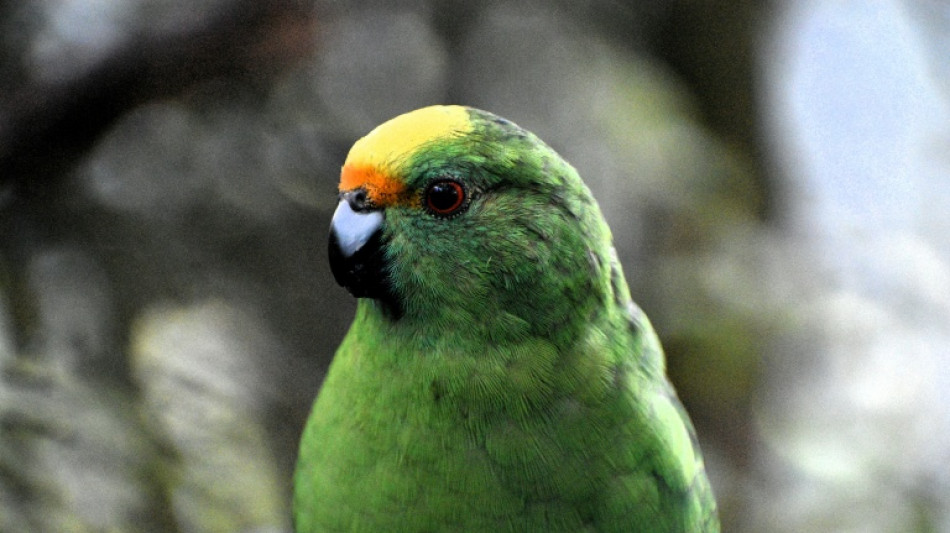
Love birds: twice-extinct parakeet gets lifeline from randy pair / Photo: Leigh Percasky - The Isaac Conservation and Wildlife Trust/AFP
 Sacha Baron Cohen revives the 'problematic dinosaur' Ali G in new film

 New race in Barcelona tops 17-event '27 IndyCar season

 Neymar backs Flavio Bolsonaro in Brazil election

 Melania Trump says she brokered truce in war-torn Ukrainian city

 Leclerc tops times for Ferrari in opening practice for US Grand Prix

 Bayern Munich coach Kompany in hospital after collapsing

 Signs point to renewed major US military ops against Iran

 European, Mideast foreign ministers push peace and diplomacy at Istanbul talks

 Ex-All Black centre Williams undergoes 'miracle' heart surgery

 Netanyahu launches major West Bank operation after Israeli soldiers killed

 AFP photographer captures striking images from West Bank attack

 Oil hits $116 with stocks mixed on earnings, AI

 De Zerbi says Tottenham's dire record at Chelsea 'more motivation'

 Lula, Bolsonaro in final debate showdown before Brazil vote

 Poulter latest golfer to leave LIV

 Gunman kills one, wounds five in town outside Paris

 Melania Trump says secured ceasefire in Ukrainian city of Oleshky

 Carrick 'confident' he can turn around Man Utd slump

 PSG v Lyon French Ligue 1 game postponed due to Paris protests

 Meghan Markle 'distressed' over claims father had child abuse images

 Gunman kills one, wounds four in town outside Paris

 France to deploy 70,000 police ahead of new protests

 Mekies hails Verstappen as Red Bull's driving force amid revival

 Tanker with Russian diesel heads to New York under Trump deal

 New centre puts focus on Portuguese dictator Salazar's legacy

One of the world's rarest parakeets has seen its numbers surge thanks to a pair of super breeders now responsible for more than 10 percent of the total population.
The New Zealand native kakariki karaka -- or orange-fronted parakeet -- is critically endangered and has twice been declared extinct, only to be rediscovered.
There are around 450 of the birds left, mainly in sanctuaries and predator-free islands but also in wild populations.
Parents Nacho and Trixie were paired up in 2024 at the Isaac Conservation and Wildlife Trust in Christchurch and have since produced 55 chicks, including 33 this year alone.
Wildlife manager Leigh Percasky praised "super-mum" Trixie.
"The breeding season has ended and yet she's still producing eggs and raising chicks," Percasky said.
"Ideally we'd prefer her to stop so she can have a rest, but she shows no signs of that with another seven chicks in her most recent clutch.
"Nacho also deserves credit as he's responsible for finding food for both Trixie and the chicks which is incredibly busy."
- Captive breeding -
Wayne Beggs, lead of the Department of Conservation's kakariki karaka recovery programme, said breeding pairs like Nacho and Trixie were ensuring the species didn't go extinct.
"We rely on the captive breeding programmes as without them we couldn't establish new sites," Beggs said.
"The wild populations are very vulnerable to predators, so we always need backup populations."
Percasky said Nacho and Trixie had made a "massive contribution" to the survival of their species, but he wants the love birds to "have a well-earned break" after their latest clutch.
"I'm not sure where they get all their energy from."
L.Davis--AMWN