Mideast war helps electric motorbikes boom in Africa / Photo: Luis TATO - AFP
 EU unveils strategy to boost Arctic presence

 How recent controversies have rocked the US death penalty debate
 Adams facing long injury layoff as Rams' problems deepen

 US judge orders Saudi engineer held in OpenAI case
 Maddison sparkles as Spurs end Premier League winless run
 Maddison sparkles on Spurs return as win drought ends
 Trump says ready to meet with Putin and Xi in China
 The young lawmaker making Brazil's Lula 'king of the selfie'

 Christiane Amanpour to leave CNN after 43 years

 Ronaldo handed 30-day suspension after walking out on Portugal

 Netanyahu basks in Trump endorsement week before election

 Saudi airport closure disrupts life in kingdom's capital

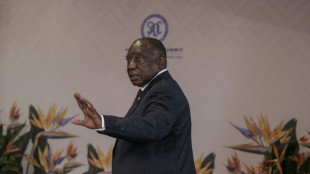 Ramaphosa tells South Africa to prepare for loss of US-Africa trade deal
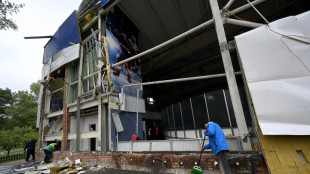
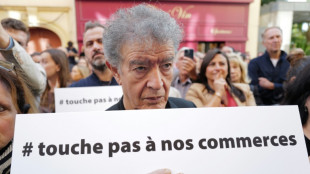 France presses resale platforms to remove 'stolen' goods after unrest
 Yamal v PSG: Ballon d'Or backdrop to Champions League showdown

 Araujo says too soon to talk about permanent Liverpool move

 US wants to be 'strong partner' for central Asia: Rubio

 'Special' to face friend Perez in Champions League, says Liverpool's Iraola

 Monitor says Indonesia fires have burned nearly two million hectares

 French PM says could declare state of emergency over unrest 'if needed'

 Albanian PM warns of 'red line' after days of unrest
 Putin, Xi and Trump could meet at APEC summit: Kremlin

 Microsoft exits data centre deal in blow to UK AI ambitions

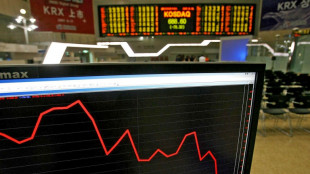 European stocks retreat as France violence spreads

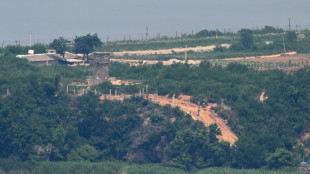 North Korea warns 'grave situation' prevailing along border

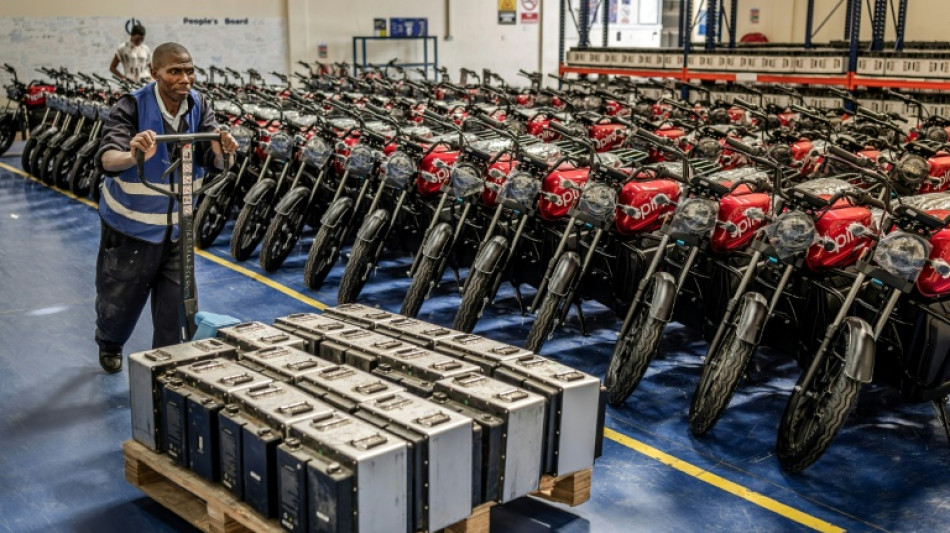
In Nairobi's congested streets, the almost imperceptible hum of electric motorbikes is increasingly replacing the roar of their petrol-powered counterparts.
The war in the Middle East, launched by the United States and Israel in February, has had the unlikely consequence of boosting green vehicles across Africa, especially in countries such as Kenya that are heavily dependent on fuel imports.
"Boda-bodas" -- the name given to motorbikes in Kenya -- are a vital part of the economy in the east African nation, used to transport everything from people to groceries to furniture.
Wisly Onyaiti, riding his large black boda, says the savings from switching to electric have been huge -- roughly 2,000 shillings ($15) a day cheaper than running a petrol bike, a significant sum in a country where many workers earn barely $100 a month.
"Electric bikes are a game-changer," said Onyaiti, who works as a bike-taxi driver to fund his criminology and digital marketing studies.
The savings have only increased since the start of the Mideast conflict, which has driven fuel prices up around 22 percent in Kenya.
Sales of electric motorbikes are booming as a result -- up around 40 percent in the last three months, according to the E-Mobility Association of Kenya.
Several e-motorbike companies are competing for the booming trade, including ArcRide, Ampersand and Roam.
But it's Spiro, an African startup, that currently dominates, with around 90 percent of sales in Kenya.
At Spiro's factory on the outskirts of Nairobi, workers assemble motorbikes with smooth efficiency. At full capacity, they can produce more than 400 a day.
Since coming to Kenya in September 2023, Spiro's sales have rocketed from 4,000 in 2024 to 14,000 the following year, and they are targeting 50,000 in 2026.
"Growth has been tremendous, quite exponential," said Raymond Kitunga, Spiro's number two.
The brand, which also has a presence in Uganda, Rwanda, Benin, Togo, Nigeria and Cameroon, estimates that around 100,000 of its two-wheelers are now on African roads. It wants to triple that by the end of the year.
Policy is helping: Rwanda has banned traditional motorcycles in its capital, and Uganda is pushing for a rapid transition to electric two-wheelers.
Spiro says these two markets alone represent a potential 1.5 million customers.
- Rapid transition -
The electric transition is much faster than in the West because motorbikes are primarily a commercial vehicle rather than a weekend luxury, said Hezbon Muse, Kenya director for Ampersand.
And in a developing economy with high fuel prices, every little saving can make a huge difference.
The bikes are also relatively cheap -- around $750 for starter models -- because they don't include the batteries, which are instead rented and exchanged at charging stations dotted around cities.
At an Ampersand station in Nairobi, the exchange takes barely two minutes. A fully charged battery has a range of about 80 kilometres (50 miles) and costs 265 shillings ($2) -- roughly half what it would cost in petrol.
The war has increased costs for parts, most of which are from China. And with the dollar increasingly volatile, Chinese vendors now often want payment in yuan, said Joe Croft, founder of ArcRide.
"But all that is completely wiped out by the savings for bike users" now that petrol prices have surged as US President Donald Trump continues the war, he said.
The surprising conclusion is that "Trump has made EVs (electric vehicles) a much more attractive market, while making sure that market is not conducted in dollars," Croft added.
In addition, Kenya's electricity is also 93-percent green-sourced (geothermal, hydroelectric, solar and wind) -- adding to the environmental benefits.
The world "will learn from Africa", said Spiro's Kitunga.
O.Norris--AMWN