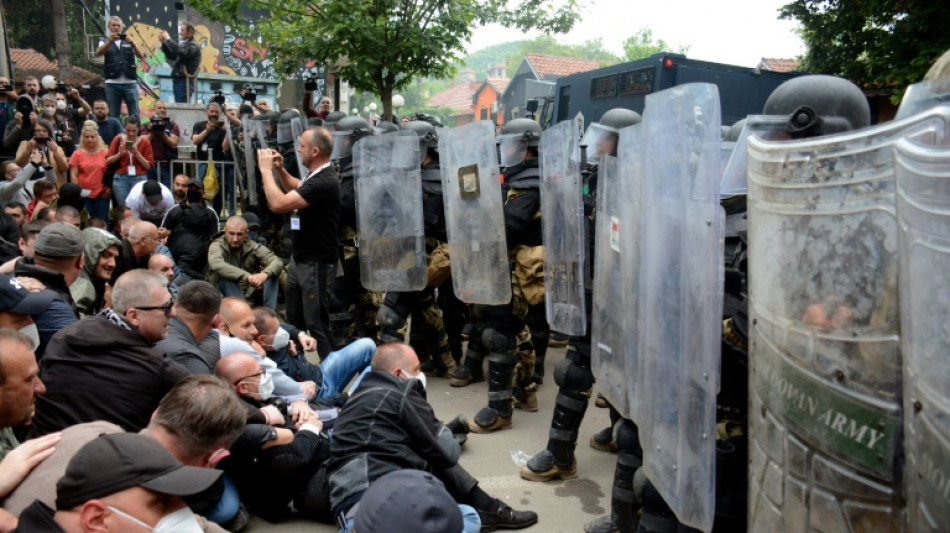
Tensions high in north Kosovo as Serbs gather again / Photo: -STR - AFP
 Experts Warn Social Security Crisis Looms After Decades of Congressional Inaction
 Dar Global and Trump Organization Launch $700M Luxury Resort in Qatar

 Former Iowa State Women's Basketball Players Accuse Coach Bill Fennelly of Abuse

 FlatRx Publishes a Dated Price Comparison of Compounded Tirzepatide at 27 U.S. Telehealth Programs Counted at a 10 mg Weekly Dose

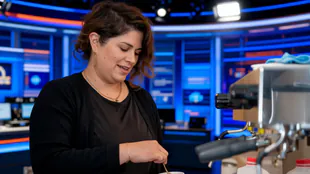 Abanico Coffee Roasters Opens Second San Francisco Location in Inner Sunset
Tensions remained high in northern Kosovo on Wednesday, as hundreds of ethnic Serbs again gathered outside a town hall after clashing with NATO-led peacekeepers (KFOR) earlier this week.
KFOR soldiers formed a ring around the municipal building in Zvecan and additionally secured the perimeter with a metal fence and barbed wire, an AFP journalist said.
Kosovo's ethnic Serb minority boycotted local elections in the north in April, allowing ethnic Albanians to take control of the local councils despite a tiny turnout of less than 3.5 percent.
Many Serbs are demanding the withdrawal of Kosovo special police forces, as well as the ethnic Albanian mayors they do not consider their true representatives.
The protesters, who were calm on Wednesday, displayed a huge Serbian flag that stretched over 200 meters (660 feet) from the town hall to the centre of Zvecan, according to an AFP journalist.
Three vehicles of ethnic Albanian Kosovo special police -- whose presence sparks controversy in Serb-majority northern areas -- remained parked outside the building.
NATO said Tuesday it was deploying more forces to northern Kosovo after 30 of its peacekeepers were injured in clashes with ethnic Serb protesters. The European Union called for an urgent de-escalation of tensions.
On Monday, NATO-led peacekeepers used shields and batons in a bid to disperse the crowd but were met by a hail of rocks, bottles and Molotov cocktails.
A total of 30 peacekeepers -- 11 Italians and 19 Hungarians -- were wounded in Monday's clashes, according to KFOR.
Fifty-two protesters were also injured, three of them "seriously", while five Serbs were arrested for taking part in the clashes.
US Secretary of State Anthony Blinken criticised ally Kosovo, blaming Prime Minister Albin Kurti's government for "sharply and unnecessarily escalated tensions" by installing ethnic Albanian mayors.
The United States also suspended Kosovo from an ongoing military exercise.
Kosovo declared independence from Belgrade after a US-led NATO military intervention in 1999 effectively ended a bitter war between Serb forces and ethnic Albanian guerrillas.
Belgrade -- along with its key allies China and Russia -- still does not recognise the move, preventing Pristina from having a seat at the United Nations.
Kosovo is mainly populated by ethnic Albanians, but the Serbs who make up around six percent of the population have remained largely loyal to Belgrade, especially in the north where they are a majority.
J.Williams--AMWN


