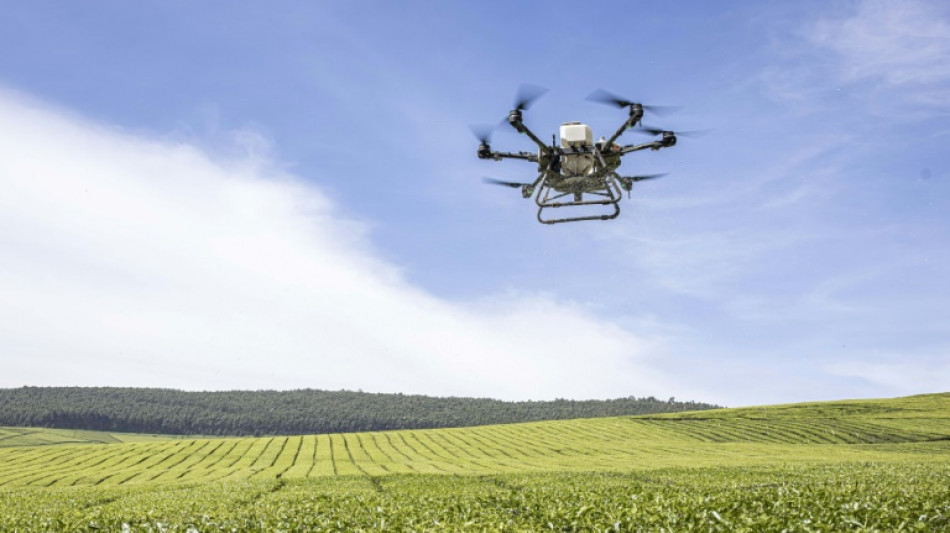
EU, Kenya reach trade deal in boost to Brussels' Africa ties / Photo: Patrick Meinhardt - AFP
 PSU Bank Stocks Surge Up to 27% in November Amid FPI Inflows
 Manchester City vs Fulham Live: Haaland Disallowed Goal and Muniz Strike

 Miao and Dong Traditional Knowledge Offers Climate Resilience Lessons at COP31

 Rosalind Eleazar on Immersing in Los Angeles for 'Misty Green' Role
 FlatRx Publishes a Dated Price Comparison of Compounded Tirzepatide at 27 U.S. Telehealth Programs Counted at a 10 mg Weekly Dose
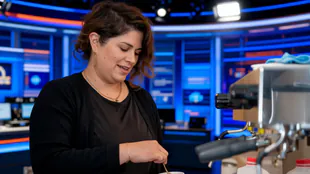 Abanico Coffee Roasters Opens Second San Francisco Location in Inner Sunset
The European Union and Kenya signed a trade deal Monday in a coup for Brussels as it seeks deeper economic ties with Africa in the face of competition from China.
Kenyan President William Ruto presided over a ceremony in Nairobi to mark the formal conclusion of negotiations to the EU-Kenya Economic Partnership Agreement.
Once ratified and entered into force, Kenya will receive duty-free and quota-free access to the EU, its biggest market where it sends roughly one-fifth of all its exports.
Imports from the EU to Kenya such as chemicals and machinery will receive progressive tariff reductions over a period of 25 years, but some sensitive products will be excluded.
"Today is a very proud moment for Kenya, and I believe a very proud moment for the European Union," Kenyan Trade Minister Moses Kuria said after signing the accord with EU Trade Commissioner Valdis Dombrovskis.
Kenya's main exports to the EU are agricultural products, including vegetables, fruits and the country's famous tea and coffee.
Over 70 percent of Kenya's cut flowers are destined for Europe.
Ruto said Kenya's farmers could be "assured of a predictable market" and the agreement provides new opportunities to boost this trade.
"It ensures a stable market for industrialists, for our farmers, and also industrialists in the European Union," he said.
- 'Priority region' -
Dombrovskis said EU companies had invested one billion euros ($1.1 billion) in Kenya in the past decade but that there was "a strong appetite" to do more business.
"With this deal in place, we have the right platform to do so," he said.
It is the first broad trade deal between the EU and an African nation since 2016 and follows a spending spree by China on lavish infrastructure projects across the continent.
The EU has taken steps to counter China's Belt and Road programme, announcing in February it would increase investments in Kenya by hundreds of millions of dollars through its own Global Gateway initiative.
Kenya is seen by the international community as a reliable and stable democracy in a turbulent region and Dombrovskis said the East African powerhouse was "a beacon of dynamism and opportunity".
In a briefing with reporters ahead of Monday's ceremony, Dombrovskis said Africa was a "priority region" for the EU and he hoped the Kenya deal would resonate elsewhere on the continent.
"Certainly, we think it's going to be a boost," he said of its impact on future trade links with Africa.
The Kenya deal is the culmination of trade talks between the EU and the East African Community (EAC) that started roughly a decade ago.
In 2014, the EU and the EAC -- then Kenya, Rwanda, Uganda, Burundi and Tanzania -- finalised negotiations for an economic partnership agreement but only Nairobi ended up ratifying it.
Kenya went its own way but Dombrovskis said the agreement remained open for other members of the EAC -- which now includes the Democratic Republic of Congo and South Sudan -- to join.
P.Mathewson--AMWN


