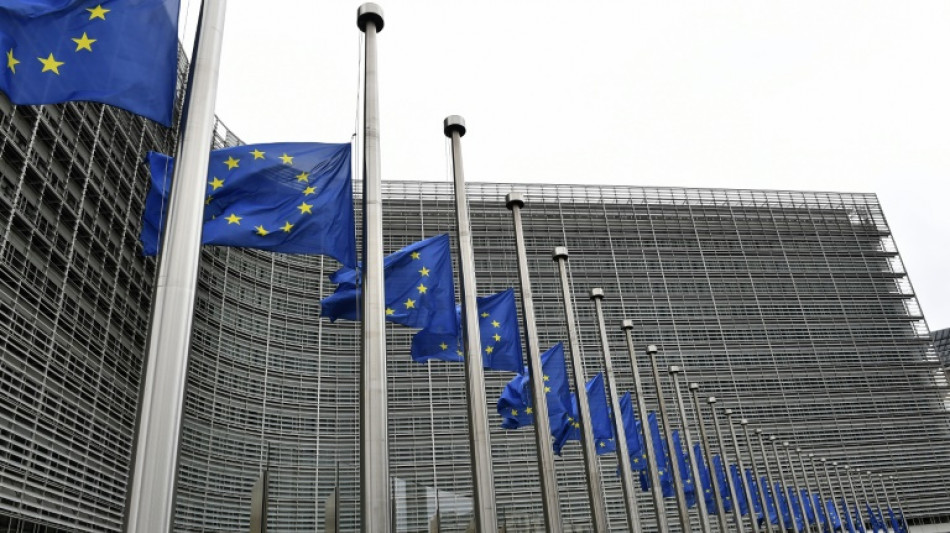
EU agrees tougher rules on banks / Photo: JOHN THYS - AFP/File
 PSU Bank Stocks Surge Up to 27% in November Amid FPI Inflows

 Manchester City vs Fulham Live: Haaland Disallowed Goal and Muniz Strike

 Miao and Dong Traditional Knowledge Offers Climate Resilience Lessons at COP31

 Rosalind Eleazar on Immersing in Los Angeles for 'Misty Green' Role

 FlatRx Publishes a Dated Price Comparison of Compounded Tirzepatide at 27 U.S. Telehealth Programs Counted at a 10 mg Weekly Dose

 Abanico Coffee Roasters Opens Second San Francisco Location in Inner Sunset
The EU struck a deal on Tuesday to implement internationally-agreed banking reforms intended to avert a repeat of the 2008 financial crisis.
The European Commission first proposed the banking law in October 2021 but there has been a greater focus on banks following the collapse of lenders in the United States triggered market turbulence earlier this year.
The draft law is the European Union's interpretation of the Basel III reforms of international standards on how banks evaluate credit and market risks.
They include stipulations that banks have adequate capital and liquidity.
The rules will apply from January 1, 2025, two years later than the 2023 deadline agreed under the reforms.
Negotiators from the European Council, which represents the 27 member states, and the European Parliament provisionally agreed on the rules on Tuesday.
"This is a major step forward which will help ensure that European banks can continue to operate also in light of external shocks, crises or disasters," Swedish Finance Minister Elisabeth Svantesson said in a statement.
The EU is the first major jurisdiction to implement the final elements of the reforms, ahead of other countries including the United States.
But the bloc has pushed for its rules to take into account the "concrete conditions" of European banks which rely more on low-risk home loans than their American counterparts.
The draft law also requires banks to disclose their exposure to crypto assets, which include cryptocurrencies such as bitcoin and ethereum, and more transparency on sustainability risks including the financing of fossil fuel projects.
The deal stipulated that banking executives must be deemed "fit and proper" under a framework for assessing the individuals' suitability.
The EU's financial services commissioner, Mairead McGuinness, also welcomed the agreement, insisting the rules would ensure "the EU banking sector is fit for the future".
The turmoil in March began when Silvergate Bank, Silicon Valley Bank and Signature Bank in the United States failed in rapid succession and fears in the markets led to the forced takeover by Switzerland's leading bank, UBS, of its former rival Credit Suisse.
L.Harper--AMWN


