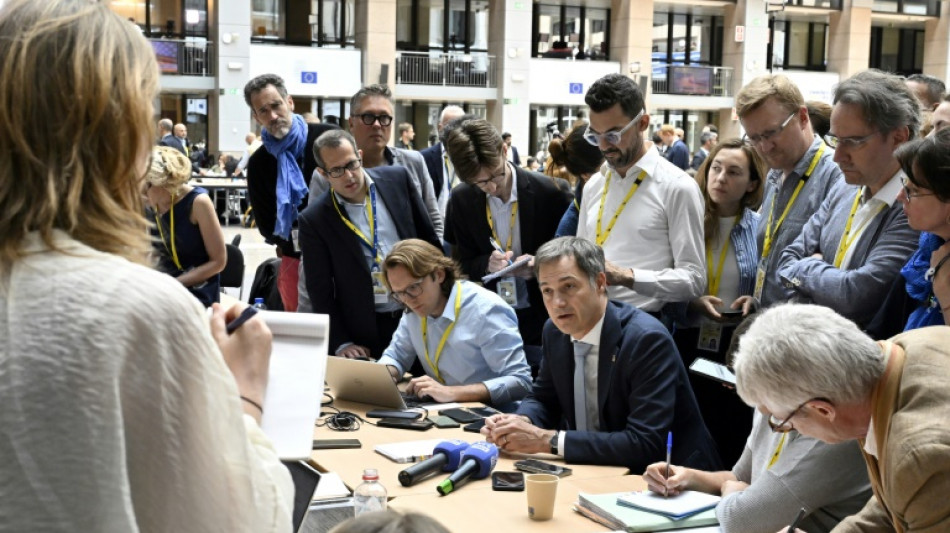
EU eyes 3 bn euros a year for Ukraine from Russian asset tax / Photo: JOHN THYS - AFP
 PSU Bank Stocks Surge Up to 27% in November Amid FPI Inflows
 Manchester City vs Fulham Live: Haaland Disallowed Goal and Muniz Strike

 Miao and Dong Traditional Knowledge Offers Climate Resilience Lessons at COP31

 Rosalind Eleazar on Immersing in Los Angeles for 'Misty Green' Role
 FlatRx Publishes a Dated Price Comparison of Compounded Tirzepatide at 27 U.S. Telehealth Programs Counted at a 10 mg Weekly Dose
 Abanico Coffee Roasters Opens Second San Francisco Location in Inner Sunset
The European Union could raise three billion euros a year for Ukraine's reconstruction by taxing the interest earned by Russian central bank assets frozen in the bloc, Belgium's prime minister said Friday.
"We are working on a windfall tax on profits," Alexander De Croo said after a summit of European Union leaders in Brussels.
"The estimate is that three billion euros ($3.3 billion) per year could be used for the reconstruction of Ukraine," he said.
The EU has frozen some 200 billion euros of Russian central bank assets as punishment for Moscow's invasion of Ukraine.
De Croo said that about 90 percent of those funds are held in Belgium, which hosts the headquarters of the international deposit organisation Euroclear.
He said there was a "political consensus" among the EU's 27 leaders to apply the windfall tax.
But German Chancellor Olaf Scholz was far more cautious, saying that "there is no proposal that is currently ready for legislation".
"It is all terribly complicated and nobody knows at the moment what is possible," he added.
In the formal conclusions from their summit, the EU leaders said only that they asked the EU's executive, the European Commission, to take work forward "with international partners" on how to use frozen Russian assets.
Commission President Ursula von der Leyen said the executive would soon come forward with a proposal focused "prudently" on targeting the profits from Russian assets.
"It cannot be that Russia destroys vast parts of the infrastructure of Ukraine and is not contributing to the repair and reconstruction," she said.
EU diplomats say that about 100 billion euros of the Russian central bank assets is in cash, earning roughly 3 percent, and that is what would be subject to the tax.
Diplomats say once the commission has come up with a proposal the EU would seek to work with its partners from the G7 to make the measures broader.
The European Central Bank and countries including Germany fear that using the Russian assets could scare off other investors from keeping their funds in euros.
L.Durand--AMWN


