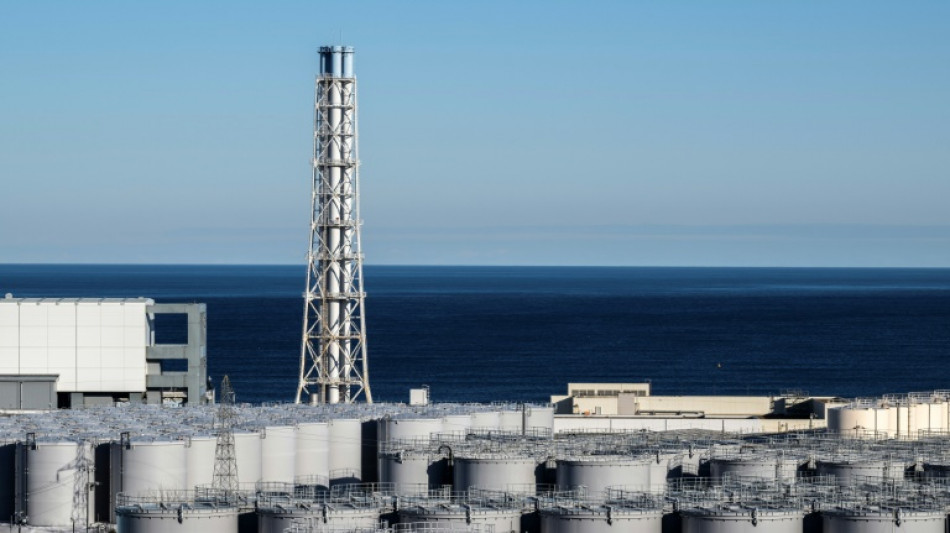
New Zealand confident in UN advice on Fukushima, govt says / Photo: Philip FONG - AFP
 Eastside Jazz Festival Returns to Birmingham for Three-Day Event in February 2027

 Experts Warn Social Security Crisis Looms After Decades of Congressional Inaction

 Dar Global and Trump Organization Launch $700M Luxury Resort in Qatar
 Former Iowa State Women's Basketball Players Accuse Coach Bill Fennelly of Abuse

 New to The Street Show #781 Premieres Tonight on Bloomberg Television with Roadzen, Robo.ai, PureCipher and American Fusion

 How Families Budget for Youth Sports Travel Seasons

New Zealand said Monday it has "full confidence" in the UN nuclear watchdog's advice after it approved of Japan's plans to discharge treated water from the Fukushima nuclear plant into the Pacific Ocean.
The International Atomic Energy Agency (IAEA) said Tokyo's scheme to release treated water from the tsunami-hit nuclear plant into the sea over the next few decades would have a "negligible" radiological impact on people and the environment.
New Zealand's Foreign Minister Nanaia Mahuta met IAEA director general Rafael Grossi in Auckland, where she said they discussed "at length" its report on the proposed Fukushima treated water release.
"I reiterated New Zealand's full confidence in the IAEA's advice and commended their science-based approach," Mahuta said in a statement.
"I also felt it was important to draw attention to the Pacific's traumatic experience with nuclear testing and asked directly that meaningful engagement continues with the Pacific region on the proposed release."
Japan's plan has raised concerns among some of its neighbours.
North Korea has criticised the IAEA for backing the scheme, while China has said it will ban some Japanese food imports. Public concern has also mounted in South Korea.
Around 1.33 million cubic metres of groundwater, rainwater and water used for cooling have accumulated at the Fukushima nuclear plant, where several reactors went into meltdown after the 2011 tsunami overwhelmed cooling systems.
The plant operator treats the water to remove almost all radioactive elements except tritium and plans to dilute it before discharging it into the ocean over several decades.
New Zealand has a staunch nuclear-free policy and no nuclear power stations.
F.Schneider--AMWN


