
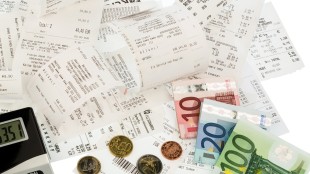
Eurozone economy rebounds as inflation slows in July / Photo: Daniel ROLAND - AFP/File
 Eastside Jazz Festival Returns to Birmingham for Three-Day Event in February 2027

 Experts Warn Social Security Crisis Looms After Decades of Congressional Inaction

 Dar Global and Trump Organization Launch $700M Luxury Resort in Qatar

 Former Iowa State Women's Basketball Players Accuse Coach Bill Fennelly of Abuse

 New to The Street Show #781 Premieres Tonight on Bloomberg Television with Roadzen, Robo.ai, PureCipher and American Fusion

 How Families Budget for Youth Sports Travel Seasons
Economic growth in the eurozone rebounded in the second quarter, data showed Monday, but concerns remain over inflation that is slowing yet still stubbornly high, and over stagnation in the German economy.
The EU's Eurostat data agency said growth in the 20-country single currency zone reached 0.3 percent over the April-June period after recording zero growth in the first three months of the year.
The first-quarter figure was revised from a decline of 0.1 percent that had signalled a technical recession.
The figures came after data last week showed that Germany's gross domestic product (GDP) stagnated between April and June, though the French and Spanish economies grew more than expected.
The European Central Bank (ECB) has hiked interest rates to their highest level since May 2001 to tame red-hot inflation, though its president Christine Lagarde last week indicated that the aggressive rate-hiking campaign could be paused.
Analysts suggest that another hike is still a possibility, and could further constrain economic growth.
"With monetary tightening still expected to have its most dampening effect on growth later, continued broad stagnation of economic activity remains the most likely outcome for the coming quarters," said Bert Colijn, senior eurozone economist at ING.
Colijn said the eurozone GDP reading would not be "a dovish argument" at the next ECB rate-setting meeting in September, "leaving a further hike on the table".
While the eurozone registered a slight drop in overall inflation this month, to 5.3 percent from 5.5 percent in June, in line with analyst expectations, core inflation -- which strips out more volatile elements -- was unchanged at 5.5 percent.
Both figures remain far higher than the ECB's two-percent target, though Lagarde said before the data release that "we are reaching our goal".
"By all accounts, monetary policy has started to have an effect for lowering inflation," she told French daily Le Figaro in an interview published late Sunday.
- Food and drink prices surge -
Also, food and drink costs are still rising sharply, at 10.8 percent compared with 11.6 percent in June, hitting European consumers' wallets.
Energy prices, however, dipped further, falling by 6.1 percent in July on the back of a drop of 5.6 percent in June.
The core inflation rate, which excludes fast-changing energy, food, alcohol and tobacco prices, is the key indicator for the Frankfurt-based ECB.
Among the 20 countries that use the euro, Belgium had the lowest inflation rate, at 1.6 percent in July, Eurostat said.
There will be further concerns over the health of Germany's economy as inflation remains high, reaching 6.5 percent in July, Eurostat said, down slightly from 6.8 percent in June.
L.Harper--AMWN


