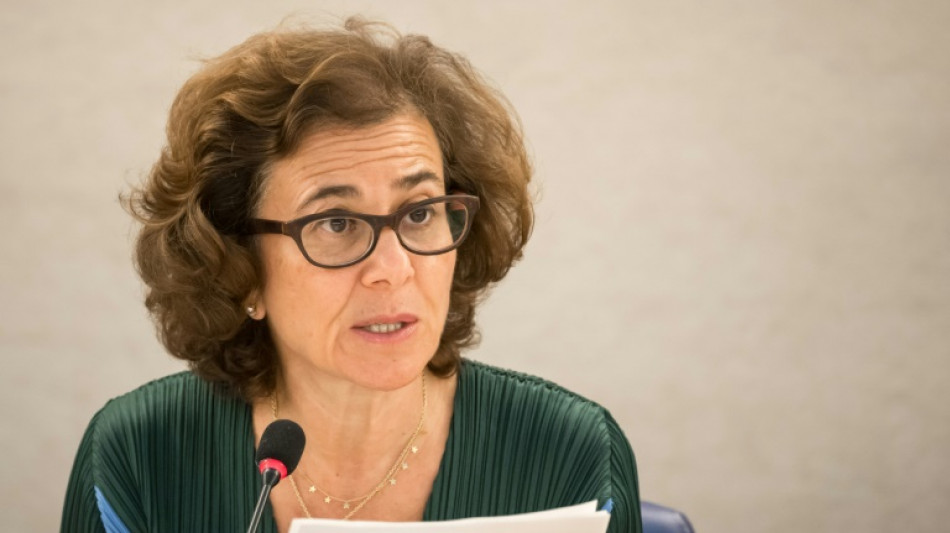
UN alarmed by Russia's 'mass' passports move in Ukraine / Photo: Fabrice COFFRINI - AFP
 Premier Doerkson Names Surrey MLA to TransLink Role Citing SkyTrain Commitment

 Mikal Bridges Hits Buzzer-Beater to Defeat Trail Blazers 97-96
 Lotto Results for Saturday, November 21, 2026
 PSU Bank Stocks Surge Up to 27% in November Amid FPI Inflows
 Manchester City vs Fulham Live: Haaland Disallowed Goal and Muniz Strike

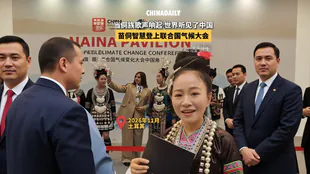 Miao and Dong Traditional Knowledge Offers Climate Resilience Lessons at COP31
The United Nations on Monday voiced deep concern over Moscow's "mass conferral" of Russian passports in Ukrainian territory it controls and denying essential services to people who refuse them.
The UN human rights office, OHCHR, said residents who do not take up Russian citizenship were being denied access to essential public services and were at greater risk of arbitrary detention.
"One and a half years after the Russian Federation's full-scale armed attack on Ukraine, we continue to bear witness to blatant and unabated violations of human rights," said UN deputy human rights chief Nada Al-Nashif.
In Russian-controlled territory, "we have observed with deep concern a policy of mass conferral of Russian citizenship on residents", she told the Human Rights Council in a debate on OHCHR's latest report on rights in Ukraine.
"Individuals who opt not to accept Russian passports find themselves ensnared in a web of exclusion, denied access to essential public services such as social security and healthcare," she said.
"This also heightens the risk of arbitrary detention for those who resist."
Russia had for years been issuing passports to Ukrainians in the eastern Donbas areas held by pro-Moscow separatists as well as in annexed Crimea.
But since President Vladimir Putin launched his full-scale invasion of Ukraine in February 2022, the passport drive has become more aggressive.
An array of routine necessities, such as receiving government benefits, getting or keeping a job and seeking medical treatment require Russian-issued papers, experts and residents have told AFP.
Putin signed a decree in April that allows Ukrainians in occupied areas to potentially be deported if they do not get a Russian passport by July 1, 2024.
- 'Erosion of humanity' -
The UN deputy high commissioner for human rights said the conflict in Ukraine "continues to erode the foundations of dignity and humanity".
Nashif said "torture remains a brutal reality" for civilians and prisoners of war held by Russia.
Survivors "describe a cruelty that is difficult to imagine", including electric shocks, sexual violence and severe beatings, she said.
"Countless detainees were also forced to praise the Russian Federation, learn and sing Russian songs and suffered severe beatings for failing, or speaking Ukrainian," said Nashif.
Moscow has made no discernible effort to ensure accountability for violations committed by their own forces -- and indeed a new law "effectively grants amnesty to Russian servicepersons for an overly broad range of crimes", she said.
Nashif said OHCHR was "gravely concerned" that there was no established system to return Ukrainian children transferred to Russia or other Russian-controlled territory.
Moscow's representative Yaroslav Eremin told the Human Rights Council that OHCHR was "continuing to whitewash Kyiv and shifting the blame for the crimes of the Ukrainian authorities on our country".
"We fundamentally disagree with the methodology, content and the conclusions" of OHCHR's report, he said.
P.Martin--AMWN

