Syrian doctor in German torture trial denies atrocities
 'No limits': Marathon world record holder Sawe chasing history

 Countdown begins to biggest-ever Rugby World Cup

 Bangladesh women lose ground after quota reform
 Vietnam admits 'differing opinions' on Hanoi development
 Stocks temper gains as oil pares heavy losses, US data in focus
 New Zealand denies breaching climate commitments to EU

 Albert becomes youngest US scorer in 4-2 win over Chile

 Pirate island's plunging population shows Greece's demographic decline
 With elections ahead, Latvia's Russian-speakers reject Moscow's help
 Brazil football clubs face massive sponsorship blow from betting ban
 ChatGPT maker wants to be the App Store for AI as safety concerns grow
 Women fight fires and sexism in Indonesian Borneo

 Forsling's OT blast lifts Florida over Carolina in NHL opener

 Hurricane Polo sweeps over Mexico's Pacific coast, heads inland
 Grynspan pulls ahead in race to lead UN: diplomat

 Trump touts AI boss pledge to self-regulate
 Oil down, but stocks lower as bond yields rise

 England break down stubborn Czechs to claim first Nations League win

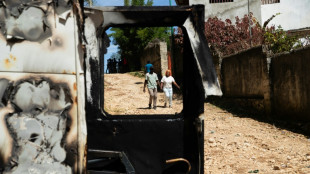 UN Security Council extends Haiti anti-gang force by 6 months

 Manchester City guilty of Premier League charges: What comes next?
 Man City chief Soriano slams Premier League 'conspiracy theory'

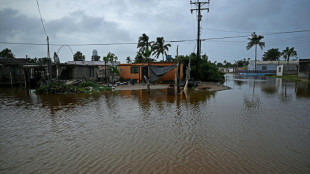 Hurricane Polo sweeps over Mexico's Pacific coast
 Man City must be relegated after guilty verdict says club's former chairman

 German far-right aims to lead Saxony-Anhalt govt in December

 Little damage as Hurricane Polo sweeps over Mexico's Pacific coast

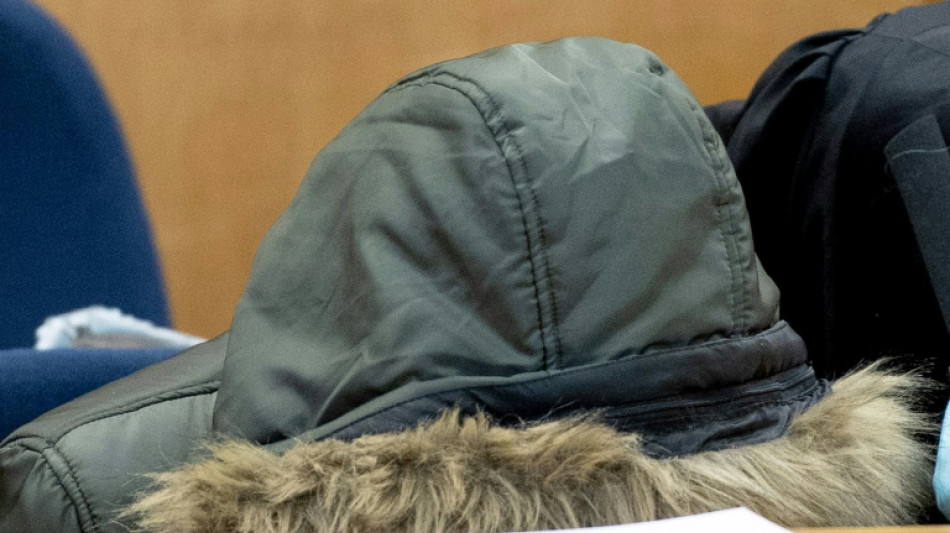
A Syrian doctor on trial in Germany for torture and murder while working in military hospitals in his war-torn homeland on Tuesday denied setting fire to a teenage boy's genitals or operating on detainees without anaesthesia.
Alaa Mousa, 36, who arrived in Germany in 2015 and practised medicine in the country until his arrest five years later, is on trial for crimes against humanity.
Taking the stand, he told judges at the higher regional court in Frankfurt that he "felt sorry" for patients who were beaten and blindfolded.
He firmly denied allegations of dousing a teenage boy's genitals in alcohol before setting them alight, saying he "did not do that".
He also said he did not strike detainees, and "would never" have operated on a patient without anaesthesia, as prosecutors accuse him of doing.
Instead, Mousa told the court he felt sympathy for detainees.
"I saw the military secret service beating injured detainees. I felt sorry for them, but I couldn't say anything, or it would have been me instead of the patient," Mousa told the court.
Mousa stands accused of 18 counts of torturing detainees in Damascus and the western city of Homs in 2011-12.
He also faces one count of murder for allegedly administering a lethal injection to a prisoner who resisted being beaten, according to federal prosecutors.
His case is the second landmark trial in Germany over atrocities committed by the Syrian regime during the country's civil war.
Earlier this month, another German court sentenced a former Syrian colonel to life in jail for overseeing the murders of 27 people and the torture of 4,000 others at a Damascus detention centre a decade ago.
Describing his time at the military hospital in Homs in 2011, after Arab Spring protests against President Bashar al-Assad's regime led to a brutal crackdown, Mousa said so many opposition demonstrators were brought in with injuries that it was "chaos".
Some of the detainees showed signs of having been tortured or beaten, he said.
- 'Inhumane' -
But Mousa, a civilian doctor, never asked questions, having been told by his supervisor that the military secret service was "in control" of the hospital.
On one occasion, Mousa said he witnessed a blindfolded patient, his hands tied behind his back, being beaten by military secret service and some of the military medical staff working at the hospital.
"I was very scared of the military secret service and also of the medical staff that just joined in," he told the court.
He also said he thought it was "inhumane" to keep patients blindfolded while they were being sutured or otherwise treated.
Asked whether he felt sympathy for the demonstrators, Mousa said neither he nor his family were political activists. "But I also wasn't a super supporter of the regime."
The anti-Assad protests started off peacefully, he recalled, but he said they quickly turned more "radical". "I'm against violence on either side," he added.
Mousa will address the other charges he faces on Thursday.
Prosecutors in Frankfurt say Syria's military hospitals play a key role in Assad's state-sponsored torture system, and that Mousa helped to perpetrate "a systematic attack on the civilian population".
Mousa left Syria for Germany in mid-2015, on a visa for skilled workers.
He worked in several places as an orthopaedic doctor, including in the picturesque spa town of Bad Wildungen. He was arrested in June 2020 after Syrian witnesses came forward.
The proceedings in Germany are enabled by the legal principle of "universal jurisdiction", which allows crimes of exceptional gravity to be prosecuted even if they were committed in a different country.
A German woman who moved to Syria aged 15 to join the Islamic State group went on trial in the eastern city of Halle on Tuesday, accused of aiding and abetting crimes against humanity.
P.Santos--AMWN