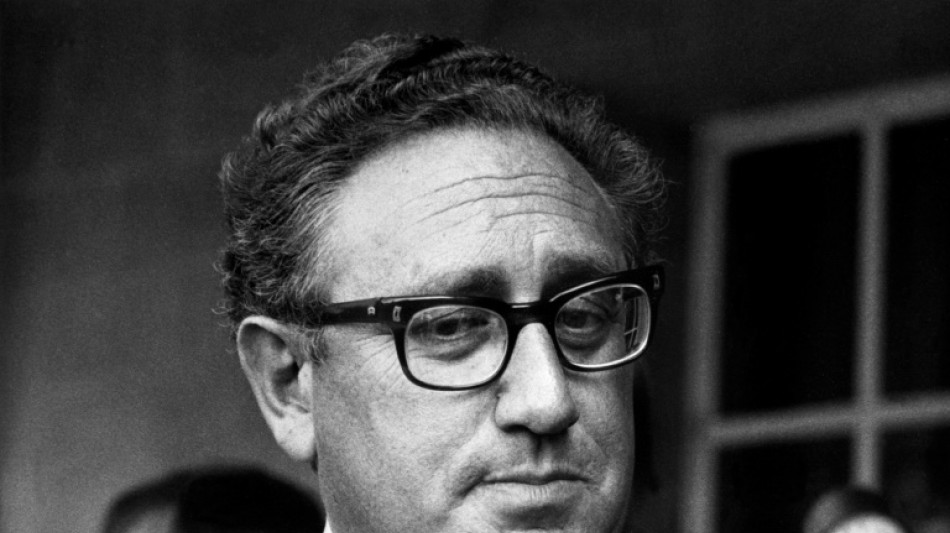
Henry Kissinger, singular US diplomat, dead at 100 / Photo: - - AFP/File
 Premier Doerkson Names Surrey MLA to TransLink Role Citing SkyTrain Commitment

 Mikal Bridges Hits Buzzer-Beater to Defeat Trail Blazers 97-96
 Lotto Results for Saturday, November 21, 2026

 PSU Bank Stocks Surge Up to 27% in November Amid FPI Inflows
 Manchester City vs Fulham Live: Haaland Disallowed Goal and Muniz Strike
Henry Kissinger, the former US secretary of state whose unapologetic promotion of raw American power helped shape the post-World War II world, died Wednesday at the age of 100, his consulting firm said.
"Dr. Henry Kissinger, a respected American scholar and statesman, died today at his home in Connecticut," Kissinger Associates announced in a statement late Wednesday.
It said that Kissinger's family would hold a private funeral, with a memorial service to take place later in New York.
It did not provide a cause of death. Kissinger had remained active even at as a centenarian, traveling to China in July to meet President Xi Jinping.
China was one of Kissinger's most lasting legacies. Hoping to shake up the Cold War fight against the Soviet Union, Kissinger secretly reached out to China, culminating in a historic 1972 visit by president Richard Nixon and later the US establishment of relations with Beijing.
After the Watergate scandal brought down Nixon, Kissinger served under his successor, Gerald Ford. In an unprecedented arrangement, Kissinger served both as secretary of state and national security advisory.
Kissinger was awarded the Nobel Peace Prize for negotiations to end the Vietnam War, even though the conflict continued afterward and his North Vietnamese counterpart, Le Duc Tho, declined to accept the prize.
While Kissinger's intellectual gifts were begrudgingly acknowledged even by his critics, he remains deeply controversial for his ruthless philosophy of realpolitik -- the cold calculation that nations pursue their own interests through power.
Declassified documents showed that Kissinger gave his blessing to the undermining of Chile's elected Marxist president Salvador Allende and later the 1973 coup by General Augusto Pinochet.
Kissinger also supported Indonesia, a close anti-communist ally, as it seized East Timor in 1975, and turned a blind eye to Pakistan's mass atrocities as Bangladesh won independence in 1971, seeing Islamabad as valuable as the go-between with China.
O.Norris--AMWN

