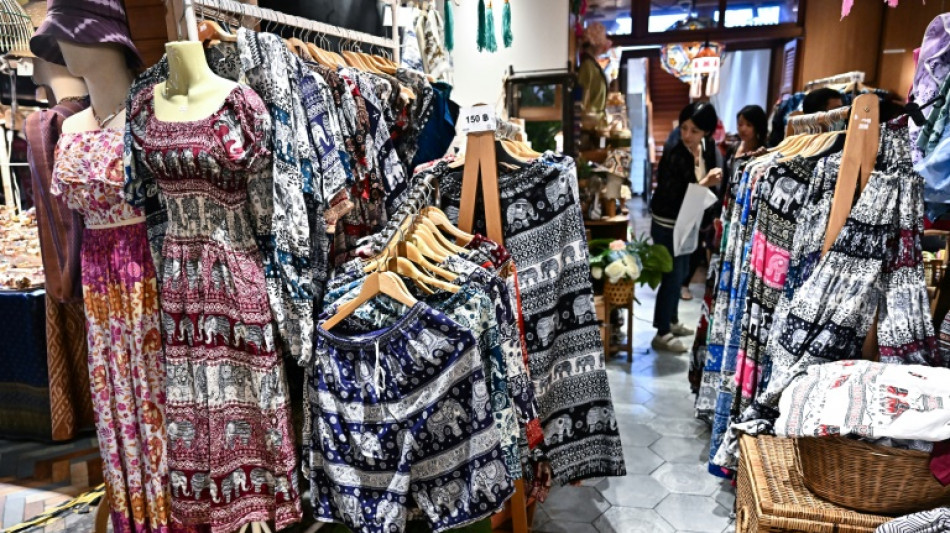
Thailand orders close watch on cheap 'elephant pant' imports / Photo: Lillian SUWANRUMPHA - AFP/File
 Premier Doerkson Names Surrey MLA to TransLink Role Citing SkyTrain Commitment

 Mikal Bridges Hits Buzzer-Beater to Defeat Trail Blazers 97-96

 Lotto Results for Saturday, November 21, 2026

 PSU Bank Stocks Surge Up to 27% in November Amid FPI Inflows

 Manchester City vs Fulham Live: Haaland Disallowed Goal and Muniz Strike
Thailand ordered its ports on Tuesday to keep a close watch out for rogue "elephant pants" being imported to the kingdom, as Bangkok trumpeted its copyright claim to the popular pachyderm print.
The thin cotton trousers have long been a staple of European backpackers travelling through Southeast Asia.
In recent months, they have become an unexpected hit with young Thais.
But a jumbo influx of cheap Chinese-made pants has sparked concern over foreign imports edging out local manufacturers, and caught officials' attention.
"We have ordered the surveillance of elephant pants in all ports," Deputy Prime Minister Phumtham Wechayachai told reporters on Tuesday.
Phumtham, who is also commerce minister, said the elephant design that stomps across the ubiquitous trousers was copyrighted.
"If we allow foreign producers to produce it, it might impact the local Thai products," he said, warning of the inferior quality of some imports.
"Thai products are standardised. Some (imported) products are easily torn after using them a couple of times," he said.
While the pants are sold from market stalls for as little as 150 baht ($4), high-end retailers have also picked up on the trend and some flog high-fashion designs for as much as $30.
Phumtham's remarks come after Thai Prime Minister Srettha Thavisin was asked about the cheap Chinese-made pants dominating the local market.
"This is nothing new in doing business. Where there is an opportunity, there are opportunists," he told reporters.
"If we do not act fast, we will lose the opportunity, like have done before on several other things."
O.Johnson--AMWN

