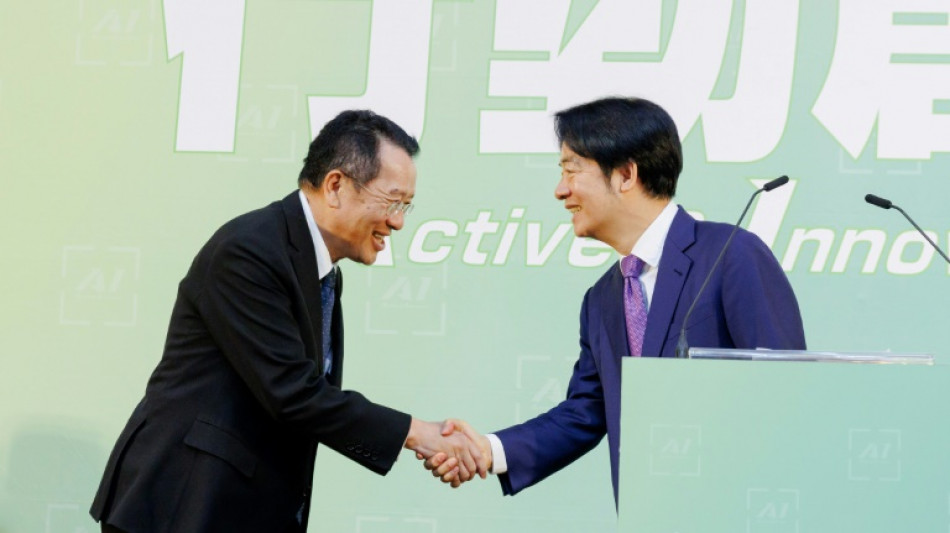
Taiwan president-elect names cabinet ahead of inauguration / Photo: Handout - The Democratic Progressive Party (DPP)/AFP
 Lotto Results for Saturday, November 21, 2026

 PSU Bank Stocks Surge Up to 27% in November Amid FPI Inflows
 Manchester City vs Fulham Live: Haaland Disallowed Goal and Muniz Strike

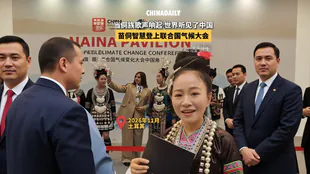 Miao and Dong Traditional Knowledge Offers Climate Resilience Lessons at COP31

 Rosalind Eleazar on Immersing in Los Angeles for 'Misty Green' Role
Taiwanese president-elect Lai Ching-te named his cabinet and security team appointees on Thursday as he prepares to take office next month.
China, which claims self-ruled Taiwan as part of its territory and has said it will not renounce the use of force to bring it under its control, has labelled Lai a "dangerous separatist".
Lai said Thursday the island was "facing unprecedented challenges" ahead of his inauguration on May 20.
"In the face of the rise of authoritarianism and China pressing closer, the national security team must not shirk our responsibility, must take the country's future as our own mission, and must shoulder the duty to defend our country," he said.
Lai named security council head Wellington Koo as his new defence minister, replacing Chiu Kuo-cheng.
Koo said Taiwan was the "most important link" in maintaining regional peace and stability, adding that "we need to take part in the development of cooperative deterrence".
"Our primary goal is to complicate the calculations of the other side of the Strait and to make China's timetable for potential reckless military actions constantly postponed in order to maintain stability in Taiwan Strait," he said.
Foreign Minister Joseph Wu will take over as head of the national security council, Lai said.
Lin Chia-lung, the current secretary-general at the presidential office, will become foreign minister.
Taiwan is separated from China by a narrow 180-kilometre (110-mile) waterway, which serves as a major transit route for the global shipping industry.
China maintains a near-daily military presence around Taiwan, sending warplanes and naval vessels that keep Taipei's armed forces in a constant state of alert.
The island's key partner and weapons provider, the United States, approved a multi-billion defence aid package this week that includes replenishing equipment for Taipei's armed forces as well as "foreign military financing" for Taiwan and other regional countries.
Chinese foreign ministry spokesman Wang Wenbin warned that the strengthening of ties between Taiwan and the United States "will only increase tensions and the risk of conflict across the Taiwan Strait", and called on Washington to stop arming the island.
But Taipei's foreign ministry spokesman Jeff Liu said Thursday it was China that had been "stepping up military threats (by) unilaterally changing the status quo of the Taiwan Strait".
"Such international concern has proven that the Taiwan Strait issue is absolutely not a Chinese internal affair as China claims," Liu said, reiterating thanks to Washington for the package.
G.Stevens--AMWN


