
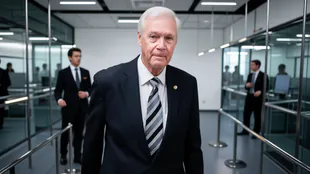
US allows Cuban entrepreneurs conditional banking access / Photo: YAMIL LAGE - AFP
 Eastside Jazz Festival Returns to Birmingham for Three-Day Event in February 2027

 Experts Warn Social Security Crisis Looms After Decades of Congressional Inaction

 Dar Global and Trump Organization Launch $700M Luxury Resort in Qatar

 Former Iowa State Women's Basketball Players Accuse Coach Bill Fennelly of Abuse

 New to The Street Show #781 Premieres Tonight on Bloomberg Television with Roadzen, Robo.ai, PureCipher and American Fusion

 How Families Budget for Youth Sports Travel Seasons

Private sector entrepreneurs in Cuba will be able to establish US bank accounts which they can remotely access, US officials said Tuesday, in announcing an update to the country's Cuba policy.
The new rules modify a longstanding embargo on Cuba, allowing conditional access to the US banking system among moves to support the private sector.
"These amendments will facilitate greater access to internet-based services for the Cuban people," a senior US official told reporters.
They will also "provide the independent Cuban private sector greater access to international transactions and US banking services, including through online payment platforms," the official added on condition of anonymity.
Cuban Foreign Minister Bruno Rodriguez criticized the measures as "limited," saying "they do not reverse the cruel impact and economic suffocation" caused by the six-decade-old embargo imposed by Washington.
"These measures seek to create divisions within Cuban society," Rodriguez wrote on X.
Under the changes, independent private sector entrepreneurs will be able to set up remotely accessed US bank accounts for authorized transactions.
According to US officials, this should help to facilitate the import of food, equipment and other goods that support Cuban people.
US authorities have also reinstated authorization allowing for transactions that start and end outside the country but pass through the US financial system.
In May 2022, US President Joe Biden's administration vowed to encourage the growth of Cuba's private sector, including by supporting greater access to US internet services and e-commerce platforms.
As of 2021, Cuban entrepreneurs could establish private small- and medium-sized enterprises -- after these were banned for almost six decades in favor of state-owned enterprises.
Some 11,000 private companies have since been registered, said US officials.
Cuba's centrally planned economy is in its deepest crisis since the end of Soviet subsidies in the 1990s.
"The Cuban economy is a shambles and there is rising public frustration with the arthritic dictatorship," said Benjamin Gedan, director of the Latin America program at the Wilson Center.
"Greater internet access would offer business opportunities and new tools for Cubans to work together to communicate their legitimate grievances," he said.
Authorities said that the latest announcement excludes prohibited Cuban government officials such as military officers.
The amendment also comes shortly after the Biden administration removed Cuba from a list of countries that it says do not cooperate fully on counterterrorism.
Cuba was on the list alongside Iran, North Korea, Syria and Venezuela.
Y.Kobayashi--AMWN


