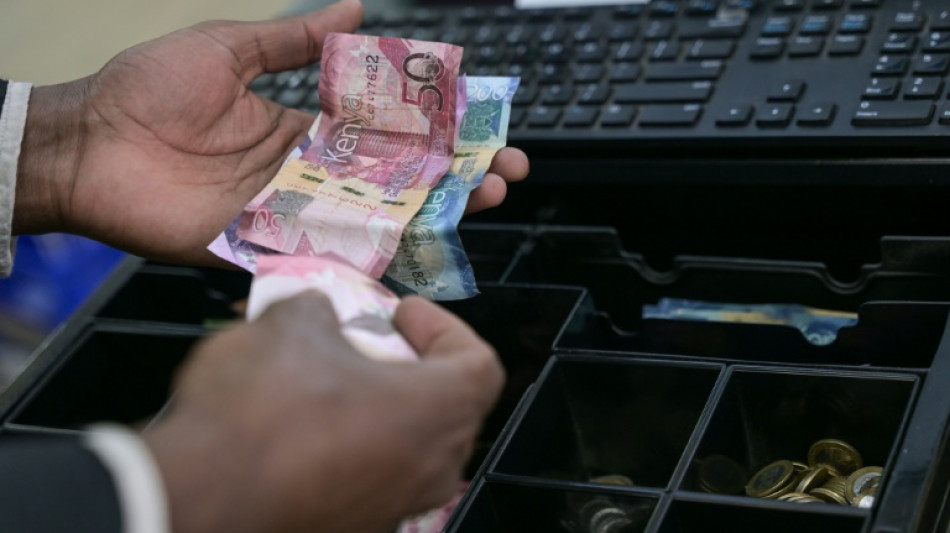
Kenya to present budget with new tax hikes / Photo: SIMON MAINA - AFP/File
 PSU Bank Stocks Surge Up to 27% in November Amid FPI Inflows

 Manchester City vs Fulham Live: Haaland Disallowed Goal and Muniz Strike

 Miao and Dong Traditional Knowledge Offers Climate Resilience Lessons at COP31

 Rosalind Eleazar on Immersing in Los Angeles for 'Misty Green' Role

 FlatRx Publishes a Dated Price Comparison of Compounded Tirzepatide at 27 U.S. Telehealth Programs Counted at a 10 mg Weekly Dose
 Abanico Coffee Roasters Opens Second San Francisco Location in Inner Sunset
Kenya's finance minister is due to present Thursday the East African economic powerhouse's biggest ever budget, alongside a contentious finance bill that contains a raft of new or increased taxes.
President William Ruto's government has drawn up a four-trillion-shilling ($31.1-billion) budget for 2024/25, up from 3.75 trillion shillings it approved last June for the current fiscal year.
Parliament has already approved the proposed spending plan, but the separate finance bill aimed at filling the coffers of the cash-strapped government could lead to an acrimonious session.
The bill -- defended by the government as a necessary measure to cut reliance on debt -- has drawn sharp criticism from politicians, employed Kenyans and industry groups.
It proposes a host of tax hikes expected to hit the financial services, manufacturing and retail sectors.
One of the most contentious provisions is the introduction of a motor vehicle tax set at 2.5 percent of the value of the car and the reintroduction of VAT on bread.
Critics have warned that the new measures will further hit people already struggling to make ends meet as the cost-of-living crisis bites.
Similar tax hikes last year led to several protests called by the opposition which degenerated sometimes into deadly street clashes between police and demonstrators.
Kenya is one of the most dynamic economies in East Africa but about one third of the country's 51.5 million people lives in poverty.
Overall inflation has remained stubbornly high, at an annual rate of 5.1 percent in May, while food and fuel inflation stood at 6.2 percent and 7.8 percent respectively, according to central bank data.
The government has forecast average GDP growth of 5.2 percent between 2024 and 2026.
The World Bank said in a report last week that while Kenya's real GDP growth had accelerated last year to 5.6 percent from 4.9 percent in 2022, it was expected to slow to five percent this year.
The recovery of the key agricultural sector -- following improved weather conditions -- drove 2023's growth, the report said, with tourism also contributing to a stronger performance.
The country's total public debt amounts to around 10 trillion shillings, or around 70 percent of GDP, with the International Monetary Fund this week agreeing an additional $1.1-billion funding for the nation.
S.F.Warren--AMWN


