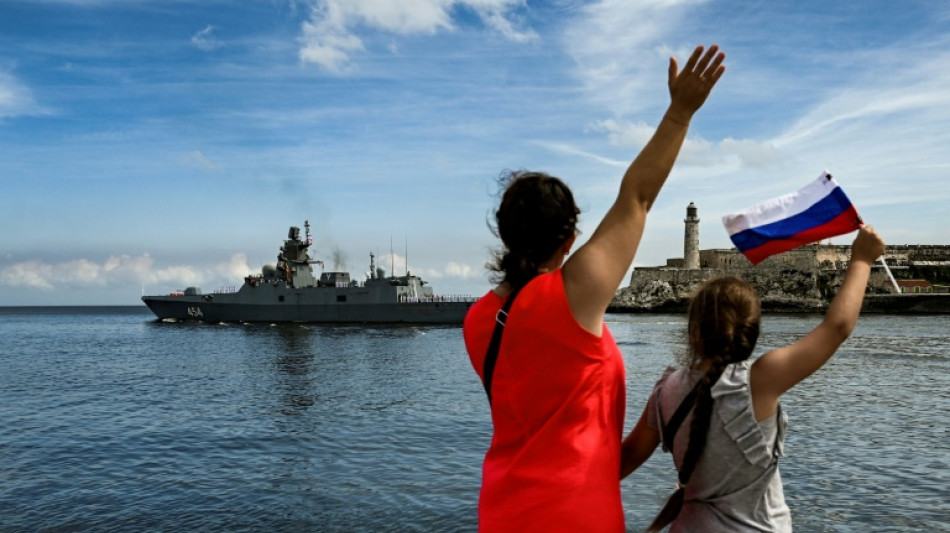
Russian nuclear-powered submarine leaves Cuba / Photo: YAMIL LAGE - AFP
 Experts Warn Social Security Crisis Looms After Decades of Congressional Inaction

 Dar Global and Trump Organization Launch $700M Luxury Resort in Qatar

 Former Iowa State Women's Basketball Players Accuse Coach Bill Fennelly of Abuse

 FlatRx Publishes a Dated Price Comparison of Compounded Tirzepatide at 27 U.S. Telehealth Programs Counted at a 10 mg Weekly Dose

 Abanico Coffee Roasters Opens Second San Francisco Location in Inner Sunset
A Russian nuclear-powered submarine and other naval vessels on Monday left the port of Havana after a five-day visit to Cuba, the communist state off Florida's coast.
Residents waved Russian flags as the vessels sailed towards the open sea after a busy few days for the island, which has also hosted a US nuclear-powered submarine and a Canadian Navy patrol ship.
The Russian nuclear-powered sub Kazan -- which Cuba said was not carrying nuclear weapons -- docked in Havana last Wednesday, though Washington said it did not see the visit as a threat.
The deployment came amid major tensions over the war in Ukraine, where the Western-backed government is fighting a Russian invasion.
On Thursday, the United States' fast-attack submarine USS Helena arrived at American naval base Guantanamo Bay as part of a planned and routine port visit, the US Southern Command said.
The vice minister of foreign affairs Carlos Fernandez de Cossio said Cuba had been advised of the visit but "evidently we do not like the presence" of a nuclear-powered submarine from a country with policies "hostile to Cuba."
Canada's HMCS Margaret Brooke docked in Havana on Friday and was also due to leave on Monday.
During the Cold War, Cuba was an important client state for the Soviet Union. The deployment of Soviet nuclear missile sites on the island triggered the Cuban Missile Crisis of 1962, when Washington and Moscow came close to war.
S.F.Warren--AMWN


